Procrastinated Reviews: Bang Bang Racing (XBLA) and WRC Powerslide (XBLA)

My Procrastinated, Comparative Reviews – Featuring Bang Bang Racing and WRC Powerslide

I’ve decided to knock off a few smaller reviews while I continue to plug away at the current story game I’m working on, The Last of Us. Included in my vast game collection digitally sits more than a few Arcade titles, so here I am, reviewing a few of them, which, conveniently, happen to both be very similar: Bang Bang Racing, and WRC Powerslide, both XBLA top-down, pocket racing titles.

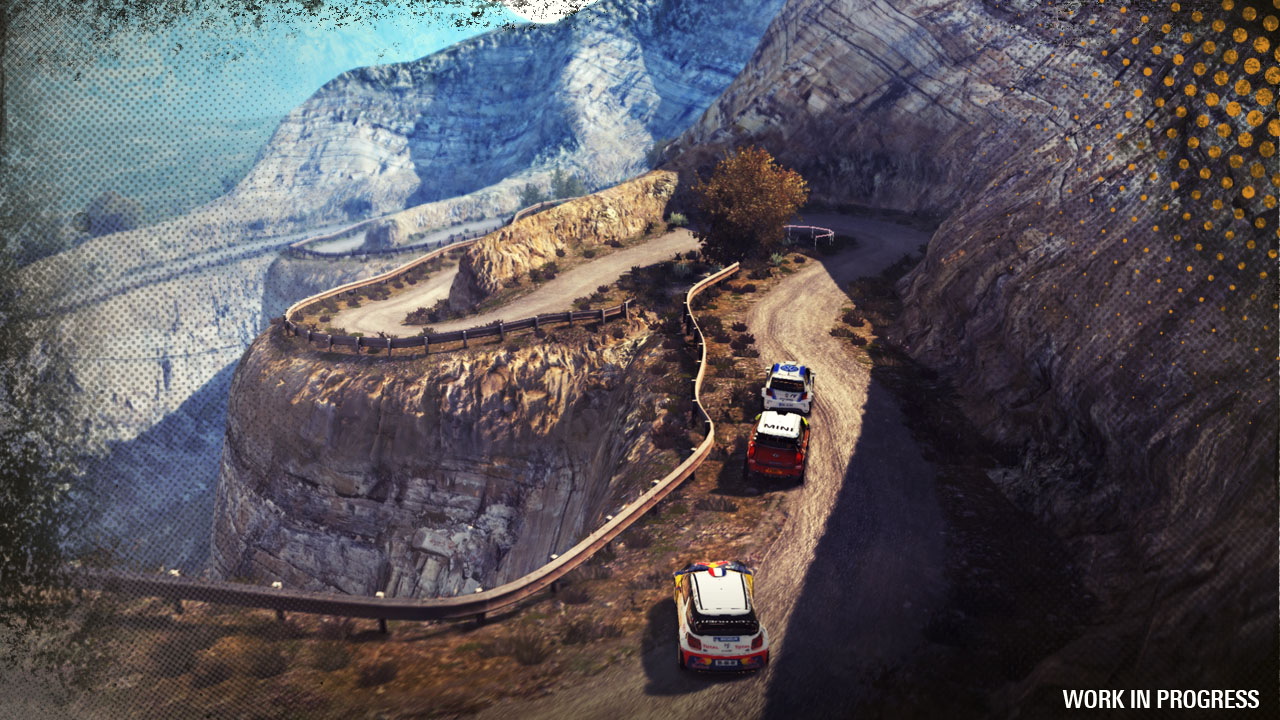
WRC Powerslide is an arcade title in the same light of its World Rally Championship (WRC) older brothers. The 8 locations included in the game are, as the name implies, rally courses, scattered across the world, featuring real world Rally championship locations such as Mexico, France and Portugal. There are 3 variants per locations, multiplied by 3 vehicle classes, capping the game with 72 unique configurations. The 3 classes of vehicles, each handling noticeably different, and feature a number of recognizable sponsor teams and a handful of car liveries. The further you progress, the more cars and skins you unlock.
Mind the edge

Mind the edge

The game itself is simplistic in design, featuring only one race mode: Championship – 4 racers including the player. Your only objective is to finish before the other racers. The cars drive fast and with agility. The camera gives us a locked top-down chase view of the player’s car, but the tracks are quick and winding which can cause some disorientation, and occasionally that particular location’s design, with mountainous regions or forested areas, can briefly obstruct the view of our car.

The AI can be tough if you find yourself in the lead; however, there are power-ups that you acquire throughout the duration of the race, that allows you to attain the lead – or help you keep it.

In closing, the locations themselves are fun to drive, and very pretty, featuring some beautiful vistas, and differing weather. The game is fun, and great for a quick race or two at a time, but becomes very repetitive and tedious for stints long than that. Omitting the power-up weaponry may have improved the focus on the actual racing. Final say: a competent arcade rally title.

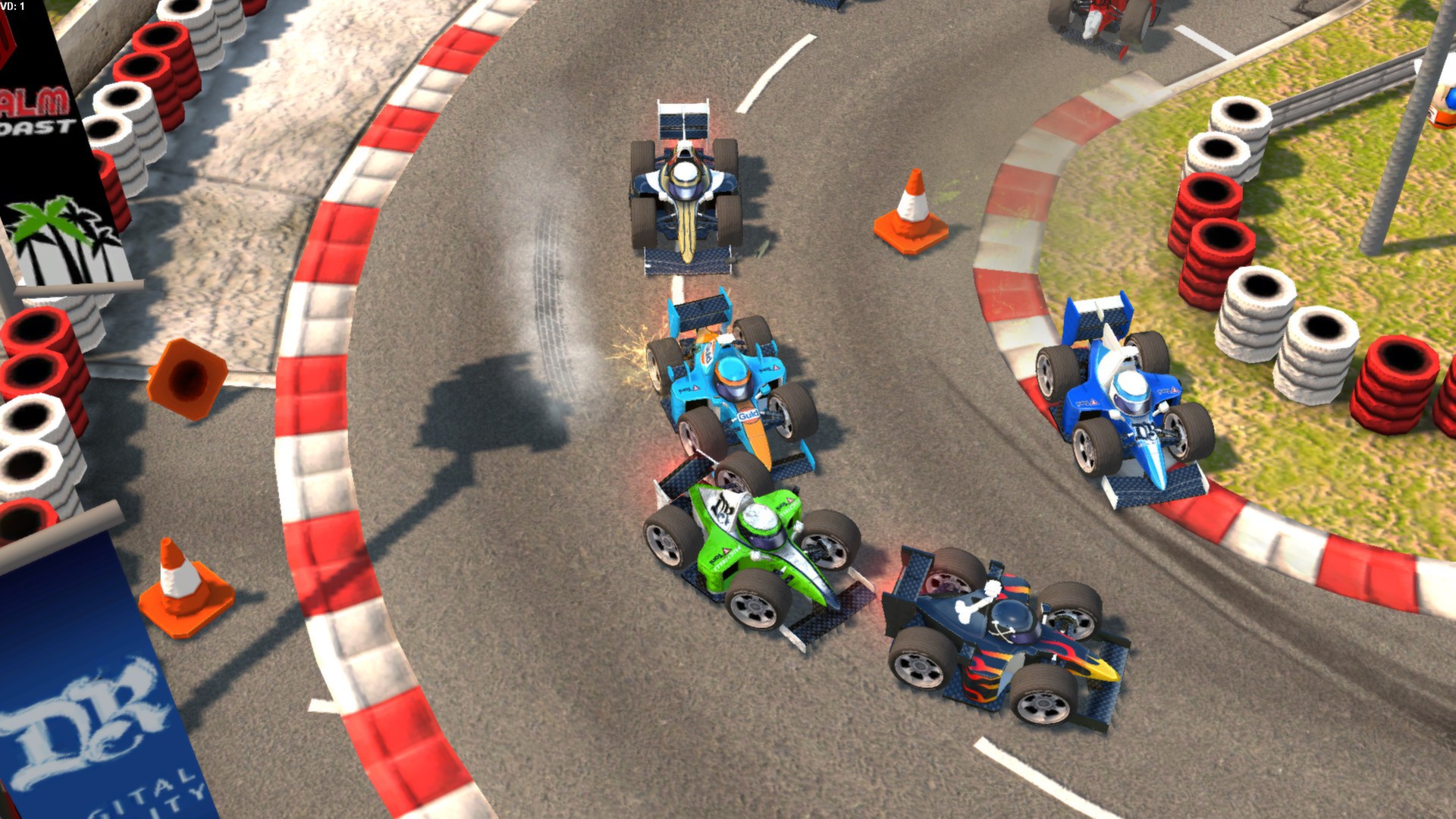
Bang Bang Racing, as the arcade title lives up to, takes itself a little less seriously. Again featuring a top-down perspective, this racer has a compacted art style, and flashier designed cars. With 9 different courses available, this title focuses on tarmac circuits, and each track has multiple shortcut layouts totaling 54 race configurations. There are 4 different classes of cars, each handling differently, and feature skins to unlock.
Pardon me!

Pardon me!

Omitting power-ups and weaponry lets the player focus on the racing, but the cars themselves have a nitrous boost and a life bar. The tracks feature oil, and water drums, which once hit cause slicks on the track, and exploding barrels that cause car damage. It is an arcade title after all.

Again, featuring dizzying, winding tracks, this racer plays fast and disorientating at times, however the car physics are less forgiving than WRC. The game features a few more modes too: Races (featuring 7 opponents), Time Trial, and Elimination.

In conclusion, where WRC tried to be more than just an arcade rally title, Bang Bang Racing definitely feels more like a true pocket racer (even the fans are just little bobbing Mii-style heads) remaining true to the racing roots and does away with power-ups. The courses are attractive, very colourful, simple to drive, but difficult to master. The gameplay modes mix it up too, keeping the events feeling new, and not so boring.

Notable Achievements:

WRC: As fast as lightning (Use the “Thunder Bolt” Power-up 10 times in total) – 20G

BBR: Bang, Bang Kaboom! (Detonate 50 exploding barrels) – 10G

Procrastinate Review: Darksiders II

My Procrastinated, Comparative Review of Darksiders II

Intended to stick with the short-form reviews for a bit, but after stumbling through padded mishmash that is Darksiders II, I had a few things to fuss about, so this review is a little dense, for consistency sake.

Darksiders II’s story is parallel to the events of the first game. If you’ll recall, in Darksiders I, War, one of the Four Horsemen accidently started the apocalypse early, and dooms all of Earth’s population, and is then brought to justice for his crimes. The sequel sees us playing as his brother, Death, who believes War was tricked into committing his crimes seeks to redeem his brother’s wrongdoings and wishes to fix everything and restore humanity. The story from that part continues along its convoluted way, meeting new characters and foes along the way, as Death futilely attempts to reach his end goal. We slowly learn the entire land is actually being consumed by darkness and Corruption, and the plan of saving our Brother starts to fade, and instead we must save everyone else, and maybe Humanity someday. One day? Who cares?

#Dark

#Dark

The Darksiders franchise is really just the darkest timeline of Zelda. The story follows our emo protagonist through a steady stream of dungeons, and open lands for exploring; each new area presenting us with a new gameplay mechanic. The dungeons themselves are interactive puzzles, requiring the player to think their way through a series of levers, doors, elevators, and portals, with some wall-running and scaling, all the while fighting a slew of increasingly difficult enemies.

The enemies and dungeons present us with a new RPG and loot mechanic, as the player is bestowed an abundance of weapons, gear, and items along our forays into combat. All the weapons have attributes such as strength, and damage, and resistance, and defense, and stop me if this sounds redundant. You gain experience to level up our character as well, awarding the player new magic attacks.

Traveling the large lands of Darksiders II is made effortless with the addition of our horse, Despair. Additionally, we have the ability to fast travel to the different city hubs we frequent or to return to the dungeons once visited. This is where my first complaints started arising.

Gripes:

We have a horse named Despair (keeping with the #dark theme) to ride around on, in the open vast lands between dungeons, great. But that’s all the horse is good for, just traveling. Once you’ve reached your destination, you can fast travel back as much as you’d like. You can fast travel out of the dungeon half-way through, and return to the exact point you left off from, if you were so inclined. The horse is a nice addition at first, but is really underutilised save for one boss fight. How come there aren’t other speedy enemies that I need the horse to ride alongside? I have 21 inventory slots per style of gear for my character. Including my two weapons, armor and amulets, that’s 147 slots for disposable gear. How come I couldn’t add gear to my horse? I got to the point where I turned on the ‘auto-collect’ for my gear and didn’t even look at comparisons until after I was done the dungeon, and then sold off the rest before starting the next area.

I clocked the main story at 20 hours to completion. 20 hours doesn’t sound like a lot of invested time, and you’d be right, but it certainly felt like a long time. The story and quests are just so thin, but padded for the sake of game time; always collecting items of three to progress. There are some side quests to waste time, and a challenging labyrinth quest that required collectibles to navigate.

I felt the story to be unnecessarily puzzling, and Death’s true goals to be lost along the way as he was sent from one meaningless task to the next before finally defeating the land’s Corruption boss in the end, and making the ultimate decision to save his brother and humanity, and sacrifice his kin. I was disappointed that the game ended in another cliff-hanger, similar to its predecessor, and that I did not get to meet up with War at all. The game’s final moments promise more, but we’ve heard that before.

Executed Well:

The art and design is gorgeous. Some of the landscapes were breathtaking, especially in the Land of the Dead: its tormented lands, and scarred earth. And the character, Death, is a design deserving applaud.

The dungeons themselves were very satisfying, just the right amount of puzzle that required thought. The plat-forming and gameplay elements for traversal, like the Death-Grip (grappling hook), were used well, and frequently, with each new area adding another element for navigation. Constant waves of enemies, increasing in difficulty, were a pleasure too. Death with the dual-scythes always felt like a bad-ass.

The bosses were imaginative, and like its blatant inspiration, Zelda, always required that one clever element to assist with defeating them. My one gripe would be the game’s paramount boss featured heavily in the trailers: the boss that seemed ripped out of Shadow of the Colossus. The boss was the only example of an enemy that was large enough that we had to climb on it and attack certain key weak points. My complaints are a) completely under-utilized large-area boss fight which proved to be the only true use of the horse. Obviously would have appreciated a few more instances of this type of battle. And b) this climactic type of battle was easily the ¼ mark of the game’s story. To have this boss featured heavily in the trailers, and expired so soon is wickedness.

Opinion:

The game is sound. Like its predecessor, it has an interesting tale, with some epic fight scenes, relegated to cut-scenes, but I digress. The art, character design, and scenery are marvelous, and dungeon crawling is very satisfying. The game, however, suffers from some excess filler, cushioning the thin story with unfortunate fetch-style quests, and leaves us in the end wanting what we ultimately wanted going in: meeting up with War, as two brothers of the Apocalypse.

Notable Achievements:
Respec Yourself (Your first respect) – 20G
Diamond Geezertron (Unlock the final skill in either skill tree) – 10G

Procrastinate Review: Remember Me

My Procrastinated Comparative Review of Remember Me

Going back to the shorter form reviews for a bit, so that I can pump a few of them out to catch up, but it’s also because I’m going to be reviewing Remember Me, which I forgot to review when I played it 4 months ago. I bought this game because the cover art had a splendid shapely bum on it, and that’s the most memorable part of the game.

Really?

Really?

The game Remember Me is an action adventure game based in a futuristic Paris, Neo-Paris (literally), and revolves around our protagonist, Nilin, who is a part of a rebel group called the Errorists, and their attempts to bring down the Memorize Corporation. The Memorize Corporation has invented a chip, Sensen, which allows the civilians of Neo-Paris to have the ability to upload and share their memories on Youtube probably, as well as remove unhappy or unpleasant memories. This gives Memorize an immense degree of control over the populace on Neo-Paris, as they have established a surveillance state.

Nilin is a memory hunter, and has the gift of stealing memories, called Remembranes, and remixing memories. This is by far, the most interesting mechanic of the game, where you enter the memory of key characters in the story, and remix key parts of them so that they remember the events differently. A shame this mechanic is only used a hand-full of times.

The game’s combat mechanic is solid, and has a unique build-your-own combos system, and the game art and level design is visually appealing, allowing for some straight-forward platforming sequences, but is linear in design. The game also has its share of game breaking bugs, revolving around the enemy’s wave based fighting sequences; if you take out the enemies in the wrong order and initiate a cut-scene, the game will prevent you from proceeding to the next checkpoint. Restart Checkpoint. Break Controller.

Overall, the game has an interesting story, art and level details look great, and has solid gameplay, but the bugs, uninspired wave based enemy interactions, and agonizing terminology related to ‘memories’ prove to be this games undoing.

Notable Achievements:

God is a DJ (Find and activate all interactions in all memory remixes) – 40G

Serve the Servant (Beat 20 robot enemies) – 20G

iReview – GREEN LANTERN – RISE OF THE MANHUNTERS

We’re talking about the 2011 film tie-in here, the first video game based on DC Comics’ Green Lantern, so before I get into this, I need to lie down. Forever.

Not the typical fare you’d see on my game shelf, but I have a friend who buys a lot of games for his 7 year old, and at some point, they tend to find themselves on my shelf after game nights.

I was able to get a break from the other games I’m currently plugging away at (Assassins Creed III, Defiance, Remember Me) and was able to blast through this game in 4 hours, but suffice to say, the game wasn’t very memorable, so nor shall this review be.

The game follows the events of the movie Green Lantern, and finds the hero, Hal Jordan, back on the planet OA defending the Galaxy, and not Earth. Galaxy Guardians have bigger things to worry about it seems. The Green Lantern Corps has to face off against the previous enforcers of the Galaxy, the Manhunters, an android race created by the Guardians.

The androids felt over-worked and under-paid, and just over-all feelings of under-appreciativeness (not really), so they started focusing on administering punishment instead of serving justice. The Guardians were forced to dissolve the union and fire their workers, and then outsource their workforce to save on manufacturing costs. With no purpose now, the Manhunters strive for revenge. Enter Hal Jordan, brash, and out spoken, decides to shirk authority and do the Galaxy saving his way. I get the impression that the Guardians of the Galaxy don’t much like Hal and his attitude, but if they didn’t like him, they shouldn’t have put a ring on him.

The game is very generic. Enter a level, fight some bad guys, queue animation of progressing to the next portion of the level, fight some more bad guys, queue same animation of advancing, and fight a big bad guy. The level designs are decent in length, but there are some unsophisticated puzzles, and a few flying segments for variety. Why Hal Jordan doesn’t just fly or hover around all the time is beyond me.

The combat is regulation, with normal attacks being sword and cleavers, and the strong attacks being hammers, but the constructs are worth mentioning. There are a number of imaginative power attacks that you’ll unlock through progression, ranging from over-sized throwing stars to a full sized jet fighter to use at your disposal. Some are used as gameplay mechanics as well, like the sledge hammer and spiked mines. My question is: where are the non-lethal constructs? Machines have souls too.

Playing in co-op allowed me to breeze through the game, even on the harder difficulty, and it allows both participants to level up simultaneously. It also provided some of the game’s brief surprising moments. One in particular had my character grabbing an enemy with the hook and throwing it at my co-op partner and baseball bat in waiting; totally unintentional, but still fascinating.

The co-op player plays as Sinestro, which makes sense (Killawog would have been preferred). But Sinestro’s constructs are the same as Hal’s, which is baffling, from an authenticity perspective. Sinestro wouldn’t create Earth’s weapons from his imagination. Secondly, Sinestro is also Hal’s main contact through the levels, as Hal is chasing the Manhunters without the guidance of the Guardians. So it’s strange to have Sinestro provide the mission’s objectives and then show up anyways as the second player to assist.

Never mind that the co-op was a tacked on effort. Co-op is always appreciated.

Visually the game is common place. Being a movie tie in, expectations are already lowered; there’s not much more to say. Not a lot of budget, and not a lot of development time. They got Ryan Reynolds appearance down. But the game is limited in scope. You traverse through a couple worlds, with inside and outside environments, each unique to their own. The Manhunter’s planet itself reminding me a lot of Cybertron from the recent Transformer games: very alien, but yet very machine.

The game is befitting as a movie tie-in (with it’s easy achievements in-tow), and has some nice ideas with the constructs and combat, however it does suffer from some repetition in its enemy types (quantity over quality I suppose), linear level design, and reliance on QTE gameplay for its boss fights. The game is technically and graphically sound when it comes to the art and design, but I lack the will power or imagination to say much else positive about this game.

Oh dear, I wish I hadn’t cried so much….

“In brightest day, in blackest night,
achievement shall escape my sight.
Let those who’d rather sleep every night,
Beware my dedication…
Rogan’s Plight”
               

Notable Achievements:

Shut Your Mouth (Performed a 99 hit combo) – 60G
Get Dizzy Y’all! (Made Green Lantern dizzy 10 times) – 20G

iReview – THE AMAZING SPIDER-MAN

What’s another word for amazing, that’s not quite that…? “Expected?”

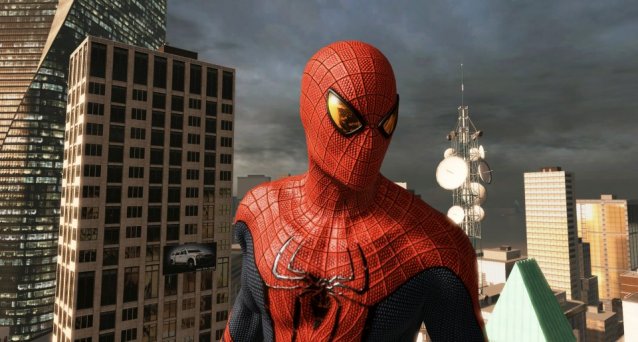
amazing-spider-man-game

The Amazing Spider-Man game from 2012 was about what I expected; however, there were some pleasant surprises. Spider-Man games in the past have had their qualities and their charm. I guess that’s why they keep getting made, year after year. But how many Spider-Man games can you play before the formula gets old?

A couple years ago Beenox came out with Shattered Dimensions which introduced a new view, incorporating 4 different Spider-Man universes into one game: Amazing Spider-Man, Noir, 2099 and Ultimate Spider-Man.

Bringing with it unique gameplay for each section. They followed it up with a sequel, Edge of Time, keeping the same gameplay, but only keeping the Amazing and 2099 universes. Positive-to-mixed responses…

Scrapping it all, Beenox came out with the movie tie-in: The Amazing Spider-Man. They kept the same design aspects of the previous games for the mission based levels, with a heavier focus on stealth based attacks, but breaking up the story with a full free-roaming, free swinging city, with its own side quests and collection aspects.

The web-swinging is a welcome addition, watching Spider-Man majestically swing through the air, and slingshot himself up buildings, all with the amazing acrobatic animations we’ve seen in previous TV shows, movies and games. The downside is all you need to do is hold one button, and the game does everything for you. You just angle the direction, and the game does the rest. Not that I ever wanted to know what it was like to be Spider-Man, I’ll happily just watch him do his thing…Sigh.

The combat is pretty straight-forward, if not a little spastic. Just mash the “attack” button until prompted for the “dodge” button to avoid attacks. And if you’re running into trouble, just press the “oh shit, get me out of here” button to escape everyone’s attacks and focus entirely. Like all Spider-Man games, the combat and camera movements always seem very chaotic, and a little disorientating at times. Maybe spiders see things differently.

The story continues where the Summer blockbuster left off. With the Lizard in jail, Alistair Smythe takes over Oscorp and starts making robots to help with the cross-species outbreak currently plaguing Manhattan. Everything gets neatly and predictably tied up in the end so as to not ruin the movie sequel’s continuity, the “Peter Parker and Gwen Story” continues and Spider-Man has to enlist the help of Doc Connors, breaking him out of jail, to assist with the outbreak.

Visually the game is standard affair, and just reeks Activision. The city’s transformation through the story is a nice touch, as the outbreak becomes worse. There is a day and night cycle, however it’s not real time, just strictly story based. And some of the boss fight’s action sequences are presented well. The developers took a cue from Rocksteady’s Batman games, and had suit wear-and-tear during the missions for the Spidey suit, but it was mission dependent and does not carry over from section to section. I guess Spidey just needs to continually repair his suit at every intermission, or maybe he has a lot of back-up suits stored as his apartment. However, being a broke super-hero, I highly doubt it.

The game is a step up from the previous two Spider-Man games, but, more limited in scope. A pleasant surprise for a movie tie-in, and I do praise some of the enemy boss choices (Scorpion, Rhino, and Felicia Hardy). That, and the game does have a nice shiny coat of production value, but a tired gameplay formula, repetitive enemy types, QTE Boss Fights, and a disorientating camera shows some cracks in the webbing.

Notable Achievements:

On The Fly (Collect all 700 Spider-Man comic books pages) – 25G
Keep It Together (Immobilize 6 enemies simultaneously with web) – 15G