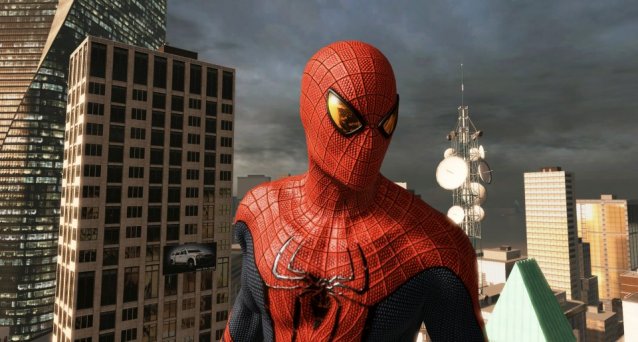
iReview – THE AMAZING SPIDER-MAN

What’s another word for amazing, that’s not quite that…? “Expected?

amazing-spider-man-game

The Amazing Spider-Man game from 2012 was about what I expected; however, there were some pleasant surprises. Spider-Man games in the past have had their qualities and their charm. I guess that’s why they keep getting made, year after year. But how many Spider-Man games can you play before the formula gets old?

A couple years ago Beenox came out with Shattered Dimensions which introduced a new view, incorporating 4 different Spider-Man universes into one game: Amazing Spider-Man, Noir, 2099 and Ultimate Spider-Man.

Bringing with it unique gameplay for each section. They followed it up with a sequel, Edge of Time, keeping the same gameplay, but only keeping the Amazing and 2099 universes. Positive-to-mixed responses…

Scrapping it all, Beenox came out with the movie tie-in: The Amazing Spider-Man. They kept the same design aspects of the previous games for the mission based levels, with a heavier focus on stealth based attacks, but breaking up the story with a full free-roaming, free swinging city, with its own side quests and collection aspects.

The web-swinging is a welcome addition, watching Spider-Man majestically swing through the air, and slingshot himself up buildings, all with the amazing acrobatic animations we’ve seen in previous TV shows, movies and games. The downside is all you need to do is hold one button, and the game does everything for you. You just angle the direction, and the game does the rest. Not that I ever wanted to know what it was like to be Spider-Man, I’ll happily just watch him do his thing…Sigh.

The combat is pretty straight-forward, if not a little spastic. Just mash the “attack” button until prompted for the “dodge” button to avoid attacks. And if you’re running into trouble, just press the “oh shit, get me out of here” button to escape everyone’s attacks and focus entirely. Like all Spider-Man games, the combat and camera movements always seem very chaotic, and a little disorientating at times. Maybe spiders see things differently.

The story continues where the Summer blockbuster left off. With the Lizard in jail, Alistair Smythe takes over Oscorp and starts making robots to help with the cross-species outbreak currently plaguing Manhattan. Everything gets neatly and predictably tied up in the end so as to not ruin the movie sequel’s continuity, the “Peter Parker and Gwen Story” continues and Spider-Man has to enlist the help of Doc Connors, breaking him out of jail, to assist with the outbreak.

Visually the game is standard affair, and just reeks Activision. The city’s transformation through the story is a nice touch, as the outbreak becomes worse. There is a day and night cycle, however it’s not real time, just strictly story based. And some of the boss fight’s action sequences are presented well. The developers took a cue from Rocksteady’s Batman games, and had suit wear-and-tear during the missions for the Spidey suit, but it was mission dependent and does not carry over from section to section. I guess Spidey just needs to continually repair his suit at every intermission, or maybe he has a lot of back-up suits stored as his apartment. However, being a broke super-hero, I highly doubt it.

The game is a step up from the previous two Spider-Man games, but, more limited in scope. A pleasant surprise for a movie tie-in, and I do praise some of the enemy boss choices (Scorpion, Rhino, and Felicia Hardy). That, and the game does have a nice shiny coat of production value, but a tired gameplay formula, repetitive enemy types, QTE Boss Fights, and a disorientating camera shows some cracks in the webbing.

Notable Achievements:

On The Fly (Collect all 700 Spider-Man comic books pages) – 25G
Keep It Together (Immobilize 6 enemies simultaneously with web) – 15G
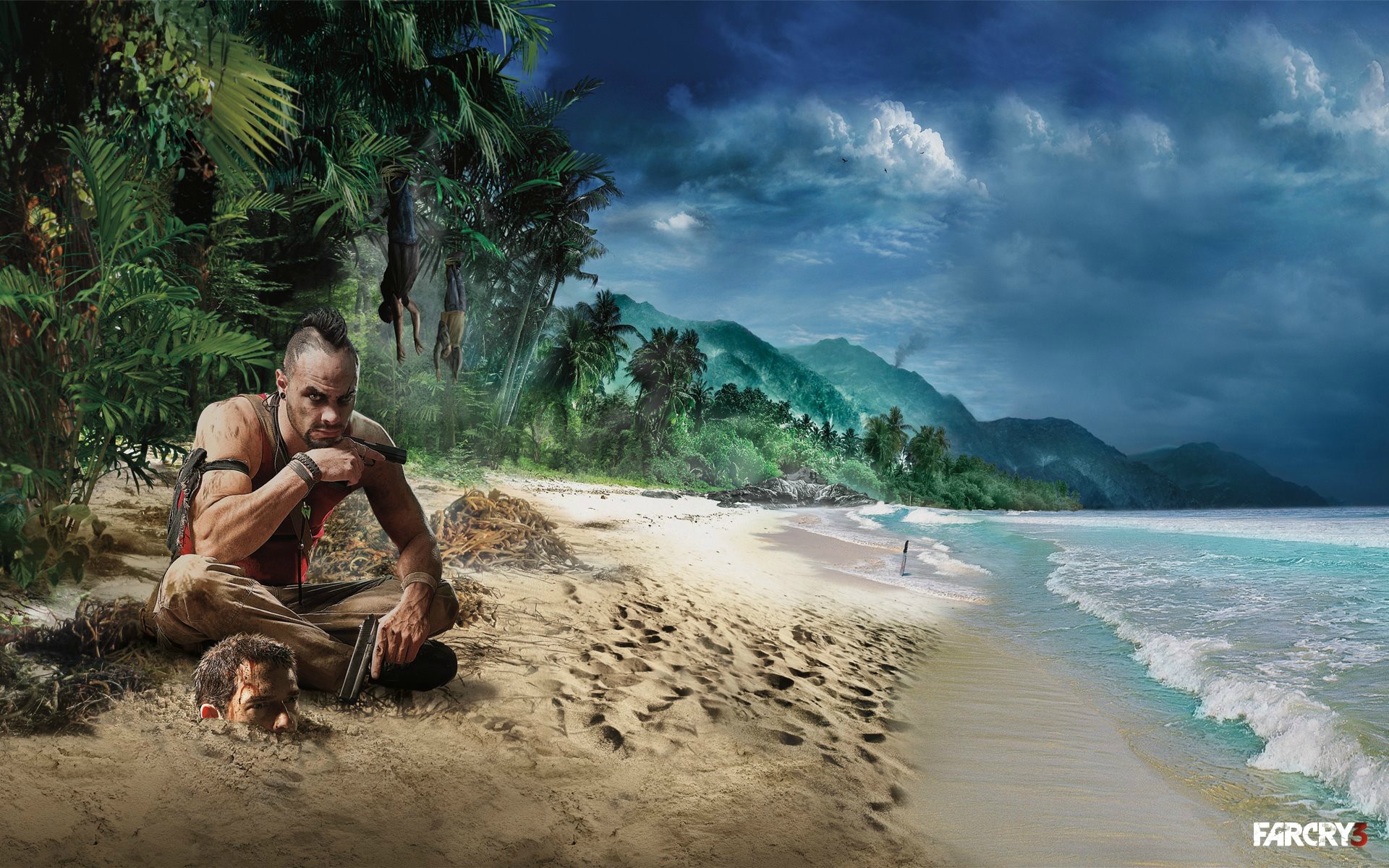
iReview – FAR CRY 3

Far Cry 2 had its problems. It’s many, many problems. But it had its qualities. It gave us an open-world sandbox first-person shooter set in the African safari. It gave us wildlife that liked running in front of vehicles. It gave us a fire mechanic that allowed open fields and trees to be set ablaze, where some times it felt like that fire would never go out. It also gave a real immersive feeling, like we were actually the character we were supposedly controlling, had stakes in their survival, and first-person camera moments when getting knocked down or getting in and out of vehicles, or just driving in general. Also included is an excruciating healing mechanics that’ll make you cringe.

It also gave us a story with no real direction, no characters, just a lot of bad guys and people doing stuff. And I mean a lot of bad guys. Everyone you come across, or within a 5km radius already doesn’t like you. The game’s enemy AI was so brutal and unforgiving in fact, that the developers couldn’t program animal predators into the game as all they would do was attack the other wildlife.

Far-Cry-3

Far Cry 3 kept the good, and did away with the bad. And takes us away from the bleak African war zone and transplants us into the gorgeous jungle island with a rich Japanese heritage. And with it comes the supernatural element. Sigh, I’m not touching that subject.

Far Cry 3 introduces us to our main protagonist Jason Brody, as we find our story’s participants living the good life, globetrotting, partying it up, and doing what rich tourists do, without consequences. Then we wake up in a bamboo jail cell, abducted by a homicidal pirate, Vaas, one of the island inhabitants, and all-around evildoer.

And this is where the Ubisoft team took a big cue from the issues with Far Cry 2, and that’s the overall character development and story. Brody has been captured but escapes and loses his brother in the process. His friends have also been captured in the process and are to be sold into the slave trade. Jason Brody will spend his time on the island trying his hardest to save his friends, but in doing so, begins to realize the evils he himself is capable of, and the lengths he will go to save his family and friends, at the risk of losing himself.

And Brody changes, he starts to lose himself to the island’s ways as his journey plays out, where he’s not the same spoiled rich kid in the end, however, where he inevitably ends up is the player’s choice.

Vaas is probably one of the more unconventional villains in recent memory. He’s just an all-around sociopath that tries fruitlessly time and again to kill Jason, who refuses to go away. Vaas he has no plan. Brody causes him a major headache by just remaining alive. It’s a shame that Vaas doesn’t make more appearances in the game, but his brief appearances are memorable, and he alone would be the highlight of the game. He did make the cover art after all.

The game is a stealth focused first-person shooter, but doesn’t necessarily have to be played that way. The game lets you take on each situation how you see fit, and gives you a vast array of tools to do just that. Fancy stealth, just spy on an outpost through the sniper scope and pick off the baddies one at a time, or come up-close with the bow and arrow. Play Rambo, and come in a little louder with some explosives. Be forewarned, noisy entrances lead to the troops calling in backup.

Far Cry 3 also provides some RPG elements to its gameplay. The gorgeous island jungle lends itself to a slew of creatures, large and small. Hunting these animals allows you to upgrade your equipment, allowing you to carry more weapons and more ammo. Experience is gained throughout, allowing you to unlock new abilities, health upgrades and stealth take downs. Basically turning you into a badass about halfway through the story, allowing you to really experience the latter half the way you see fit. Or participate in some free roam past-times, like flame-thrower bear hunting, jet-ski shark dueling, or burning drug fields (one of the story highlights).

All around, Far Cry 3 is a great, lengthy game with lots of collection and side quest events to keep you well occupied into the 30+ hour range. The game mechanics all work well, and the lush island setting is one of the more beautiful, realistic open-world settings to date. I even found myself running for shelter when the thunder and rain came, wearily checking my six for lurking predators.

I felt the game to be a little bloated, needs more appearances by Vaas, and some of the gameplay collections tasks like unlocking the many radio towers to reveal the map can be a little tiresome. The random animal attacks, and the occasional unfortunate timing of random enemy AI scouting parties are annoying. The bears are just mean, and the vast depths of the ocean are claustrophobic (to me). But otherwise the game has very few faults, and is well worth your consideration, especially if, like me, you were a little turned off from Far Cry 2’s grim, Malaria centered setting and story.

Notable Achievements:

Improper Use (Killing an enemy with the repair tool) – 5G
Say Hi to the Internet (Find the Lost Hollywood star *Christopher Mintz-Plasse a.k.a. McLovin’*) – 10G

iReview – TOMB RAIDER

I’ve always followed the Tomb Raider games, playing them at friend’s or at school during my lunch hours in grades 7-8 (’97 – ’98), back in their PC origin days with grid-by-grid movements, an emphasis of timing to avoid Indiana Jones style rolling boulder traps, and a female explorer that somehow had the core muscles to do a handstand dismount while pulling herself out of a pool (probably before yoga was even invented), in Lara Croft.

TombRaider

I’ve been actively playing the TR series since The Angel of Darkness, 2003, when I had the PS2. Angel of Darkness was kind of a reboot unto of itself, moving the gameplay to a freer running mechanic, and darker city based story. This game also killed off the TR series in a lot of people’s eyes.

Enter Crystal Dynamics a couple years later, and TR is revitalized. Lara was back to her tomb raiding roots, and the new, energized, development team brought life into the series again, with TR: Legend, a second game, which was a throwback anniversary edition of the original game with the new engine, and a 3rd game in TR: Underworld. They tried new mechanics and built on the free running platform mechanics, introducing rope swings, and some quick time events. Crystal Dynamics also made an arcade-like TR game, TR and Guardian of the Light, which was a quality cooperative puzzle/action game. To sum it up, Crystal Dynamics has done will by the TR series in my eyes.

So in late 2010, when the game was announced as a reboot, all I needed was the one page cover concept art, and I was excited.

Naughty Dog’s Uncharted series with Nathan Drake took a lot of influence from the TR series of old, and gave us a look at what a really polished adventure/platforming game can be. It had the combat, the characters, the story, the action, and a cinematic style of presentation. And it had buckets of polish. It was perfected over the next two titles. And like Uncharted borrowed from TR, TR has now borrowed back. TR has taken everything that’s great about the Uncharted series and added the exploration element, and a lot more depth to the combat.

The game starts you off with a bow and arrow, which aside from its combat purposes, also acts as a rope bridge tool and long range fire starter. Unlike Uncharted, where you pick up weapons from enemies, in TR you find weapons and tools throughout the game, and they stay with you. You also find parts for your weapons and tools, allowing you to upgrade them, for combat and gameplay purposes alike. The game provides some large levels that require exploration, and like its predecessors, Lara can still run, jump, swing, and climb. You find a pick-axe that allows you scale walls, and the shotgun allows you access through troublesome walls. And if you so choose, you can go back to any part of the island you’ve previously been, to re-explore as you unlock new tools.

There are some elements that do require attention though. Uncharted introduced active set pieces and levels that literally get destroyed around you as you’re trying to escape, be that a moving train, an old mansion that is literally burning out from under your feet, or a flying cargo plane, that you’re desperately trying not to fall out of while its crashing. TR tries to emulate some of these set pieces that get destroyed around you, and they are great, but don’t quite hold up. That being said, TR had us trapped on an island, Uncharted had us spanning the globe, so story wise, they had a little more freedom. The foundation is there, and Crystal Dynamics can improve on it a lot if they plan to make more.

Secondly, for a game called Tomb Raider, the actual tomb raiding is an afterthought. Granted, you could consider the whole mystical island with its gods and supernatural aspects as a big tomb, but the island is really just made up of smaller shanty towns and villages, and a couple temples and shrines. The game does provide a few OPTIONAL mini tombs worth exploring, and worth mentioning, this is where you’ll also find the bulk of the puzzle aspects of the game, which is insufficient.

And finally, I’m not going to review the graphics, as the game looks great on the PC (especially with the hair physics), but I played on the aging Xbox360, which can’t hold up, so I can’t comment. I can comment on the animations, which are great, but not as good as they could be. For a game that was seemingly trying to build on what Uncharted had perfected over its past 3 games, they can’t compare. They tried and nearly got it right, but the Uncharted games used motion capture for A LOT, not just cut scenes, and you can’t compete using key frame animation. It’s a shame because Crystal Dynamics hired Camilla Luddington for the cut scene motion capture and voice-acting; why not use her for some of the gameplay animations. The game’s polish just can’t compete with Naughty Dog’s franchise, either due to time constraints, developer experience, or budget.

All that being said, Tomb Raider has its ace, its lead protagonist, its heroin. Lara Croft. You can’t go wrong. Lara’s story is retold through this reboot, her first adventure. She’s younger, and shes fit. She more realistic looking and handling. Starting as a naive explorer trying to follow the footsteps of her father, she joins an archaeology group on a boat. The boat crashes, she loses her friends along the way, and from then on she’s basically forced to react to everything the island can throw her way as she tries to find a way off. The island inhabitants are really in the same pickle, but Lara, her first kill out of the way, doesn’t really give them a lot of time to share their thoughts. She’s a ‘survivor’ and they are in her way. Losing her friends and companions left and right leaves her no real choice other than kill to survive. Starting innocent, she ends her journey scarred, burned, and with a different darkness to her eyes, knowing she’ll never return home the same person, if she ever does decide to go home.

The game is fantastic throughout, and understandably it was delayed to add additional polish, but maybe they should have scrapped the ill-thought multiplayer and delegated the time and resources to an additional coat.

-iRogan

iReview – HITMAN ABSOLUTION

I’ll start off by saying that I liked this game. I liked it more than any other Hitman game. Which isn’t hard, as that count currently sits at zero. I never found the Hitman series’ gameplay intuitive. It never looked good. Agent 47 was blocky, and slow, and boring. Only thing he had going for him was the barcode on his head. Reminded me of Dark Angel…remember that show?

HitmanAbsolution

Absolution really revitalized the series for me. It looked a lot better, and played a lot better. The game also catered to my meticulous nature of trying to complete every objective or challenge on the same play through. The game is broken up into levels, and each level has a series of challenges you can complete, if you so choose, including: different ways to take out the main target, locating evidence, finding every weapon, disguising yourself with different costumes, being a perfect assassin, etc. I like to complete all these before I move onto the next level. So this bloats the play time, which I don’t mind, as the game was decently long already; 20 missions long.

Visually, the game was a step up on its predecessors, but then again, it should be, as the previous iteration came out 6 years ago. And the gameplay stepped it up a notch too. It just plays faster. Combat and stealth have evolved to what should be the norm, and you can setup slow motion shoot outs, allowing you to tag multiple enemies, á la Splinter Cell:Conviction.

The story is bloated and repetitive, as the missions are just a lineup of guys to take out, with a couple unique escape missions scattered through to break it up. But the game is all about HOW you take those guys out, and most of the time there’s multiple per level, and the levels get longer and tougher as the game progresses. The gameplay keeps you coming back as you can be as creative as the game allows you to be or you can be bullet happy.

Agent 47 had the audacity to cut his barcode off and stick a band-aid on it (not fooling anyone), but he’s back, and fresh.

-iRogan