Day 3: iReview: TITANFALL

The Titanfall we received in March, 2014 is not the same Titanfall we play today. Today’s Titanfall is what we should have received many months ago.

Taking a few steps back in time here, Titanfall is Jason West and Vince Zampella’s new baby, developed by their newly formed company Respawn Entertainment after a fall-out with Activision over Call of Duty Modern Warfare 2. They had a nasty, public break-up. Look it up.

West and Zampella left / got fired, along with most of the key Infinity Ward staff, and created Respawn Entertainment, decided to make a game in the genre they helped mold, and signed a deal with EA and Microsoft to publish Titanfall, an online only FPS, with humans and mechs.
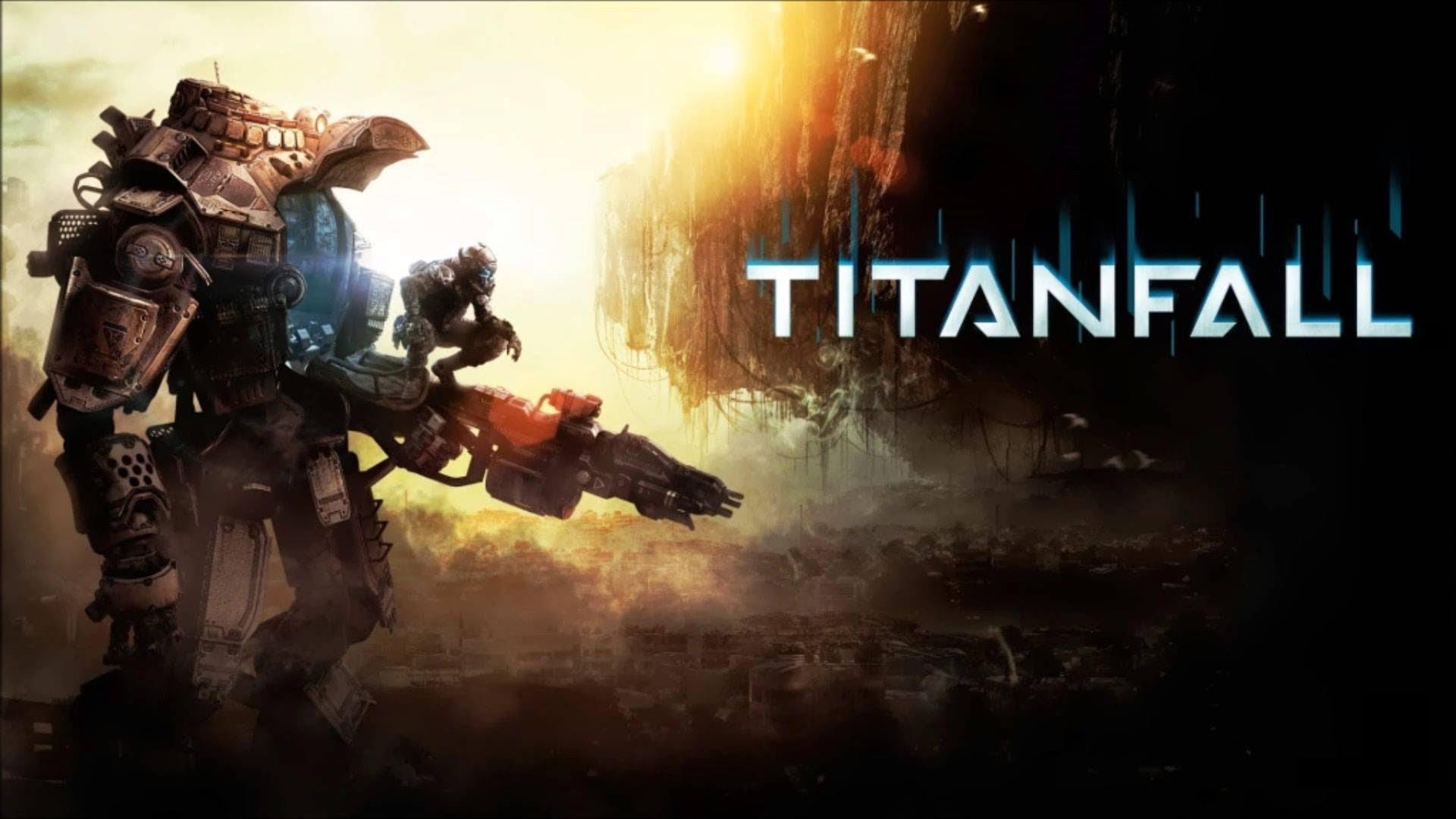
I am Titan's favourite sidearm.

I am Titan’s favourite sidearm.

Titanfall is, at its most basic, a 6 vs. 6 team based first person shooter.

We play as a Pilot, a free-running foot soldier. We’re equipped with a primary weapon, secondary weapon, and an anti-Titan weapon, along with some other offensive and defensive tools, and perks. We’re also equipped with a jet-pack that allows us to double-jump, wall run and scale walls, all very fluid-like.

As a Pilot, we also have a handy companion in the Titan, an agile mech-style exoskeleton. The Titans are deployed into the battlefield from the sky at the request of their Pilot. The deployment is timer based, and the timer can be reduced through the in-game actions of the Pilot through kills. As the Pilot, we also have the ability to ride on friendly Titans, or jump on the backs of enemy Titans and shoot away at their core components. The Pilot’s class and load-out is fully customizable before the match starts.

The Titans can be AI controlled, either through a “guard” or “follow” command, or they can be player controlled once the Pilot steps inside. Pilots can get out whenever they see fit. It’s all very quick and seamless. When piloting the Titan, however, if the Titan is doomed, the Pilot can eject 100’s of feet in the air to escape the blast, and live to continue the fight. The Titan’s are equipped with an anti-personnel weapon, and anti-Titan weapon, as well as some defensive tools and core power-ups. The Titans are not as fast as their Pilot counterpart, but they’re not sluggish either. There are 3 classes of Titan ranging in size, speed and armour, and their load-out is also fully customizable before the match starts.

The battlefield is also scattered with AI soldiers running around, designed as human player competition and support. En masse, they’re a distraction.

Striving to push the genre forward, Titanfall has a nifty feature in Burn Cards. As a Pilot, we earn these disposable game-changers through unlocked challenged and purchases through the in-game store, which, thankfully, does not support real currency. These Burn Cards can be equipped in 3’s and are used once per life, then they’re gone, hence the name. Some allow for added agility to the Pilot, offensive possibilities for the Titan and Pilot alike, such as modified or boosted weapons, unlimited grenades, and some allow for more defensive perks, like upgraded mini-map, unlimited invisibility, or x-ray vision.

The gameplay itself is very fast paced, and a blast to take part in. With the Pilot’s ability to combine wall-running, gliding along ziplines, scaling walls, and vaulting over obstacles, it’s easy to lose track of the team you were following. Add in the distraction of the AI soldiers with you, or against, and Titans strolling through, it can be a lot to take in. I repeat, it’s very fun.

That being said, going back to my introductory statement – only with the addition of the 3 DLC packs (9 maps) and the newly added Frontier Defence (Co-op Horde mode), is Titanfall feeling like a complete title.

Out of the box we got 15 maps, and 5 game modes. In Attrition, teams compete for the greatest kill count, bots included. Pilot Hunter is similar to Attrition, but only Pilot kills count. Hardpoint Domination is a Capture and Defend objective-based mode. Last Titan Standing has everyone begin the match in a Titan; the team with the last Titan standing wins the round. And Capture the Flag – self explanatory.

The game also has a “campaign”, if you can call it that. There are two factions, Militia and IMC, obviously at odds with each other. In the campaign, we choose a faction and play through a series of maps and gameplay modes. Still online, still 6 vs. 6. The only difference is that each match has a few single-player story elements, such as cinematic sequences, and some narrator dialogue. Some key characters carry over from mission to mission to supplement the story.

Mind, THAT campaign is as it was in March. Now with the DLC out, the campaign is an afterthought. Factions and maps are randomly chosen when you enter the mode.
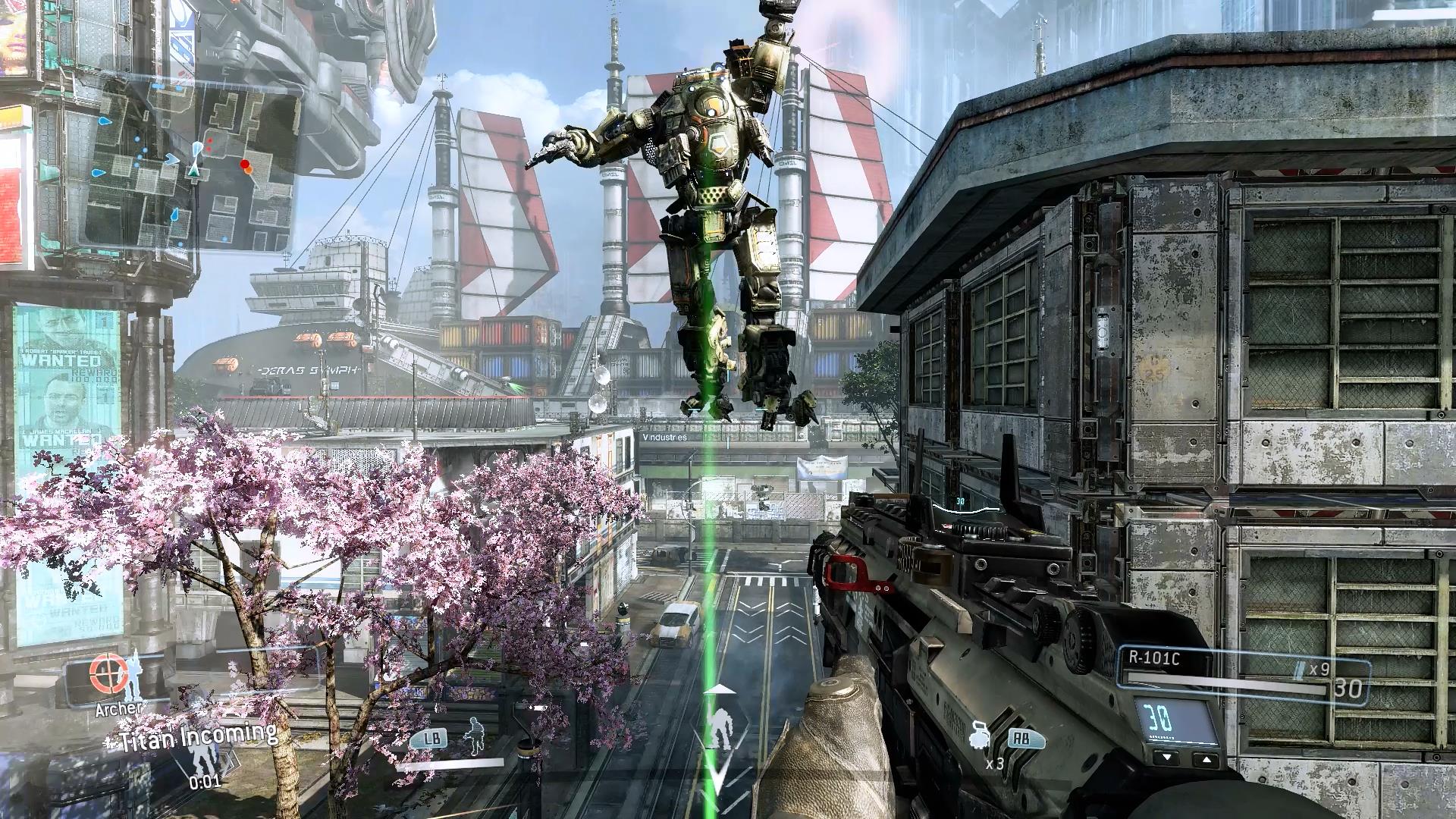
Just Call of Duty with Mechs

Just Call of Duty with Mechs

Graphically the game holds its own as a first generation Xbox One title. It should be considered as launch title quality, albeit 5 months late. The game is a minor step up on the previous generation’s hardware; however, as it runs at a very quick pace, some forgiveness can be given. Standard game textures, and static lighting are its biggest detractors, along with static maps with no level of destruction. Like the team’s previous Call of Duty games, there’s a lot of artifacts and debris that flies around, but that’s only for aesthetics.

Following the release of the game, I had a lot more complaints that I do not still share today. To be honest, I don’t gravitate towards online multiplayer shooters. I prefer to stay content in the single-player package. This game strove to change me, to drive me out of the comfort zone. And for the most part it succeeded. I very much enjoy the Titanfall package available today with its DLC maps and additional game modes, and co-op element. Today the game feels like a complete package.

I would not consider Titanfall to be the “next big thing” that EA and Microsoft were selling, but it does invigorate the genre. Watching the Titan’s blast from space into the atmosphere and come crashing down to the Earth is, and will remain a thrill every time. The game is fresh and innovative in its parkour elements that recent shooters are only now mimicking.

The game is also exciting and very chaotic at times, especially when multiple Titans converge on one crossroad. The AI soldiers populating the map definitely give the game the feeling that a larger battle is happening, even though the AI themselves will slow you down no more than a bug does a bug-zapper.

Worthy of the praise, but it’s more a step forward, than a leap.

For those who like FPS’s, parkour, jet-packs, and getting stepped on by very large robots.
Also available on the XBox 360 (Ported by different Dev) and the PC.

Notable Achievements:

Death From above (Killed 5 enemies by dropping a Titan on them) – 15G
Look Around (Snapped the necks of 10 Pilots) 10G

Procrastinate Review: Darksiders II

My Procrastinated, Comparative Review of Darksiders II

Intended to stick with the short-form reviews for a bit, but after stumbling through padded mishmash that is Darksiders II, I had a few things to fuss about, so this review is a little dense, for consistency sake.

Darksiders II’s story is parallel to the events of the first game. If you’ll recall, in Darksiders I, War, one of the Four Horsemen accidently started the apocalypse early, and dooms all of Earth’s population, and is then brought to justice for his crimes. The sequel sees us playing as his brother, Death, who believes War was tricked into committing his crimes seeks to redeem his brother’s wrongdoings and wishes to fix everything and restore humanity. The story from that part continues along its convoluted way, meeting new characters and foes along the way, as Death futilely attempts to reach his end goal. We slowly learn the entire land is actually being consumed by darkness and Corruption, and the plan of saving our Brother starts to fade, and instead we must save everyone else, and maybe Humanity someday. One day? Who cares?

#Dark

#Dark

The Darksiders franchise is really just the darkest timeline of Zelda. The story follows our emo protagonist through a steady stream of dungeons, and open lands for exploring; each new area presenting us with a new gameplay mechanic. The dungeons themselves are interactive puzzles, requiring the player to think their way through a series of levers, doors, elevators, and portals, with some wall-running and scaling, all the while fighting a slew of increasingly difficult enemies.

The enemies and dungeons present us with a new RPG and loot mechanic, as the player is bestowed an abundance of weapons, gear, and items along our forays into combat. All the weapons have attributes such as strength, and damage, and resistance, and defense, and stop me if this sounds redundant. You gain experience to level up our character as well, awarding the player new magic attacks.

Traveling the large lands of Darksiders II is made effortless with the addition of our horse, Despair. Additionally, we have the ability to fast travel to the different city hubs we frequent or to return to the dungeons once visited. This is where my first complaints started arising.

Gripes:

We have a horse named Despair (keeping with the #dark theme) to ride around on, in the open vast lands between dungeons, great. But that’s all the horse is good for, just traveling. Once you’ve reached your destination, you can fast travel back as much as you’d like. You can fast travel out of the dungeon half-way through, and return to the exact point you left off from, if you were so inclined. The horse is a nice addition at first, but is really underutilised save for one boss fight. How come there aren’t other speedy enemies that I need the horse to ride alongside? I have 21 inventory slots per style of gear for my character. Including my two weapons, armor and amulets, that’s 147 slots for disposable gear. How come I couldn’t add gear to my horse? I got to the point where I turned on the ‘auto-collect’ for my gear and didn’t even look at comparisons until after I was done the dungeon, and then sold off the rest before starting the next area.

I clocked the main story at 20 hours to completion. 20 hours doesn’t sound like a lot of invested time, and you’d be right, but it certainly felt like a long time. The story and quests are just so thin, but padded for the sake of game time; always collecting items of three to progress. There are some side quests to waste time, and a challenging labyrinth quest that required collectibles to navigate.

I felt the story to be unnecessarily puzzling, and Death’s true goals to be lost along the way as he was sent from one meaningless task to the next before finally defeating the land’s Corruption boss in the end, and making the ultimate decision to save his brother and humanity, and sacrifice his kin. I was disappointed that the game ended in another cliff-hanger, similar to its predecessor, and that I did not get to meet up with War at all. The game’s final moments promise more, but we’ve heard that before.

Executed Well:

The art and design is gorgeous. Some of the landscapes were breathtaking, especially in the Land of the Dead: its tormented lands, and scarred earth. And the character, Death, is a design deserving applaud.

The dungeons themselves were very satisfying, just the right amount of puzzle that required thought. The plat-forming and gameplay elements for traversal, like the Death-Grip (grappling hook), were used well, and frequently, with each new area adding another element for navigation. Constant waves of enemies, increasing in difficulty, were a pleasure too. Death with the dual-scythes always felt like a bad-ass.

The bosses were imaginative, and like its blatant inspiration, Zelda, always required that one clever element to assist with defeating them. My one gripe would be the game’s paramount boss featured heavily in the trailers: the boss that seemed ripped out of Shadow of the Colossus. The boss was the only example of an enemy that was large enough that we had to climb on it and attack certain key weak points. My complaints are a) completely under-utilized large-area boss fight which proved to be the only true use of the horse. Obviously would have appreciated a few more instances of this type of battle. And b) this climactic type of battle was easily the ¼ mark of the game’s story. To have this boss featured heavily in the trailers, and expired so soon is wickedness.

Opinion:

The game is sound. Like its predecessor, it has an interesting tale, with some epic fight scenes, relegated to cut-scenes, but I digress. The art, character design, and scenery are marvelous, and dungeon crawling is very satisfying. The game, however, suffers from some excess filler, cushioning the thin story with unfortunate fetch-style quests, and leaves us in the end wanting what we ultimately wanted going in: meeting up with War, as two brothers of the Apocalypse.

Notable Achievements:
Respec Yourself (Your first respect) – 20G
Diamond Geezertron (Unlock the final skill in either skill tree) – 10G

Procrastinate Review: Remember Me

My Procrastinated Comparative Review of Remember Me

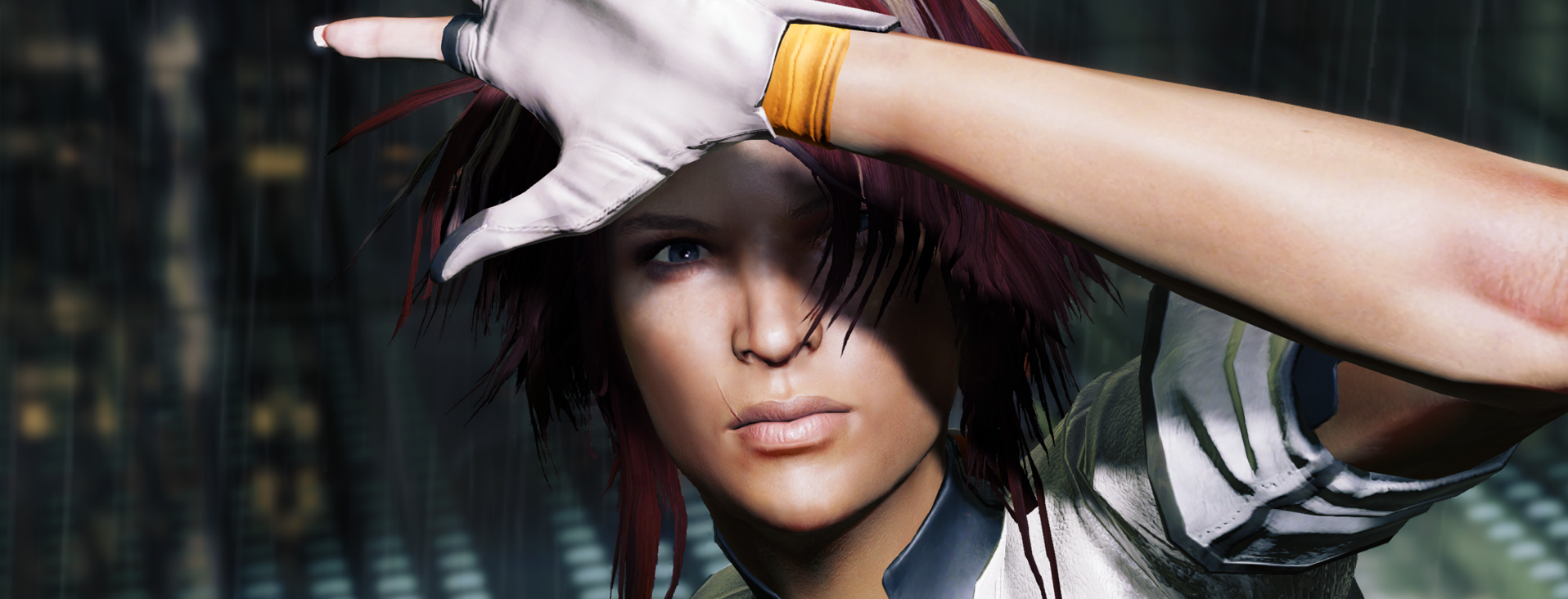
Going back to the shorter form reviews for a bit, so that I can pump a few of them out to catch up, but it’s also because I’m going to be reviewing Remember Me, which I forgot to review when I played it 4 months ago. I bought this game because the cover art had a splendid shapely bum on it, and that’s the most memorable part of the game.

Really?

Really?

The game Remember Me is an action adventure game based in a futuristic Paris, Neo-Paris (literally), and revolves around our protagonist, Nilin, who is a part of a rebel group called the Errorists, and their attempts to bring down the Memorize Corporation. The Memorize Corporation has invented a chip, Sensen, which allows the civilians of Neo-Paris to have the ability to upload and share their memories on Youtube probably, as well as remove unhappy or unpleasant memories. This gives Memorize an immense degree of control over the populace on Neo-Paris, as they have established a surveillance state.

Nilin is a memory hunter, and has the gift of stealing memories, called Remembranes, and remixing memories. This is by far, the most interesting mechanic of the game, where you enter the memory of key characters in the story, and remix key parts of them so that they remember the events differently. A shame this mechanic is only used a hand-full of times.

The game’s combat mechanic is solid, and has a unique build-your-own combos system, and the game art and level design is visually appealing, allowing for some straight-forward platforming sequences, but is linear in design. The game also has its share of game breaking bugs, revolving around the enemy’s wave based fighting sequences; if you take out the enemies in the wrong order and initiate a cut-scene, the game will prevent you from proceeding to the next checkpoint. Restart Checkpoint. Break Controller.

Overall, the game has an interesting story, art and level details look great, and has solid gameplay, but the bugs, uninspired wave based enemy interactions, and agonizing terminology related to ‘memories’ prove to be this games undoing.

Notable Achievements:

God is a DJ (Find and activate all interactions in all memory remixes) – 40G

Serve the Servant (Beat 20 robot enemies) – 20G