IDL FEATURE – Day 1: FPS – Call Of Duty 4: Modern Warfare

First category of the next two weeks is the First Person Shooters. The FPS genre is probably the most popular genre, if not the most prolific. Every year we get dozens of new titles, each competing for popularity. The FPS genre is also one of the oldest in gaming history, with Doom, and Quake, and Wolfenstein 3D. At points it’s been funny, with the Duke Nukem’s, or gorgeous, with the Crysis’i. The genre has been used to tell many stories, from war in the World War 1 and 2 days, battles with demons on Mars, cities under water or in the sky, or used to tell no story at all, but simply made to press the technology borders farther, and just have people compete in an arena till their death, like Unreal Tournament.

For the First Person Shooter category, I’ve chosen 3 games: Call of Duty: Modern Warfare 1, Halo: Reach, and RAGE.

Honorable mentions to: Far Cry 3, and Homefront.


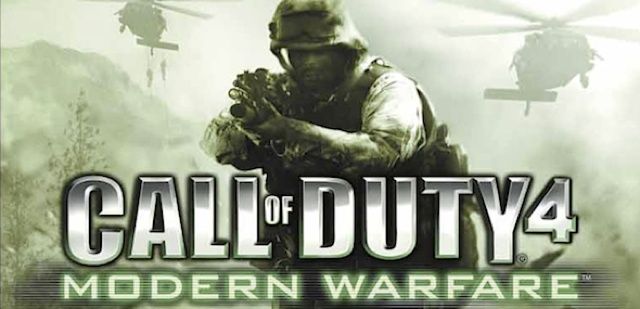
Day 1 – Call of Duty 4: Modern Warfare

Developer: Infinity Ward
Publisher: Activision

Looking back now, one of the most well-known franchises, and most popular today, are the Call of Duty games, but it started over a decade ago with their World War 1 and 2 games. Call of Duty popularized the FPS genre on the PC and console by dropping us in a war environment, in the shoes of a soldier and asked us to fight in a war. The game glorified war, but showed the true nature and harsh realities behind it. We lost comrades left right and center as we fought our way through each battle, and it didn’t give us a lot of time to grieve.

Call of Duty became most well-known for its single player campaign, story-telling and scripted events. Head long into each firefight, every instance of the game was a little over the top, and urged the player to press forward, be it your comrades who sit beside you until you advance, or the enemies up ahead flushing you out with well-placed grenades. You never stop moving.

Year after year of the World War 1 and 2 games, the Call of Duty franchise made a sudden, if not relieving, jump to the modern era, with the introduction of COD 4: Modern Warfare. This is also the game that jumped into the new generation of consoles, with a spiffy new engine.

This game changed the landscape of FPS, and is still revered as one of the most popular Call of Duty games to date, and sparking the ignition to what is now the most popular annual franchise.

call_of_duty_4_modern_warfare_640px

The game told a great story, following multiple leads, each connected, as they trotted the globe fighting terrorism. The story was kept compact though, a small group making big changes, and dragging the player through it at a ferocious pace.

The game starts as we try to escape a huge freighter ship that is sinking in the ocean, slows everything down and puts us in the shoes and gullies suit of a sniper in Chernobyl, and then ramps it back up without apologizing.

The mechanics of the game were its best attributes. The shooting mechanic was so precise and so fulfilling. The shots felt like they had real impact, the guns so realistically designed. And getting shot also felt punishing, the screen getting covered with blood. The enemies’ deaths felt natural as well. A mainstay of the franchise, the deaths were animated, and not delegated to a physics engine, making the bodies perform unrealistic ragdoll tumbling maneuvers.

The game also reinvigorated the online FPS world, and this is now the most popular feature of the annual versions. People don’t even play the single player campaign. These are terrible people though. The way the online mode was designed encouraged continuous play. You earned unlocks and new guns the more you played, through XP, and you didn’t even need to do well. The game rewarded time and dedication. And then if/when you reached the cap level, you could prestige to Rank 2, and do it all over again, sacrificing all your unlocks and starting from scratch. Why, to show dedication and time, of course.

Modern Warfare, and the Infinity Ward team behind it designed every facet of the game to perfection, and it can be argued that the eight Call of Duty games that have since followed, and the sheer popularity of the annualized franchise, is thanks to the success of this title.

Tomorrow – HALO: Reach –>

-iRogan

WHAT i’M PLAYING/iReview – Massive Chalice

Massive Chalice, a Double Fine Production, on a long enough timeline, is a lot like Game of Thrones, and that’s why it’s a lot of fun to play, and this is my review in progress.

Title: Massive Chalice
Developer: Double Fine Productions
Platform: Linux, Mac, Windows, Xbox One
Publisher: Double Fine Productions
Reviewed on: Xbox One

photo-originalSimply enough, it starts you out with not a lot of explanation. Two narrators located inside a chalice speak to you about the world we’re in and the impending doom. We then pick our 5 Vanguard families and are shown our partitioned island and sent on our merry way.

The goal of the game is to build Keeps on the islands, among other buildings, and fight off the encroaching doom through individual battles with the enemy, while we wait for the Chalice to power up. That process takes 301 years. The battles come on multiple fronts and only one side can be defended at a time. Battles are also 10-20 years apart.

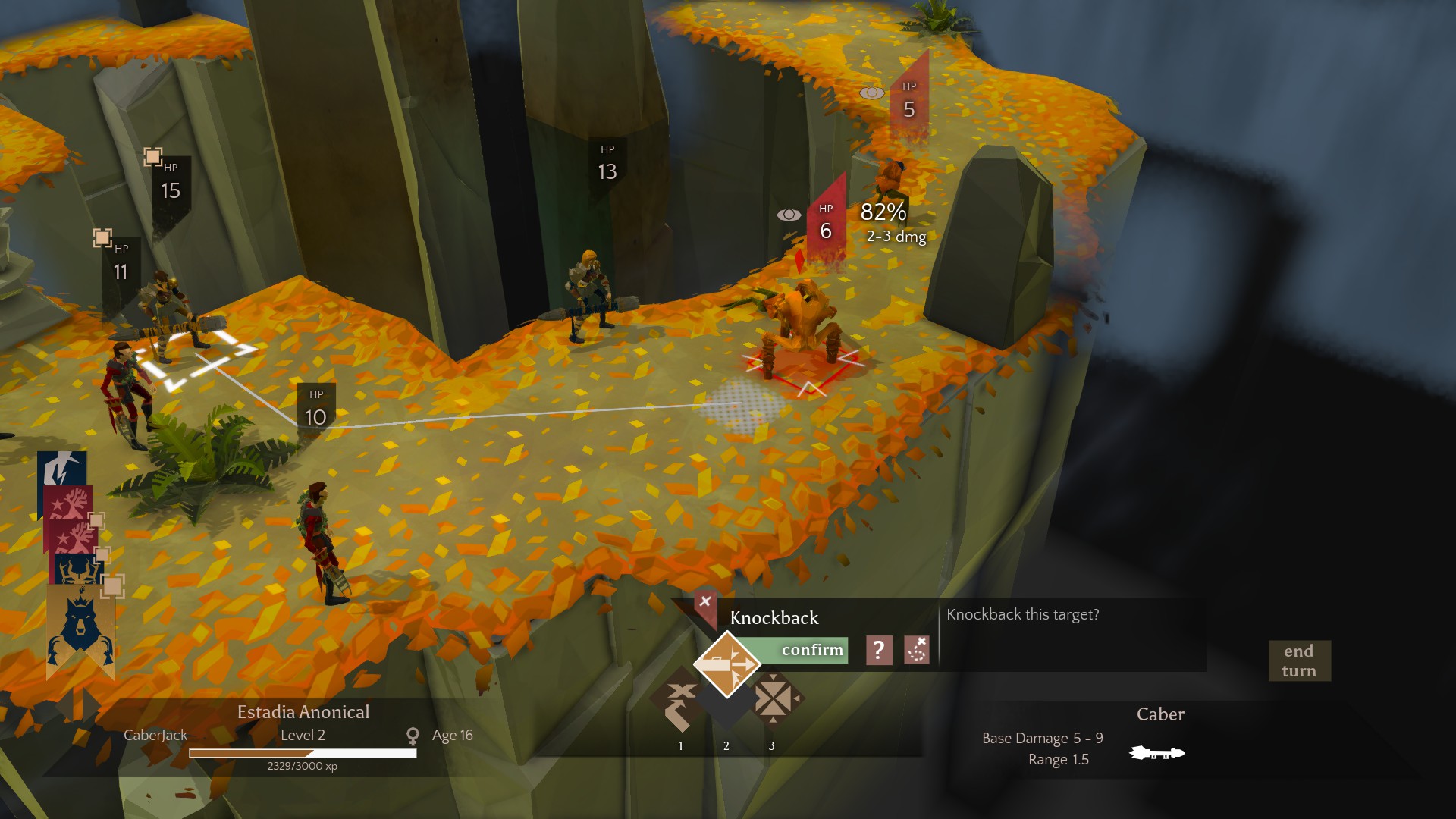
The gameplay of the battles is a lot like X-Com. We choose our 5 warriors and send them into the blind battlefield, and we must explore the terrain and remove the enemies in our path. Once you start the mission, you have to see it through to his conclusion, or die trying. It’s a turn-based strategy game, and easy enough to pick-up, but difficult to pull off each battle successfully. I would suggest you utilize the save function frequently.

Each Vanguard type as two skill points per turn, that can be spent on moving or attacking. Movement is restricted to a zone – per turn – and attacking is by line of site, and accuracy depends a lot on distance. You have your 5 characters in the mission to move around, and then it’s the enemy’s turn to do their thing, rinse and repeat until you’re dead or they’re dead.

MASSIVE CHALICE IS MORE MELEE BATTLES THAN THE FIREFIGHTS IN XCOM

Outside the battles is where the game is interesting. Each Keep built take approx 10-12 years, and you have to assign a Regent, and their partner. The goal is to setup strong bloodlines that will produce many children to increase your Vanguard army for future battles, and generations to come.

MASSIVE-CHALICE-screen-02

I found the bloodlines portion of the game to be the most interesting part, battles second. Aligning families, assigning regents and marrying them to other strong lines to produce kids year after year. And because the timeline of the game is so long, you’ll see whole generations come and go, and watch the regent’s kids take over, and then their kids. The purpose is to marry well, to keep the bloodlines going throughout the story of the game as strengths and perks get passed down. It reminded me of Game of Thrones, as the many families vie for the crown. I had a 12 year old regent married to the daughter of another strong family at one point, and had to wait for them to come of age. Boy King, right?

My first play-through didn’t go as well, as I played it uninterrupted, without saving. I did last for 150 years, idly watching, as my towers crumbled and lands fell to the darkness. But it was a learning expedition mainly. I vow to do much better the 2nd time through.

-iRogan

iReview – THE CREW – We’ve Got A Secret Weapon. God is Our Co-Pilot

When you’ve been driving around the United States for a couple hours, visiting all the 242 country landmarks, do you get a sense of overwhelming joy, wonder, or fatigue?

Title: The Crew
Developer: Ivory Tower
Platform: PC, PS4, Xbox 360, Xbox One
Publisher: Ubisoft
Reviewed on: Xbox One

The Crew in one word: expansive. On its own, it’s a decent racer, featuring a wide array of vehicles from many different brands and classes. It also displays a huge map of a contiguous United States. The world is massive, open, and persistent, for both racing, and free-roaming. As a multiplayer racer, it enjoys its always-online connection, reinforcing the idea that this game should not be played alone.


When the game Fuel was released, the map was colossal. One could probably claim that it was too big. It was mountainous and rocky and barren of anything interesting. Hardly any roads and terrain that wasn’t really fun to drive on. Forza Horizon 2 was immense as well, featuring highways, and forests, and farming fields, and a scaled down version of some of the popular European destinations. Test Drive Unlimited 2 brought us to Hawaii and Ibiza, full coverage of the two islands, landscape and cities.
TheCrew_2014-07-25_15-41-49-58

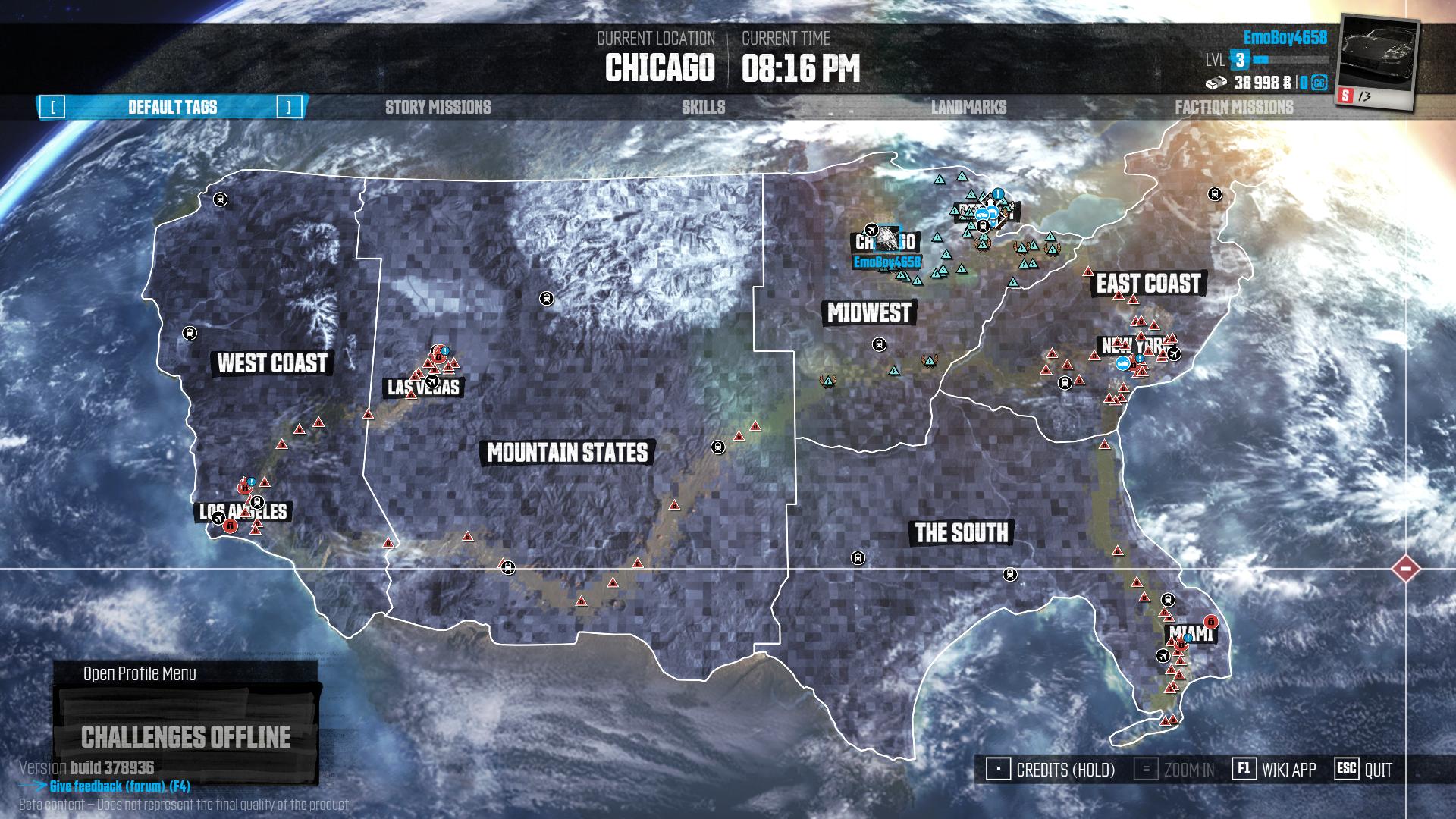
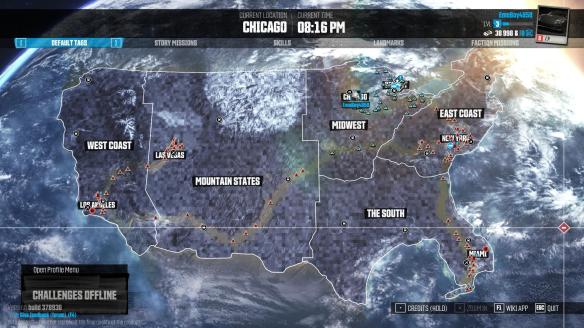
The Crew brings these similar concepts, however this time, of an authentic re-creation of the major cities across the United States. The map is broken up into 5 regions: The Midwest, East Coast, Mountain States, West Coast and The South. Each region has 1-2 main cities, various other large cities, and then 30 odd, smaller cities and towns spread out. All the major US landmarks are view-able, and attainable as collectibles.

The game map takes approximately 45 minutes, in real world time, to cross from coast to coast, depending on your vehicle of choice. Some of the races themselves may even net you a 2-3 hours dedicated game session, as they take you on a tour of the US.

“REINFORCING THE IDEA THAT THIS GAME SHOULD NOT BE PLAYED ALONE”

The map is filled with landmarks to visit, hidden busted up car parts to collect, satellite towers to unlock, and pedestrians and wildlife aplenty to swerve around, as you weave in and out of oncoming traffic. From coast to coast, the world is also littered with challenges. These are little mini games to help unlock upgrades for your respective vehicles: Drive fast while on the road, drive through the marked gates, slalom, jump distance, etc. Each has a bronze, silver, gold and platinum trophy and unlocks car parts. And each of these challenges just requires the vehicle to drive through the marked zone to initiate. Then the only loading is when you equip the part after it’s won. The seamlessness is appreciated.

Each region of the map is the home to its specific class of car, and these are unlocked as we progress through the story. Each major city has its own Garage, Tuner, and Showroom for buying new cars.


The Story of The Crew is commonplace to any typical driving game or driving movie: a family member is killed, and you need to infiltrate the ranks of the rival street gang to ruin their day and potentially get revenge for your family. It’s tired and predictable. Need For Speed in a nutshell.

Our protagonist, Alex Taylor, looks like Morgan Freeman. He’s a street racer, as is our older brother, Dayton, big surprise. Our brother is the leader of the 5-10 motor club. I guess street racers don’t hold down real jobs anymore. After winning a race, hanging out by our cars, our brother is shot by an eager up-and-comer, wanting to move up the ranks. As our brother dies in our arms, in the middle of the street, the mysterious driver gets away, and the police arrive, suspecting us of the killing, and we get put in jail for 5 years by a crooked FBI agent.

“THINK OF THE FACT THAT THERE’S NOT ONE STATE IN THE 50 THAT HAS THE DEATH PENALTY FOR SPEEDING…”

After 5 years, we get released by another FBI agent, a new face, incorruptible probably. She knows that we were put away wrongly, and has given us the task of tracking down our brother’s killer, the new leader of the 5-10 motor club and the crooked FBI agent, in return for our freedom. All we have to do is infiltrate the ranks, and work our way up through the 5-10 motor club, and get a few permanent tattoos along the way. The deal is that we get our brother’s killer; she gets the crooked FBI agent. Everyone is happy.

What follows is about a 20 hour campaign, working our way through the 5-10 ranks through a series of races, starting in the Midwest, in Detroit, progressing down to The Big Apple, across through The South, all the way to The West Coast, Los Angeles. We start with a functioning car, upgrade it for off-road Dirt races, then Raid class, advance onto Perf, then Street, and finally Circuit. Race types include: A to B style races, checkpoint, lapped races, and even some collection style races.

We meet many different allies, and bad guys along the way, and have to out-run the cops, to remind us that street racing is illegal. But in the end, we finally meet up with our brother’s killer, force him to crash his car, and let the police take him down.


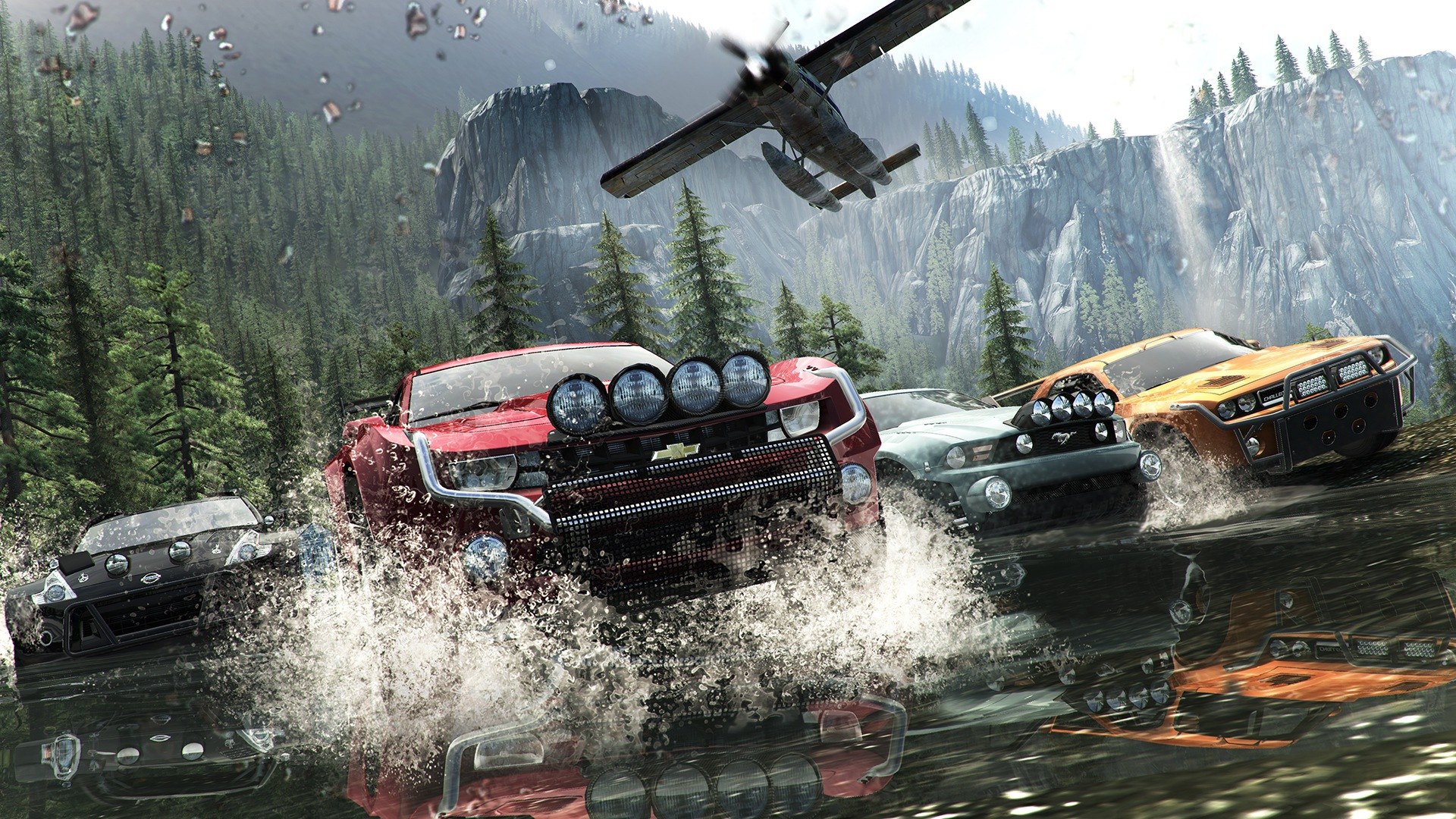
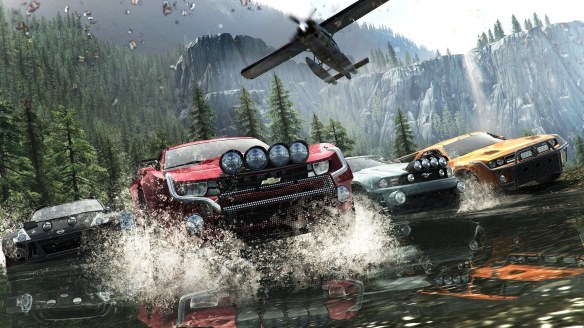
The visuals of the game are impressive, considering the scope of the game. Cars are detailed inside and out, and the map is alive with pedestrians and civilian cars in the city, and many different kinds of wildlife outside. Luckily a lot of the environment is destructible. The one downside of Test Drive Unlimited 2 was its indestructible fences and lamp posts. Luckily The Crew fixed this, as all poles and fences can be driven through without much friction. As mentioned already, the map is large and very diverse, with a full day and night cycle, so it is a joy to drive across the large expanse of country side.
The-CREW_screen_Yosemite_e3_2014pm_147816

The Tuner shop features a very robust car detailing and upgrades section. This area will allow you to modify the car parts currently assigned, as well as style, colour, and body mods to each. These are all purchased with in-game currency which is earned through races and challenges.

All this, and the game functions with very minimal loading, which is a blessing. When accessing the map, the zoom feature allows you a view right down on top of your car and shows a real-time view of the streets, down to the minor details of any recent tread marks left in your wake, and any crew member who happens to be doing donuts around you. The map also allows the player to fast travel to anywhere they’ve already been, and with only seconds of loading.

That said, the frustrations start to pop up as we try to work within the menu structures. It’s not always readily apparent where to find information about factions, or challenges, or what winning Reputation even means. And trying to access the in-game start menu is all through a cell phone that houses the games settings, vehicle changer, and radio. All of this, while driving? Don’t text and drive kids!


Lastly, the multiplayer and co-op components are what make The Crew worth picking up. Test Drive Unlimited 2, and to an extent, the Forza Horizons twins, introduced us to a social, persistent driving game, where you could road trip with friends. The Crew takes these ideas and puts some weight behind them.

Your crew supports up to 4 drivers, including you, and with these friends, you can enjoy the full campaign, as well as PvP events. The co-op crew functionality includes a shared waypoint indicator for meet-ups, and everyone will be able to participate in campaign events and faction missions. You can also see your friend’s location on the map, and on the horizon. Only downside is you can’t challenge your friends to any spontaneous point-to-point races like some other online racers.

thecrew

The shared multiplayer world hosts 5 factions. You choose one, and all faction races you take part in will benefit the overall community experience handed out daily. Sort of like a global competition. Faction choice can be changed at will, but not constantly, as there is a delay before switching again.

“-HOW LONG BEFORE WE STOP?
-EIGHT HOURS!”

The multiplayer also supports PvP free-for-all and crew vs crew. The online community, sadly, is lacking, so it might be difficult to find races consistently.

All the campaign races, challenges, and faction events can be replayed endlessly to get a better ratings and trophies. Once the player reaches the level cap of 50, the platinum trophy is unlocked, and this will provide huge boosts to your car parts.


Overall, the crew is a worthy driving game contender. Its map is huge, diverse, and robust with distractions (last bit a staple with all Ubisoft games). It’s satisfying as a racer, if not a little frustrating sometimes with its forceful ground magnets ensuring your vehicle is always right side up, to the sacrifice of any semblance of control, on occasion. Challenge menus, settings, and map quirks aside, the co-op element make up for the shortcomings, and ensures that any friends are welcome to come along for the ride.

“For those who like driving from the Pacific Ocean to the Atlantic in 45 minutes, near misses with wildlife, or for those who thought that Battlefield Hardline’s story would have been better served in a driving game. Bonus: for those who like Gordon Freeman.”


Achievements aplenty, but these are mainly collectibles. Finding all the landmarks, hidden cars, or getting gold on the 500 skill challenges. Drive forever in one car? Blegh.

Give me those multi-hour races, test-driving expensive cars, or breaking sound barriers on the Salt Flats. Thanks.

Notable Achievements
Coast to Coast (Complete the Faction Mission Coast to Coast in a Crew (2-4players)) – 15G
Salt Rocket (Achieve a speed of over 236 mph on the Bonneville Salt Flats) – 15G
-iRogan
iReview – BADLAND GOTY Edition – Get Squished

It’s that kind of game that just scrolls from left to right and plays for you, while you try to avoid obstacles. Like Flappy Bird. Only deadlier.

Title: BADLAND Game of the Year Edition
Developer: Frogmind
Platform: Mobile, Windows, PS3, PS4, Vita, WiiU, Xbox One
Publisher: Flogmind
Reviewed on: Xbox One

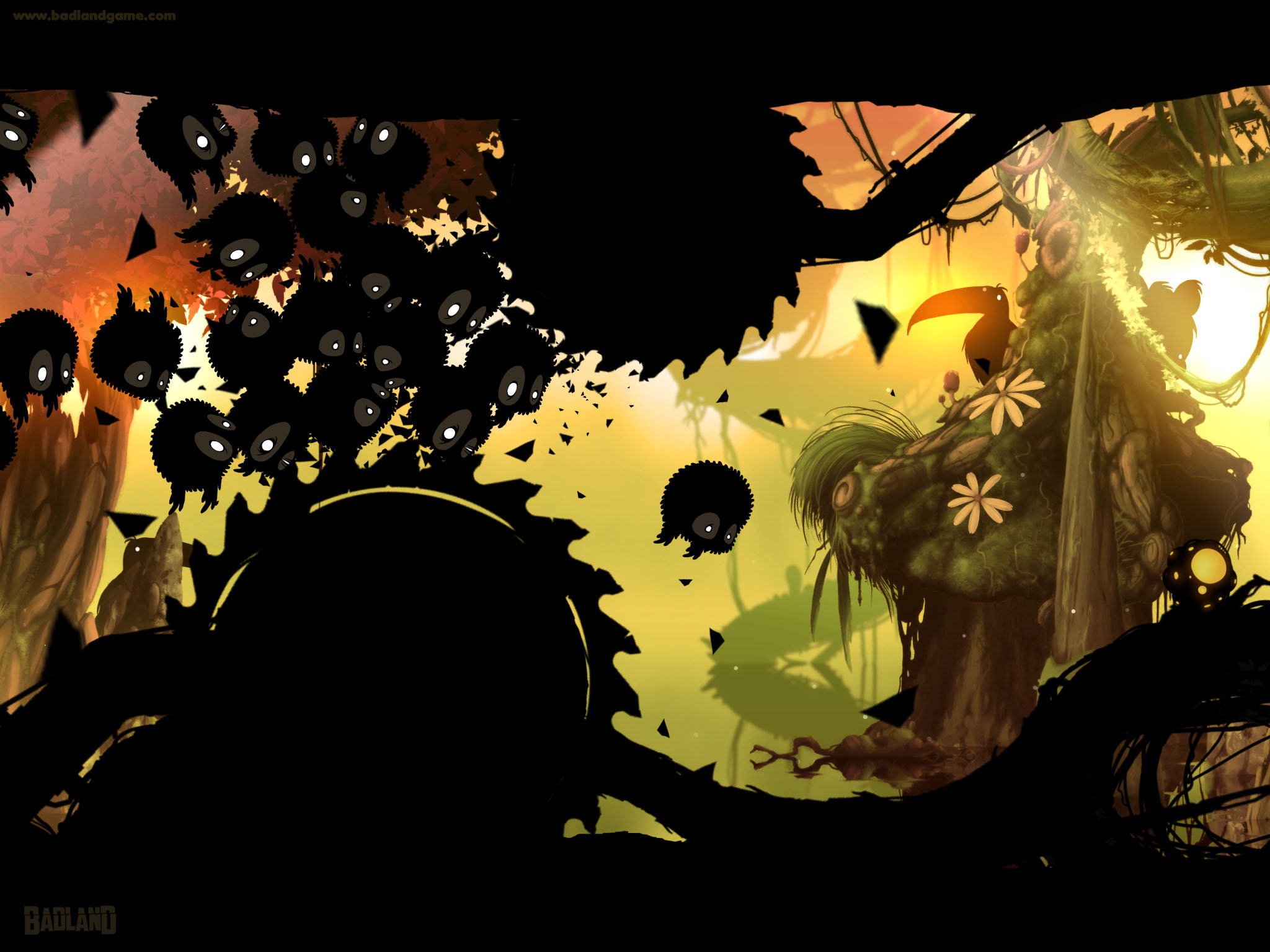
BADLAND starts off straightforward enough: you play a little flappy, fluffy hedgehog-like creature with small feeble arms/wings, attempting to navigate through this left-to-right side-scrolling world. Like Flappy Bird, where you need to flutter your way through the stage, only if you hit anything, or the ground, you don’t necessarily die immediately.


The game plays akin to Limbo, as the stages are silhouette in design, with background level design that will barely even register, and ominous, atmospheric music in the backdrop.

The goal of each stage is to get to the end, which is a large vacuum tube. There is no story. The stage itself is the main obstacle, as it moves left-to-right, and it may eventually push you off the screen, ending that run, if you get snagged. The levels, except for the speed runs (needing to be completed in one life), will have checkpoints if you do happen to die.

“AND YOU WILL DIE. LOTS.”

As a physics platforming puzzle game, aside from the navigation alone, with the constant threat of the left hand side of the screen, there are spiky plants, lasers, bombs, and blades all trying to ruin us. As with other platformers, there are occasional switches. These activate walls, or turn off the blades, or switch the gravitational pull, and sometimes, these switches are on different paths. Later in the levels, portals will also be introduced.


This brings us to the main power-up: cloning. Throughout each stage, there are plenty of grab-able power-ups. The main one is the clone function, but others will increase the speed of the stage or slow it down, will make our little fluff ball tiny, or heavy and huge. Some will make us sticky to the level, or bouncy, or even turn us square. Others will make us automatically spin, continuously, as these will help us navigate through circular mazes or roll along speedy parts of the stage, so that we won’t get left behind.

What doesn't kill us, definitely reduces our numbers.

What doesn’t kill us definitely reduces our numbers.

All the power-ups are appropriate to that section of the stage, never going unused. Cloning is by far the most important though, and most impressive part of the game. As we start with one, the stage can quickly get populated upwards to 2, 5, 20, 30 of us, trying to navigate the minefield of death.

The main purpose of the cloning is not necessarily to get them all to the end of the stage – although that is, unto itself, a goal to get as many as possible – but as sacrificial fodder to get through the next section of awful. Strength in numbers, as only one lucky flappy ball needs to make it through. Some stages will involve clone puzzles, where there’ll be 4 paths, each ending in a switch that will open a door for one to make it through. Sacrifice is key in these cases.

“SO MUCH . . . NOPE”

The game really comes together in an impressive feat when you have 30+ clones on the screen, in slow-motion, getting bounced around and shot at by cannons, surrounded by spinning blades, just trying to survive, slowly watching our many, many clones explode into feathers. Even the slow-motion sound effects add to the awesome.


The game has four worlds: Day I, Day II, each made up of 40 levels, and a Daydream world, and a Doom world, each made of 10. Each level also has 3 missions. These are similar to the stars in Angry Birds. These level specific challenges mainly require getting to the end of the stage in one life, or with a specific number of clones.

Day I and Day II are split into 4 zones, 10 levels each: Dawn, Noon, Dusk, and Night. Each section displays different background art styles, introduces new power-ups, and harder puzzles. And the Daydream and Doom levels really mix it up, with modifiers to either the flappy hedgehog, or the whole stage, and increase the difficulty ten-fold. For example: some stages will have light timers or light switches.


“YOU’LL WATCH YOURSELF DIE – OR YOU’LL WATCH A LOT OF YOURSELVES DIE.” 

Each world is also available as a couch co-op mode. In co-op, there are slight modifications to the puzzles, but these are barely noticeable. Playing in co-op, the puzzles are sometimes easier, as you can play with up to 4 players. So, for example, when you start to come up upon a path split, you can communicate, instead of trying to manage 4 spinning monsters simultaneously.

Other times the stage gets complicated, as we’re bouncing off each other, crashing into walls, and losing, or getting stuck, jammed against one another in a tiny gap, and losing.

So, yes, sometimes co-op can be a hindrance. Communication and sacrifice is key, as certain parts of a stage is timing related, and it’s meant for one flappy hedgehog only. If your buddies do die, the cloning power-ups will bring them back to life.

Badland3

Lastly, there’s a couch multiplayer mode as well, which is survival of the fittest. Whoever makes it longest, through the stage, wins the most points. Again, supporting 4 players.


BADLAND is a lot of fun. It’s satisfying, and equally frustrating at times. It’s a great multiplayer platformer that doesn’t require too much brain work to figure out the puzzles, but you’ll watch yourself die – or you’ll watch a lot of yourselves die. A lot.

“For those who liked Flappy Bird, Limbo, or the Slo-Mo guys.”


Many of the achievements are completionist achievements: completing each level/world, saving clones in single-player or co-op, and completing the stage specific missions. All of these will require many, many playthroughs . . . but the secret achievements are where it’s at.

Notable Achievements:
Besserwisser (Miss 20 clone power-ups while some player is dead in coop) – 10G
Friendly Fire (Lose 500 clones in Co-op) – 10G

-iRogan

iReview – SNIPER ELITE III – Sniping is Not a Co-op Activity

I heard you like sniping snipers? Good luck.

Title: Sniper Elite III
Developer: Rebellion
Platform: Xbox One, Xbox 360, PS4, PS3, PC
Publisher: 505 Games, Rebellion
Reviewed on: Xbox One

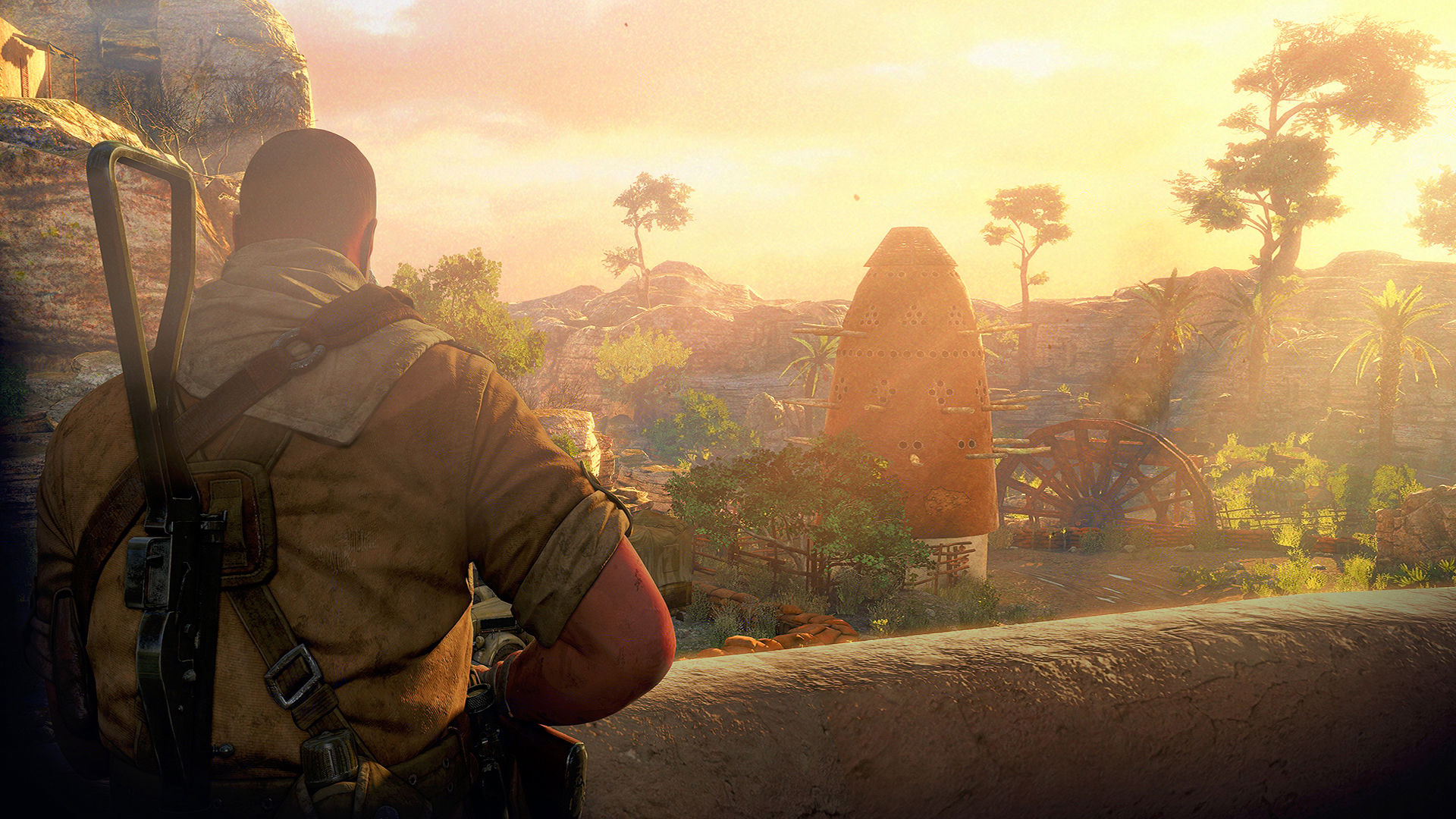
Sniper Elite III is a tactical shooter that takes place in Northern Africa, and follows our hero, Karl war-hero blockhead during a conflict in the setting of World War II. Sniper Elite III, the follow-up to Sniper Elite V2, is actually a prequel, and takes place many years BEFORE the events of its predecessor? Time Paradox if you die I guess?

“2 lines you should never cross….horizontal and vertical”

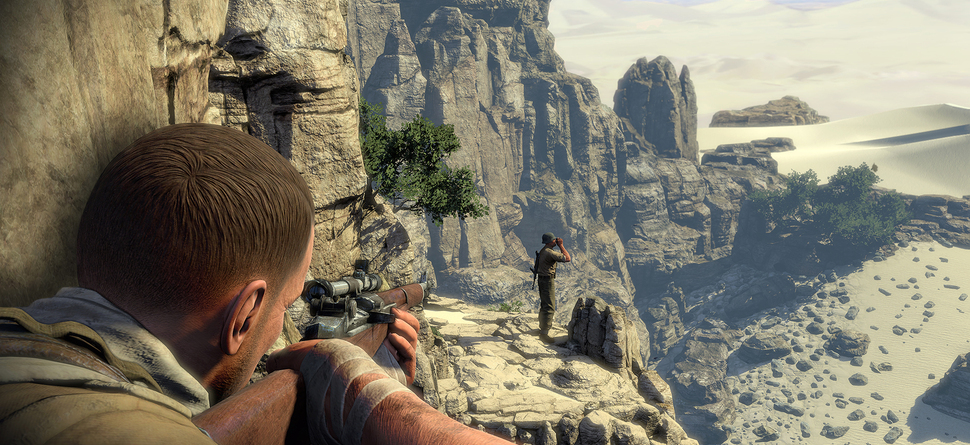
You play a sniper, if that wasn’t evident by the game’s title. The same gameplay mechanics from V2 have been retained. We’re dropped into a very large battlefield with a set of objectives, and we essentially make our way from point A to point B to point C, silently eliminated enemies along the way. The game is played as a long range shooter, where our primary weapon is the sniper rifle, and we have a handy back-up rifle and pistol if things get up close and hairy. Included in the inventory are a few grenades, bandages and health packs, mines and trip wires for defense, and rocks for distraction.

THE GAME SHOWCASES A SLOW-MOTION SEQUENCE WHENEVER THE SNIPER RIFLE IS USED

The main objective, as a sniper, is to quietly eliminate the enemies. Once a comfy nest is found, the handy binoculars can be used to tag enemies, and then using the trusty sniper rifle, can then be easily picked off one by one. Then we need to pick ourselves up and relocate before they find out where we’re shooting from. We are Jack’s ghost.

My biggest gripe with the sniping mechanic is that you can’t actually tag enemies using the sniper scope. The tagging mechanic is the sole reasoning behind burdening the player with the binoculars, fumbling with the controller to switch between the two.

“A sniper is the worst romancer, they never make the first move”

Strictly sniping everyone isn’t even necessary, but it does make things easier, if not slower. Once spotted and the alarms raised, the enemy just runs your way. All the enemies. This will give you ample opportunity to bring out the faithful assault rifle and shoot all the ducks in a row, as they waddle around the nearest corner in a neat line-up. Unless you’re achievement hunting, this is a sure way to clear the area.

They do make the sniper rifle fun. The game showcases a slow-motion sequence whenever the sniper rifle is used, as the camera follows the bullet across the map, into, and through the body cavity of our enemy, occasionally showcasing a Mortal Kombat-like X-Ray view of the body, as the bullet destroys organs and bone alike.

HUNDREDS OF ENEMIES THAT SWALLOWED MY BULLETS HAD NO IDEA OF MY PRESENCE

After a couple completed primary and secondary objectives and we’ve taken out our primary target, the end of each mission usually tapers out to a tank boss fight, and you’d better hope you still have some mines left. Sadly, nearly every mission ends this way.

Also, good luck finding any of the enemy snipers before they find you. 1. They look like the environment. 2. These sneaks spawn only when the player is in visible range, and give no warning of their presence. We’d have to be omnipotent to know their tactically pre-placed advantages. I can’t truly complain though, that would be hypocritical. The hundreds of enemies that swallowed my bullets had no idea of my presence either.

“One man’s fate comes from another man’s wait”

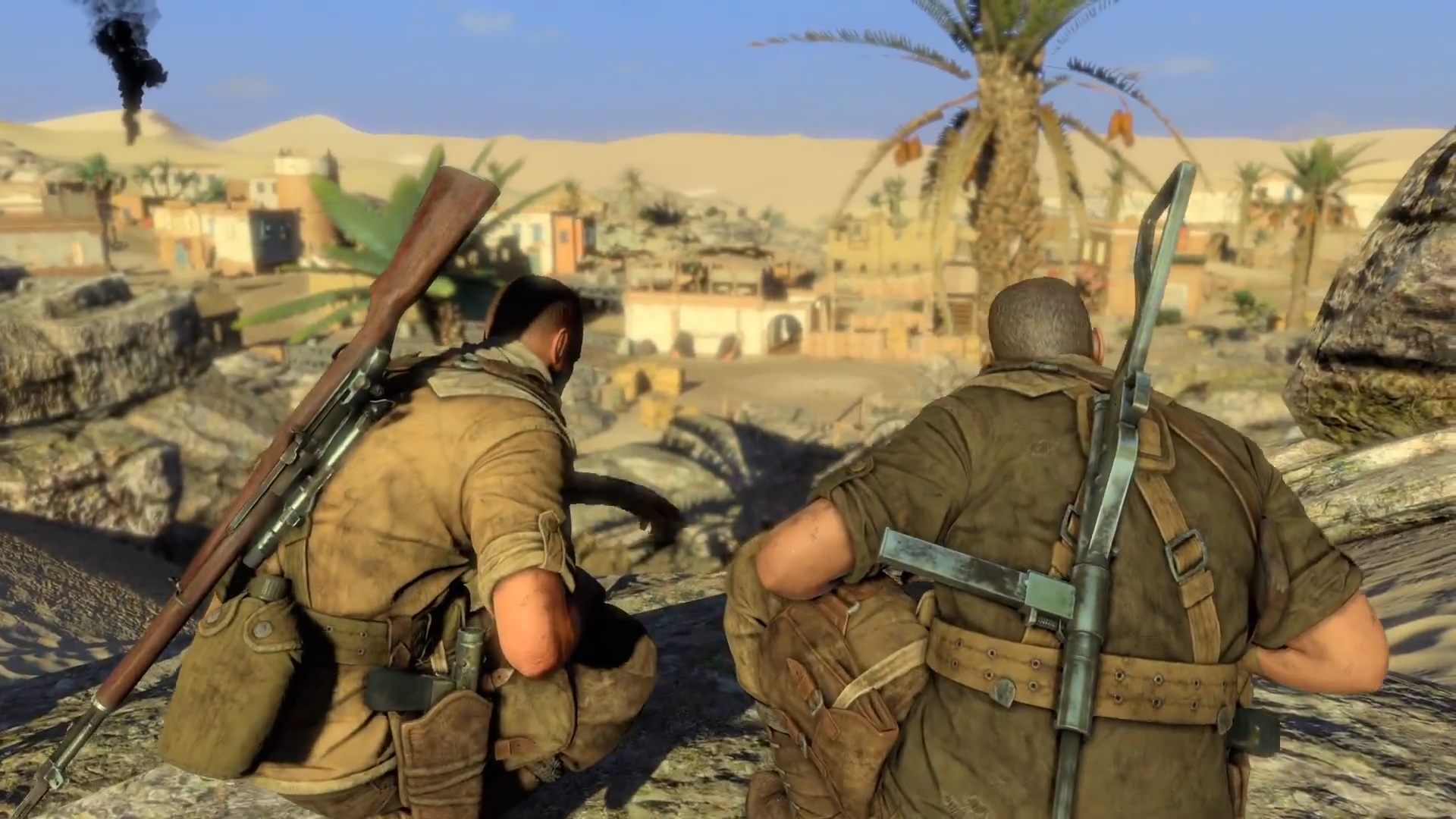
The story is forgettable, and told through illustrated cut-scenes between missions. The plot follows Karl who was sent on a mission to assassinate a high ranking general. We find plans of a secret project, and proceed through the next missions locating high value targets and more plans for a Supertank. Yay, more tanks. Predictably we find our final target and the Supertank factory, murdering everything along our path and win the day. The upside to the game is that it can be played in its entirety, in co-op. Rejoice, someone to share the pain.

I WOULD ARGUE THAT THE FASCINATION WEARS OFF AFTER ONE LEVEL

The co-op is a nice edition, but there’s no bonus for taking advantage of this feature. No co-op paths or bonus for dual sniping (not that that would even need to be a thing). All co-op is good for is getting caught by the enemy that much quicker, when your friend messes up. I don’t mess up. Not ever. I’m perfect. Segue to my short story that takes place within Sniper Elite III, and tells a tale of joy when co-op sniping.

Sniper Elite III, after the slow-motion gunshot appeal wears off, and the enemy spies your location for the umpteenth time because your co-op friend slipped up, gets very boring and tedious. Each level is loooong, and the sneakier you are, the longer it takes to complete. The game itself houses only 8 levels, but through enough grinding and trial and error, it’ll start to wear the patience thin. Each Sniper Elite level refuses to introduce any new mechanics, only a different locale, and a switch to the day and night cycles.


There seems to be some love for the sniper type, maybe because the typical shooter has de-saturated the typical modern war shooter appeal, as we see THAT game year after year. Sniper Elite III has tried to make the role more interesting. Metal Gear Solid Snake Eater did it right, needing only one level, and Call of Duty Modern Warfare 1 did it right, needing only one level. I would argue that the fascination wears off after one level in this case as well.

Since I like chronology, I’ll go subject myself to Sniper Elite V2 now, thanks.


For those who like snipers, sneaky boring gameplay, or getting sand everywhere.

Notable Achievements:
Through the looking glass (killed 10 snipers before they see you) – 10G
Charlie’s Challenge (get a testicle shot from 100M away) – 5G

-iRogan