iREVIEW – Metal Gear Solid V: The Phantom Pain

Metal Gear Solid V: The Phantom Pain

Publisher: Konami Digital Entertainment
Developer: Kojima Productions
Platform: Xbox One, Xbox 360, PS3, PS4, Windows
Reviewed On: Xbox One
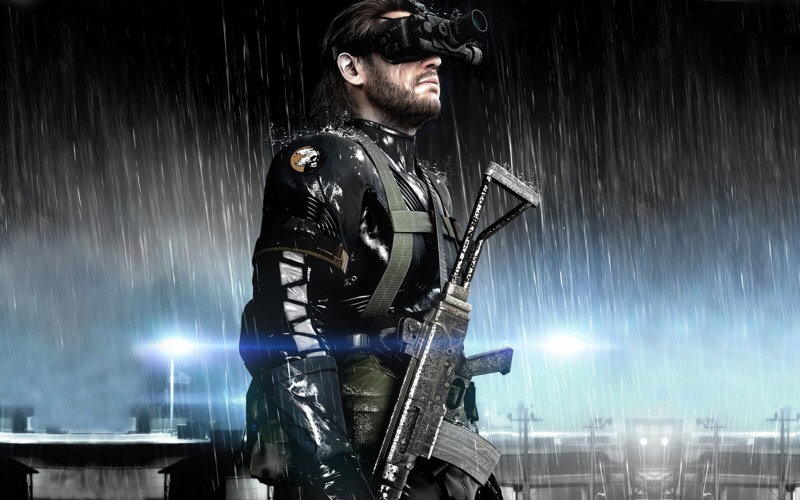
  

I’ve probably started and re-started this review half a dozen times. Not knowing where to even begin describing a game like Metal Gear Solid, but also not wanting to disappoint. Intimidated, I suppose, would be the best way to describe my feelings towards this review. Intimidated. I’ll briefly touch on the story, but I’ll be spending the bulk of the review discussing what mechanics worked and what didn’t.

I won’t be discussing Kojima’s falling out with Konami, as I’ve written about it enough already, and I don’t want it to tarnish the review.

“Started from the bottom, and now we’re here”

///

Metal Gear Solid V: The Phantom Pain is a sequel to 2014’s Ground Zeroes. Ground Zeroes as a game was very short, and acted very much as a tech demo, or introduction to the full-fledged release. Really it was just released to whet our appetite, and to stop our complaints about the widening gap of time between MGS 4 and 5.

At the end of Ground Zeroes, Punished “Venom” Snake’s base of operations is attacked and destroyed after an ex-filtration mission, and the captive we extracted during said mission was a bomb in disguise. These simultaneous events have left Snake broken, and in a coma for nine years. The opening of MGS V: The Phantom Pain has us waking up from our coma, coming to terms with the aftermath of the events from nine years ago, and escaping the hospital during an assassination attempt on our life.

“WE HAVE NO TOMORROW, BUT THERES STILL HOPE FOR THE FUTURE”

We establish a new base of operations and begin our revenge story, going after those that came close to killing us in the prequel.

///

Metal Gear Solid V: The Phantom Pain, like its predecessors, is a game that works really well on so many levels. Hideo Kojima in the realm of attention to detail, has no equal. Doing the game no justice at all, it would best be described as an open world action stealth game, and Kojima’s most ambitious project to-date, but the game is so much more, so deeply detailed, so mechanically sound, so engaging.
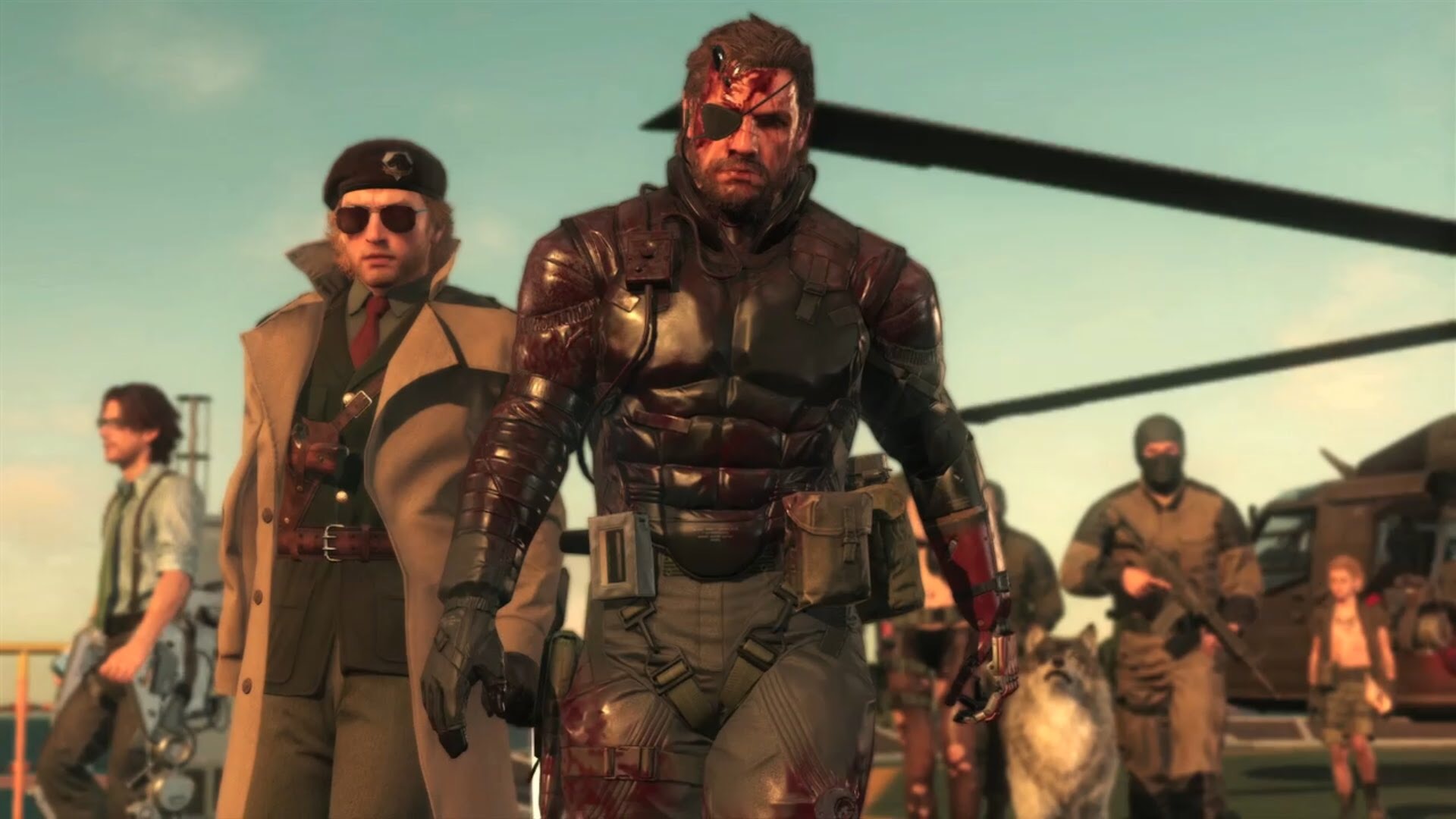
As the MGS series creator, director, writer, and designer, Hideo Kojima tried something very different with the latest outing. Prior MGS games were solid in gameplay, but relied heavily on story and lengthy cut-scenes to tell the tale. With MGS V, these cut-scenes are pretty much completely eliminated, with the player left to tell their own tale through the open world missions and exploration. Granted, there is still a ton of voice-over narration, and audio tapes to be listened to.

The open world is broken up into two locations, Afghanistan and the Angola – Zaire border region of Central Africa. Afghanistan being very dry with desert terrain, and sand storms, and Africa more lush, with jungles and rain storms. Each area has significant, key enemy bases and small towns related to the story missions, connected by dirt or muddy paths, and the rest of the map is peppered with small enemy outposts. The third area is our operating base, which is an off-shore oil rig. This is our base of operations where there are multiple platforms attached, each catering to a different type of support group. There is the Command Platform, Combat Unit, R&D, Resource Development, Support, Intel, and Medical. Upgrading and expanding these throughout the game gives us access to more advanced tech, mission intel and assistance, and weapons. The fourth and final area is our helicopter, which acts as our transport between the base, and either Afghanistan or Africa. The helicopter also acts as a mobile operating base, where we can upgrade our equipment or initiate the next mission.

While in the field, we can extract enemy soldiers or equipment to help bolster our off-shore base. This is through a device called a Fulton, which is basically like a parachute that picks up the soldier and shoots them up into the sky to be picked up by our helicopter. The enemy soldiers get placed into the teams that suit their skill set and extracted vehicles and weapons can be used in later missions.

MGS V is not a true open world game, and its world not entirely seamless like a Grand Theft Auto or Far Cry. The game is broken up into missions and side missions. Missions need to be selected from our iDroid, and in a means to progress the story, we need to stop back at the off-shore base to check in. When selecting the mission, we can pick the drop-off point, and select our gear and buddy for the trip. At any point during the mission we can select weapon or vehicle drops, or exchange buddies. Before the mission can be completed, an extraction is necessary, either by means of helicopter or exiting the conflict area. Just call the helicopter from our handy iDroid, and meet up at the nearest drop point, and mission complete. We then get the mission’s spoils, and notification of the next mission.

Between the main missions, there are side missions, which can be initiated at any time, in any order. Completing some of these is a requirement before advancing the story, but the rest are available to help grow the base’s resources or involve an especially skilled soldier that needs extraction to help with the bases future upgrades. These missions are less strict and can be started from the ground through the iDroid, and are completed by just finishing the objective, no extraction required.
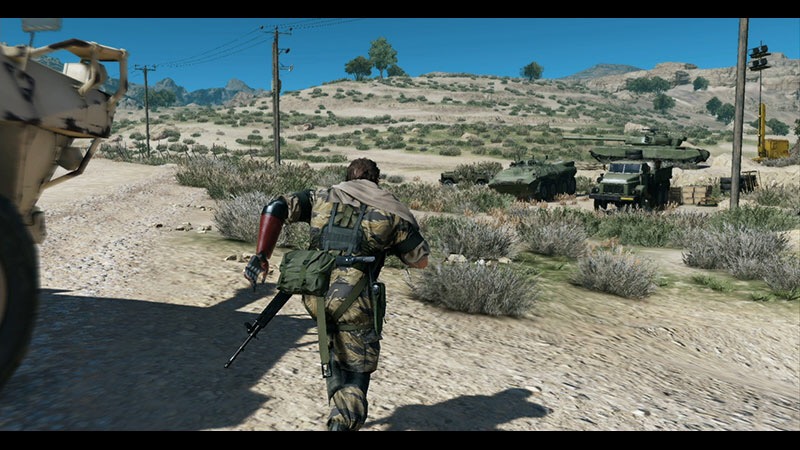
The downside to MGS V’s mission structure design is it ruins the seamlessness and immersion of the story. For example, some of the later story missions end with a cliff hanger and “to be continued”. And then we find ourselves back in the helicopter, ready to pick the next mission and load out. We can go back to our base, or explore the side missions. But then re-initiating the story where it left off, everything is hectic once again, as if there was no interruption.

///

The story missions are a little boring or repetitive at times. There are a few spread out across the two part campaign that are one hundred percent story dedicated, either boss fights or missions that truly drive the story. The rest are either infiltration or extraction based, or intel gathering. These missions provide little tidbits of story and background information, but are more purposed towards learning the world and mastering the game mechanics, both action and stealth.

As stated, the campaign is split into two parts, part one being the bulk of the story, and part two feeling like it was tacked on, meant as an expansion. But part two is where the story concludes for each of the secondary characters, and has the final mission, which is a replay of the game’s first mission. Part two is primarily composed of replay missions from part one, just augmented to play a specific way: mandatory stealth, no load out, extreme difficult, etc. These are not a requirement to complete the story, and are just for those who want to test their skills in a tougher field.

Part two just felt messier, incomplete. The story is solid but the presentation feels raw. Possibly at this point Kojima was already on his way out and was feeling the pressure from Konami to wrap it up and ship the product. There’s even an incomplete chapter cutscene on YouTube, a cut ending.

The game’s mechanics are truly its strongest feature, and this has been the case throughout the entire series. I can’t stress this enough. In MGS V’s case, it’s especially notable due to the open world. The player is left to their devices when infiltrating an outpost. Snake is more nimble than ever with his smooth transitions from stealth to action poses; gone are the days when we were tied to a rigid camera.

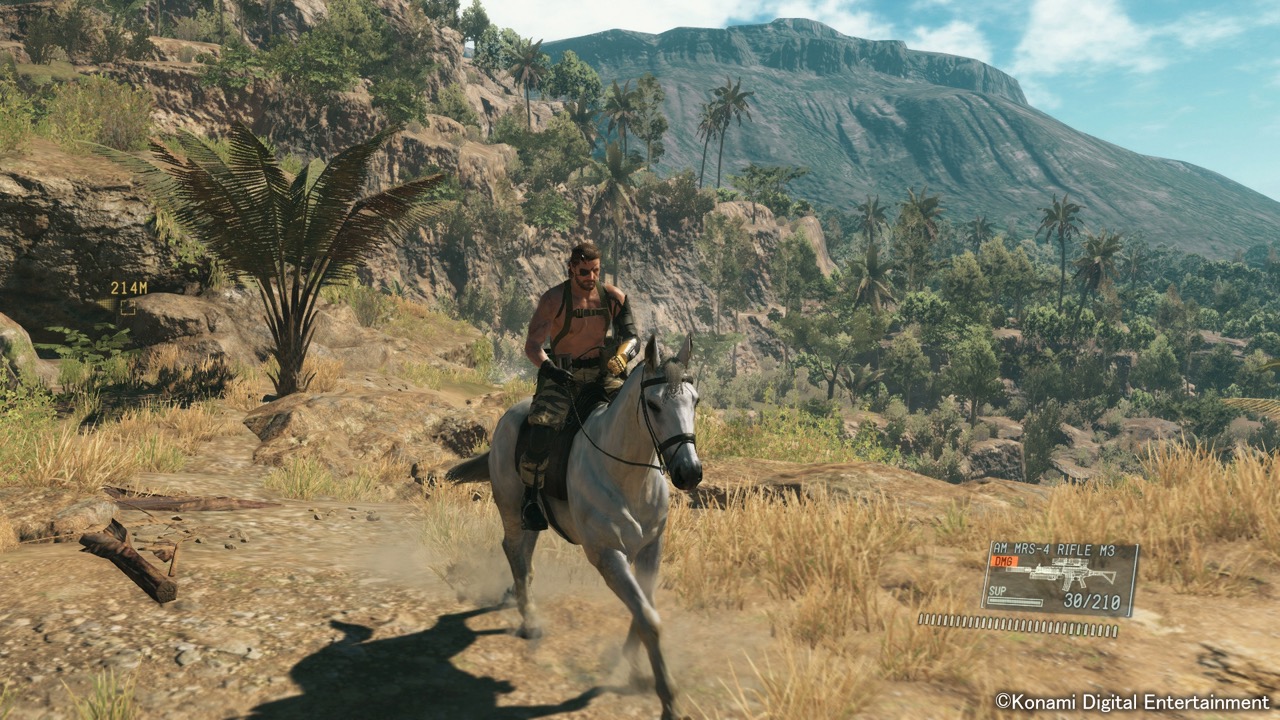
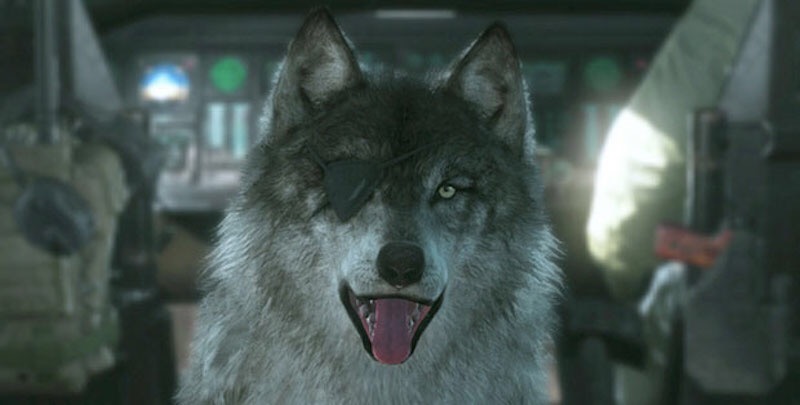
Our mission buddies include D-Horse, D-Dog, or D-Walker. Or we can have Quiet, a story character, available later on in the campaign. D-Horse is primarily used for navigating the vast terrain, D-Walker is a small mech that we can ride, and is helpful with navigating and is useful when engaging an outpost gets hairy, D-Dog and Quiet are good for stealth engagements and highlighting enemies and objectives, and at any time we can swap out one for another.
However the player wants to attempt a mission, that option is available, full assault or sneaky, and the game permits many a failures before its game over – reload checkpoint?

“YOU’RE FACE TO FACE WITH THE MAN WHO SOLD THE WORLD”

If you get spotted, the game time will slow down, allowing the player to locate the threat, and eliminate the threat before they announce your position, alerting the base. If you get spotted, or an enemy thinks they’ve spotted you, they will then alert the base through their radio, and they will check your last known position, or call for backup. Assuming you still have your wits about you, you can take out any enemies quietly, or vacate that area and hide. The enemy will eventually give up, and continue their routine, just on a higher alert. Its only when you’ve alerted the whole base to your position, and you are unable to escape, and end up getting killed, that the mission will end in failure. The game is very forgiving. That said, the enemies will adapt to your chosen gameplay style throughout the campaign. You’ll start noticing more helmets if you’re adept at headshot, or night vision goggles if you prefer excursion under moonlight; the enemy will even start setting up dummy soldiers to reinforce their numbers.

“WORDS CAN KILL”

Your intel support team back at home base will suggest you scope out a town or base prior to infiltration. Find a high spot, and use the binoculars to tag enemies to watch their route. You can even advance time while in-game if you prefer daylight to night, or reverse. Guards will finish their shift and go to sleep, but others will likely take their place. I didn’t have the patience for this feature, and instead would always infiltrate at my earliest convenience, and roll with the punches as they came. Just note, when extracting a prisoner, sand storms are your friend. On numerous occasions I was able to infiltrate a base completely unseen without removing any enemies, and extract my target. I’ve also had missions go so sideways that enemy helicopters were searching for me with troops on the ground. Its instances like these where a mission can play out so different each time, that makes the Metal Gear Solid game what it is – unmatched free-roam, free-form experimentation.

///

The weirdest feature in the game has to be the ability to play a mission as any of your Combat Unit’s staff. Male or female. They’re just Boss. Everyone you meet thinks they’re Boss, and will treat them as such. Boss can literally be anyone.

And the infamous cardboard box is back, and better than ever. It’s tougher, and has a more robust feature set, including allowing the player to stand while in the box. A funny feature with the box is the ability to attach a guard image poster to the top and standing in front of enemy guards. They will salute you as their commander.

///

The game’s whole presentation is near-perfect. The story, while lacking focus at times, tells an emotional tale of loss and recovery, of deceit and love. Kojima’s storytelling and direction has never been better.  While some of the missions seem tedious, the actual story driving missions are powerful and will truly keep you engaged. Kojima has a way of including current events and melding them into his fictional worlds. Last generation is was micro technology and private militaries. This generation child soldiers in Africa, nuclear warheads, war-time interrogation techniques, and the diversity of language around the world.

“I WONT SCATTER YOUR SORROW TO THE HEARTLESS SEA, I WILL ALWAYS BE WITH YOU”

Kojima has created two believable, living, breathing areas filled with enemy encampments and wildlife. He’s placed us in the center of these war torn countries and given us a home base to manage, that requires resource and staff management far too detailed and involved than it ought to be. He’s given the tools to play out the missions with freedom and experimentation. He’s made a sand-box world, given us Snake, and told us to go play – be nice or be deadly. Kill or extract. Snake even has a shrapnel horn stuck in his forehead that will grow to mimic a demon if you’re evil enough.
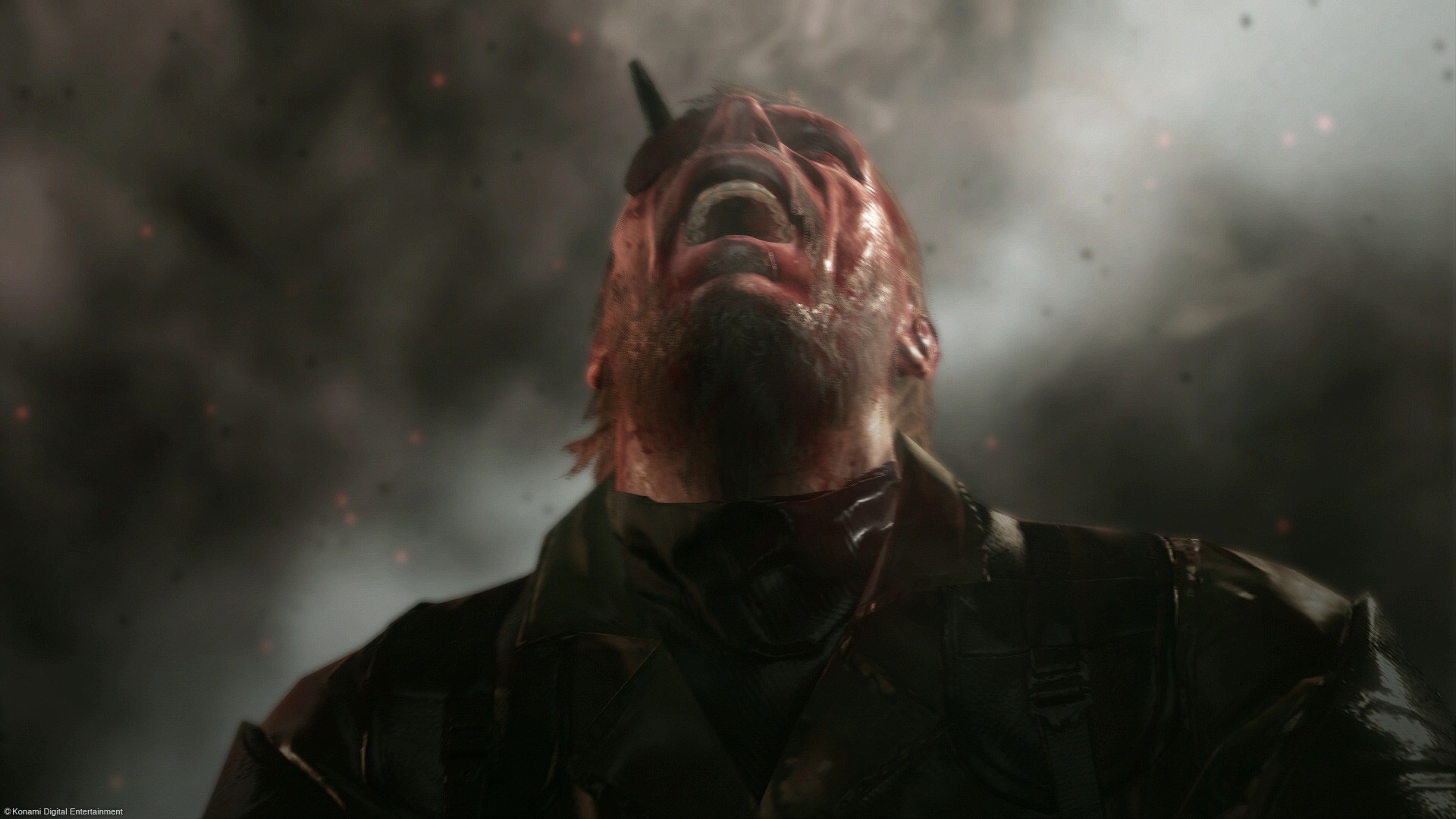
And the game is gorgeous looking to boot, with Afghanistan’s hard rocky valleys at sunset even surpassing Red Dead Redemption’s brilliant vistas.

///

In the realm of achievements, considering the unique type of game, and imagination of Hideo Kojima, the achievements are pretty unimaginative. There are those dedicated to completing the main missions, some side quests, and completing the bond with your three breathing buddies. The rest are completionist – bleh.

For those that like stealth incursions, horses, e-cigs, or snake. Snake? SNNAAAAAAKEEE!!!

Notable Achievements
To the Rescue (Extract a female prisoner) – 15G
Man’s Best Friend (Raise bond with D-Dog to the maximum) – 15G

-iRogan
Revisted iReview – BEYOND GOOD AND EVIL HD

Beyond Good & Evil HD

“The weak, the wimps and the wussies still have three seconds to get the hell outta here, and get back to their knitting!”

Publisher: Ubisoft
Developer: Ubisoft Montpellier
Platform: Xbox 360 reviewed on Xbox One Backwards Compatibility
Availability: Ps3, Xbox 360

Playing older games is like visiting old friends. Those that you haven’t seen in a few years, but still think about from time to time, or come up in conversations when visiting others. It’s a great feeling to reminisce, but a greater feeling to actually see that friend again, and catch up.

In somewhat of a personal new-games rut, I settled and gave the Xbox One Backwards Compatibility a try. Since Call of Duty Black Ops 2 has yet to be made available, I booted up Ubisoft’s Beyond Good and Evil HD remastered release.

Beyond-Good-and-Evil

I played the original back in 2004 on the Playstation 2, and it’s always been a mainstay on my list of great games I remember having played during that generation. In 2011 a HD re-mastered edition was released on the Playstation 3 and Xbox 360 which included improved textures and character models, as well as an updated soundtrack, achievements and leaderboards.

///

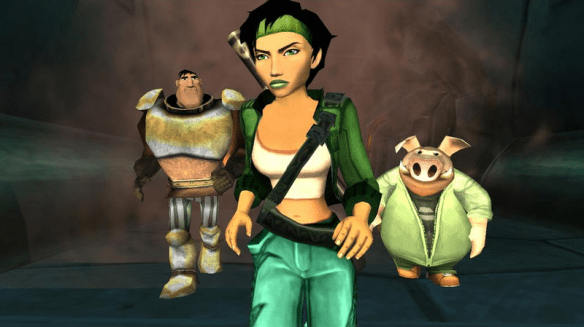
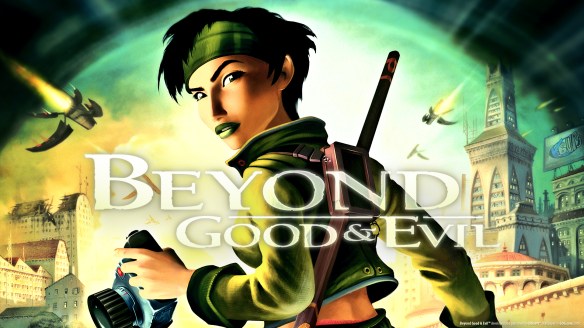
Beyond Good & Evil is an adventure game about an alien invasion and the conspiracy surrounding the involvement of the planet’s military dictatorship. In the game, we play as Jade, a photojournalist and caretaker of a home for orphaned children. Jade, I believe, is the primary reason I fell in love with the game eons ago. She’s a character with a lot of heart, but can hold her own when pressed. Her character design was very spunky, with her baggy pants, white tank top, jet black hair with a headband and green eyes and green lipstick. If one could fall in love with a video game character… Alongside Jade is her uncle, and guardian figure, Pey’J, who is a boar-like creature. Only Jade is playable, but large portions of the game have Jade being paired up with another character to solve puzzles and help in combat situations.

6a00e398244402883300e552a813a68834-800wi

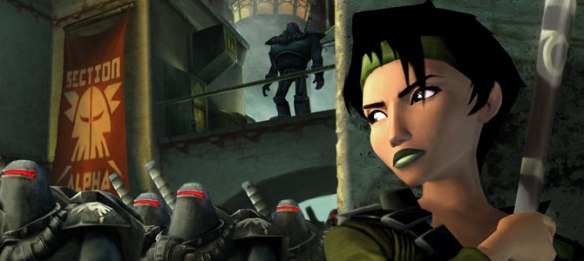
The story of Beyond Good & Evil takes place on a small mining planet called Hillys, with its population a mix of humans and anthropomorphic animals. The local town has been under attack by aliens called the DomZ, who have been abducting and enslaving the civilians. The planet’s military, Alpha Section, has promised to defend the population, yet have been unable to stop the alien attacks thus far. An underground resistance group called IRIS Network believes that the Alpha Section is actually working with the aliens, and are working towards uncovering the truth. IRIS enlists Jade’s photojournalist skills to reveal Alpha Section’s true motivations. Once proof has been obtained, IRIS will provide the evidence to the Governess and create promotional material to gain favour with the citizens and help overthrow the military dictatorship. On the side, to help fund her adventure, Jade is also a freelance photographer, taking pictures of all the species on Hillys for a science museum. This photography gameplay mechanic is part collection, finding all the species throughout the game, but also provides the player with currency, allowing them to buy health restore items and upgrades.

“ITS A GOOD THING I’M HERE, OTHERWISE THIS WHOLE PLACE WOULD FALL APART”

The majority of the game takes place in a small floating town built around canals, and small surrounding islands. Primary mode of transportation is a hovercraft that allows the player to navigate the open, but modest, world. The main city serves as the hub, where we meet vendors, and visit the Akuda Bar which is the headquarters for IRIS. The Alpha Section’s many headquarters are also found in the city, and can be unlocked and accessed throughout the game for more collectibles. The city also hosts 2 hovercraft races.

The closest island boasts a lighthouse, and is our protagonist’s home, where she lives with her uncle and orphaned kids. The game starts on this island as the focal point of the initial alien attack, and jump starts Jade’s adventure. Other nearby islands include caves and a volcano, and the final large island is the slaughter house. This final island also hosts 2 more hovercraft races. Each area gets unlocked as we progress through the story and unlock new items for the hovercraft.

FeaturedImage-beyond-good-and-evil

Aside from taking a break and admiring the local beaches in said hovercraft, Beyond Good & Evil’s other two gameplay mechanics are Combat and Stealth. On our missions to unlock the truth we come across many different types of creatures while exploring the islands, some are not so friendly. Jade is equipped with a staff to help her in fights, and more often than not, paired with a companion in Pey’J or an IRIS operative named Double H. With their help we can fight off any baddies that come our way. They will also aid with navigating the islands’ inner workings and cooperative puzzle areas. The other bad guys we stumble upon are the Alpha Section’s elite. Most of these sections require stealth to navigate around, as this enemy has strength in numbers and Jade is ill equipped to deal with them on high alert, especially later on in the story when breaking stealth is an instant fail.

The pacing of the game is its notable weakness. There are only a few proper missions involving the Alpha Section investigation, and these are quite bloated, but afterwards we always have to run back to the town to turn in our findings. We then have to re-explore the town and its new available areas to collect the required amount of Pearls (in-game currency to upgrade our Hovercraft) to advance. It feels like, as Jade, we have to do a lot of unnecessary leg work just to help the resistance complete their story of corruption. They’re very thankful for our assistance, but I don’t feel that we are properly compensated, aside from a few donated Pearls from the resistance supporters.

11488-beyond-good-and-evil-hd

Story gripes aside, the game is just as enjoyable as I remember, if not a little weak on the writing – some of the one liners from Pey’J are groan-worthy. The HD re-mastering is also not a huge leap forward in visuals, but the game is much brighter and more colourful. The water reflections are most noteworthy, as some times it looks like we’re hovering across glass.

The camera was my biggest complaint. When piloting the hovercraft in tight corridors, or as Jade when in a combat situation or hugging the walls in stealth, the camera was very difficult to wrangle into the ideal direction, and sometimes left me turned around, or having to restart the segment.

I did also notice a few points where the game hung between gameplay and cut-scene and quite a few instances where the dialogue audio was not synced with the character’s facial animations. These could be chocked up to the HD re-mastering with new frame rates, or even the Xbox One Backwards Compatibility emulation.

The game is still fun to play, the puzzles fairly smart, and since it’s been 16 years since I originally played it, everything felt fairly fresh.

///

Achievement-wise, the game is quite light, as it was released as an Xbox Arcade game. So it only had 200G worth, mostly item collection oriented, and the standard “introduction” and “beat the game” achievements.

-For those who talk to animals, enjoy photography, or always fall in love with the first video game female they meet.

Notable Achievements
Wildlife Photographer (Take 6 film rolls of animal photos) – 20G
Racing Champion (Score 1st in all 4 hovercraft races) – 20G

-iRogan


WHAT i’M PLAYING/iReview – Lovers in a Dangerous Spacetime

Lovers in a Dangerous Spacetime

“Wanna go to – wanna go to space.”

Publisher: Asteroid Base
Developer: Asteroid Base
Platform: Reviewed on Xbox One
Availability: Out on Xbox One and PC September 8th.

On a whim I picked up Lovers in a Dangerous Spacetime last night, as my New Game Tuesday ritual dictates new games forever and always.

I’d previously seen the game at PAX Prime 2015 on display, but didn’t give it its due, instead only acknowledging its existence, and moving on. But after mentioning its launch yesterday in my wrap-up, and watching the trailer, I picked it up.

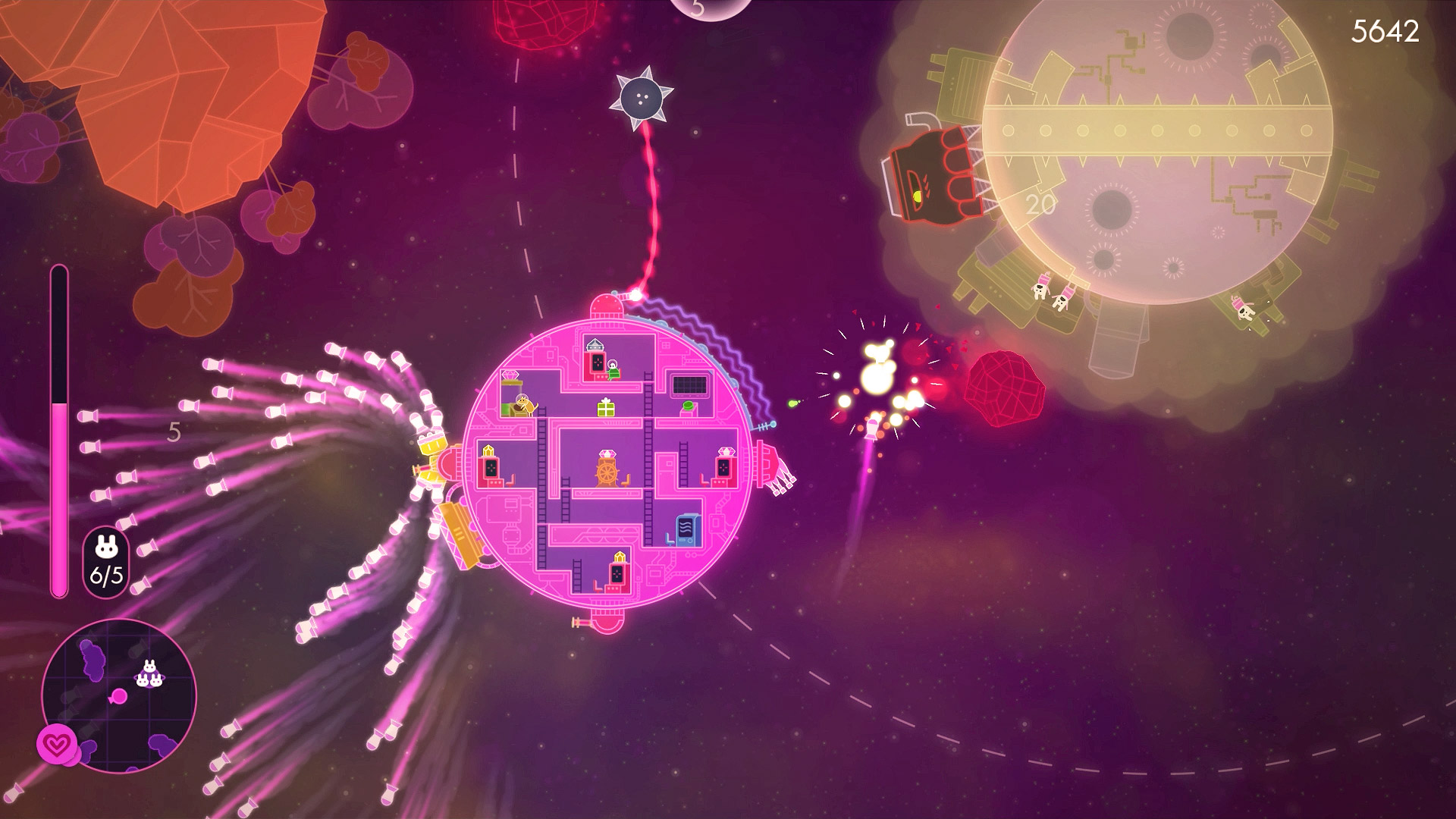
Sitting down and handing the 2nd controller to the person that lovingly sits beside me, we dove in together to this wonderfully coloured space game about rescuing lost bunnies. The game is part of the ID@Xbox initiative, and is about relationships.

///

A relationship between you and your cumbersome spaceship traveling through tight corridors, gravitation orbits and asteroid fields. You must first manage your ship’s movements, but also simultaneously manage your character inside the ship’s interior, running from one terminal to the next, up and down ladders, trying to manage the engine, shield, and 5 different weapon booths.

screen2

“WHAT’S YOUR FAVOURITE THING ABOUT SPACE?
MINE IS SPACE.”

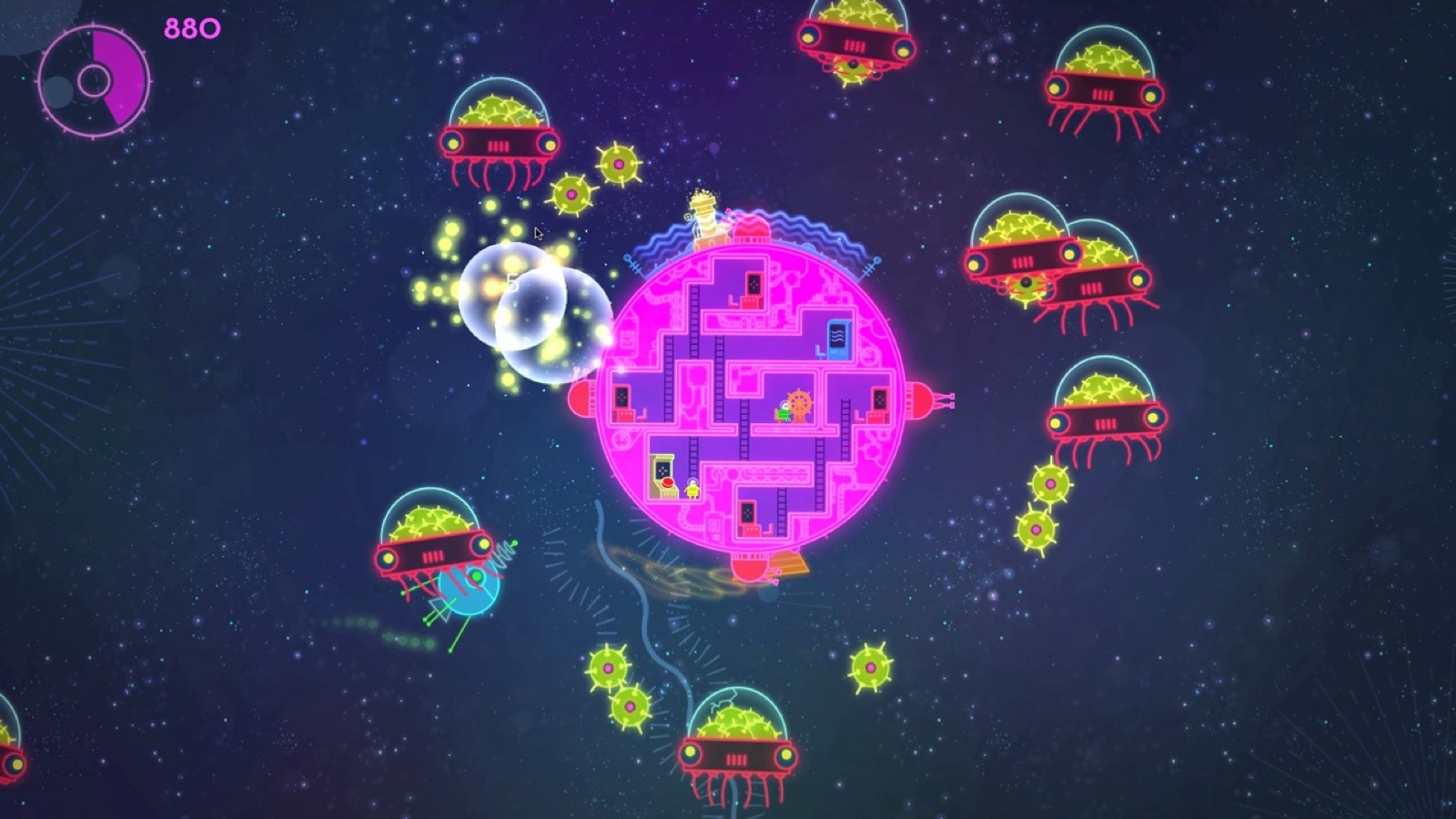
Your view is a side interior shot of an ill designed ship. The steering wheel is in the middle and this maneuvers the engine when maned. The 4 weapon turrets reside at 4 fixed points on the border, in their own rooms. A power weapon, which rotates around the circumference of the ship is controlled in a 5th area. And lastly, there is the flawed shield – only covering about a quarter of the ship’s hull – and, again, is controlled from a separate corridor. You are well tooled to fight space, but are drastically understaffed. Crucial decisions are constantly being made in where to sit.

Because of these choices, the game is also about human relationships. Play with a friend or loved one, and you’ll both assume your astronaut roles, and together must wrestle the clunky ship through space and enemies alike. Success hinges a lot on communication, but almost instinctually, you might find that you’ve resigned yourself to a set routine – one controlling the weapons, the other controlling the engine and the shield when in defense, and a spare turret when overwhelmed. Sometimes it doesn’t work out as smooth, especially when utterly surrounded or on the run, and this is when the game gets frantic. In solo mode, you’re tasked with commanding the AI buddy around to man certain stations.

“WELL TOOLED TO FIGHT SPACE, BUT ARE DRASTICALLY UNDERSTAFFED”

As you find and save the kidnapped bunnies, and progress through each level you can find upgrade gems for the ship and terminals, and each gem can augment its respective station in unique ways. Power gems add more power or higher frequency turrets; Beam gems will change the weapon to a beam type or change the engine to a beam propulsion engine; the Metal gem with change the weapon into a morning star type or change the shield into a metal spiked shield, or augment the engine to lay spike traps in your wake. The game encourages experimentation as each terminal supports a gem, and upgrades to your ship will eventually allow dual gem augments, adding more variety.

Screen4 (1)

The game is equally fun and stressful, colourful and challenging. Make sure you bring a loving partner along for the ride, as this is a game best played in pairs, but even then, love is far from guaranteed.

-For those who like bunnies, stressful micromanagement games, or doing pirouettes aboard a space ship.

Notable Achievements
Space-man’s Best Friend (Beat any level with the help of your trusty space-pet) – 10G
Cooties (Finish a level without crossing paths with your partner) – 50G

-iRogan

WHAT i’M PLAYING/iReview – Lara Croft GO

Lara Croft GO is a fun little mobile game developed by Square Enix. Similar in style to their previous game, Hitman GO (which I haven’t played yet, but will next).

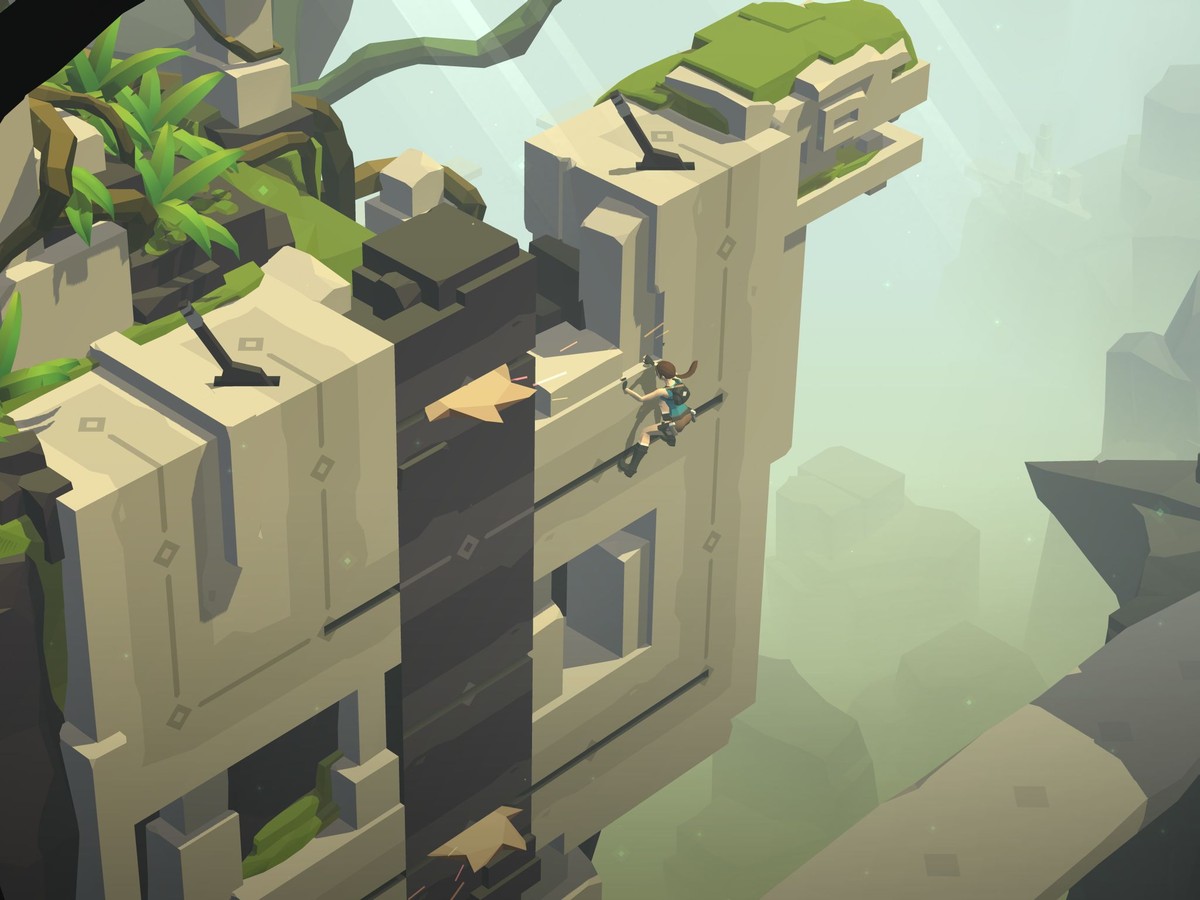
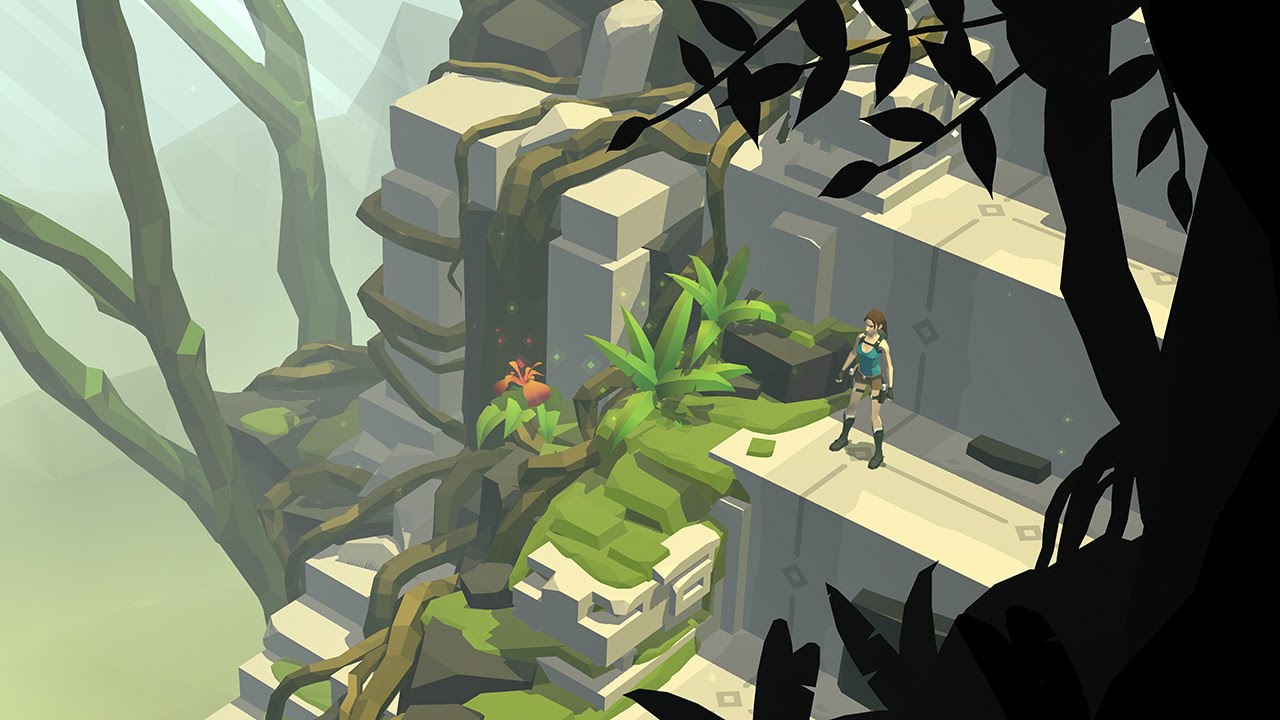
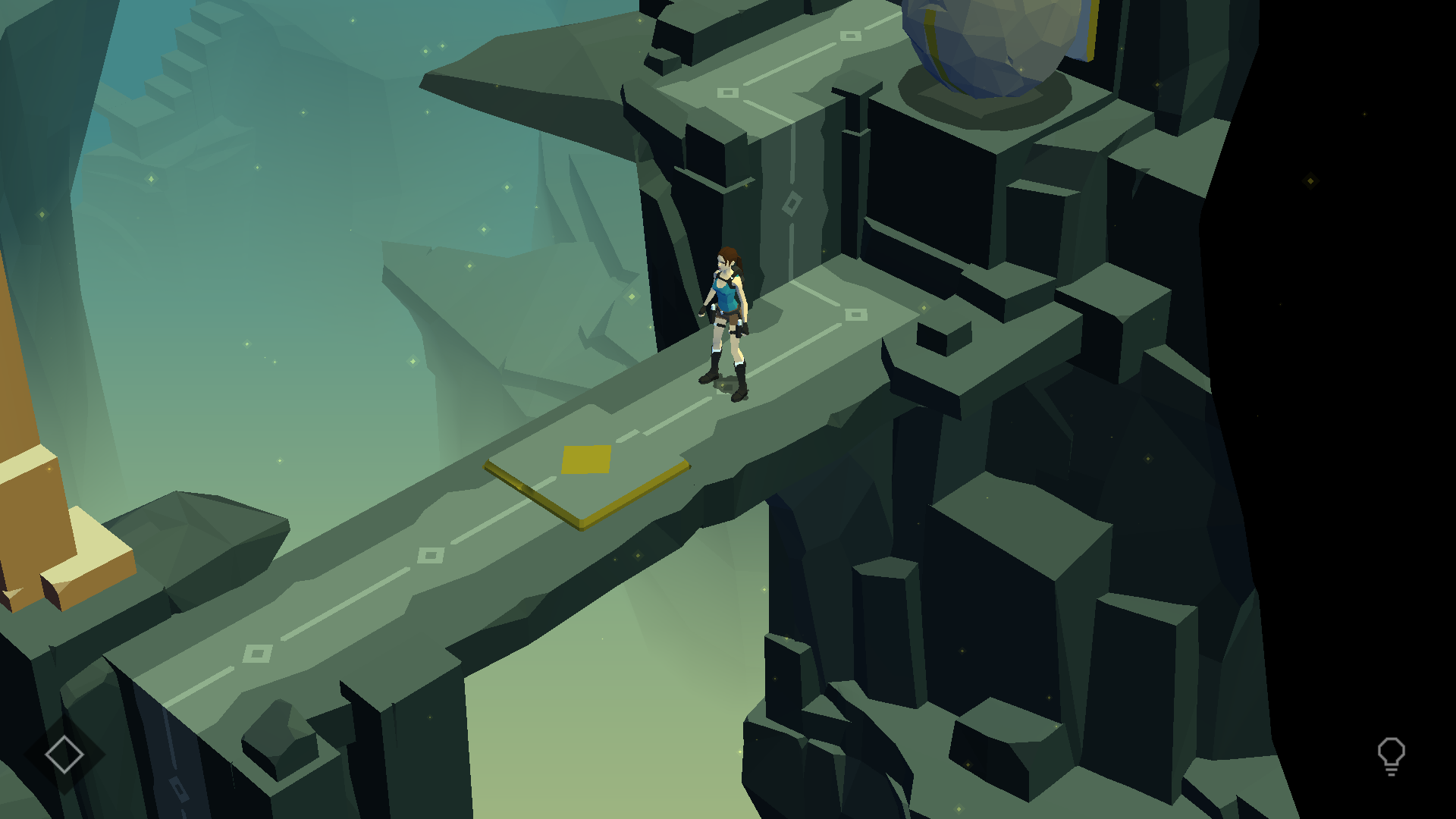
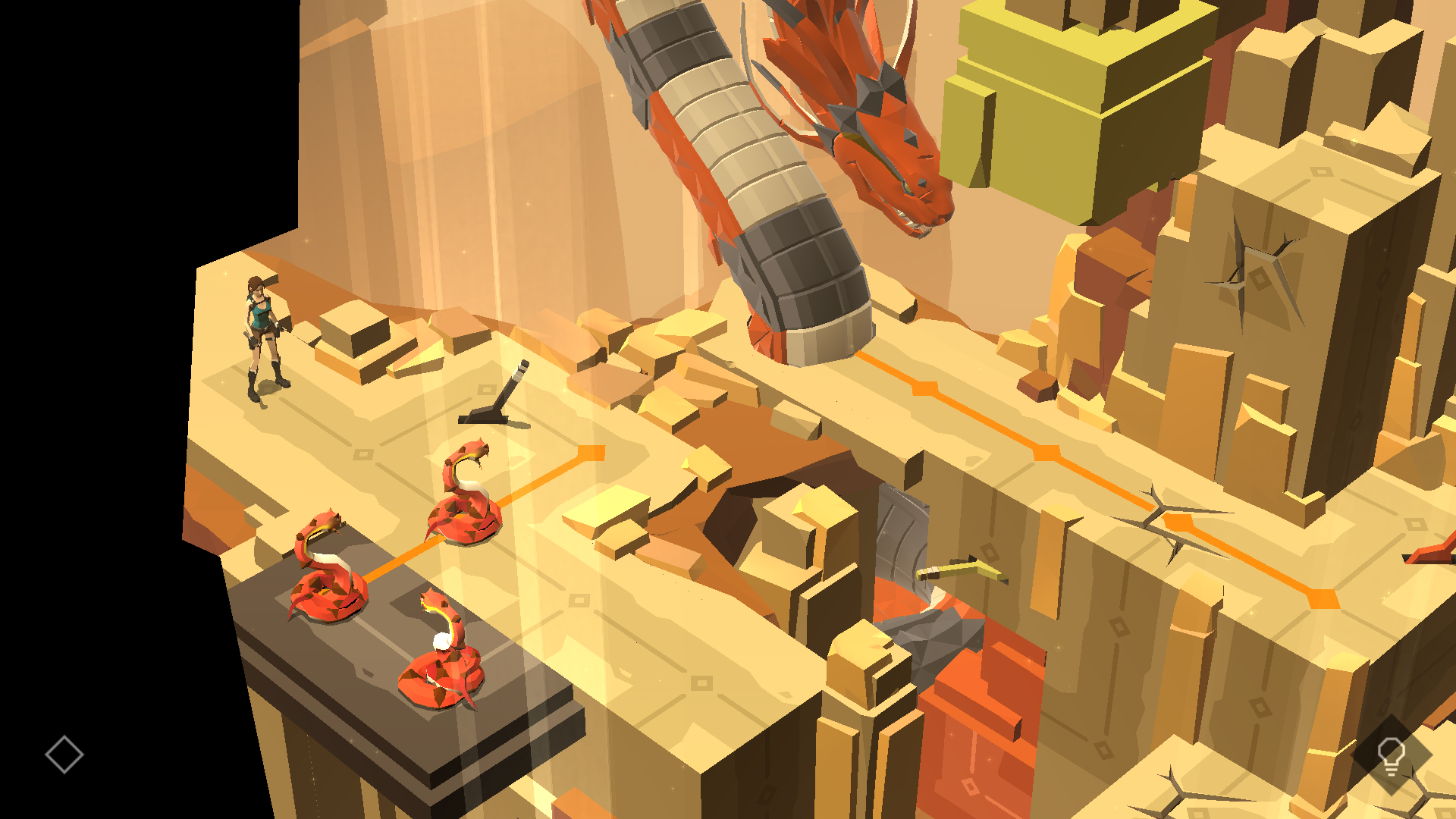
The game is a puzzle platformer, and turn-based. Very striking up front is the visuals. Flat colours, but bright with some atmospheric lighting. Everything looks smooth but with great detail. The sounds are very soft and ambient.

lara-croft-go

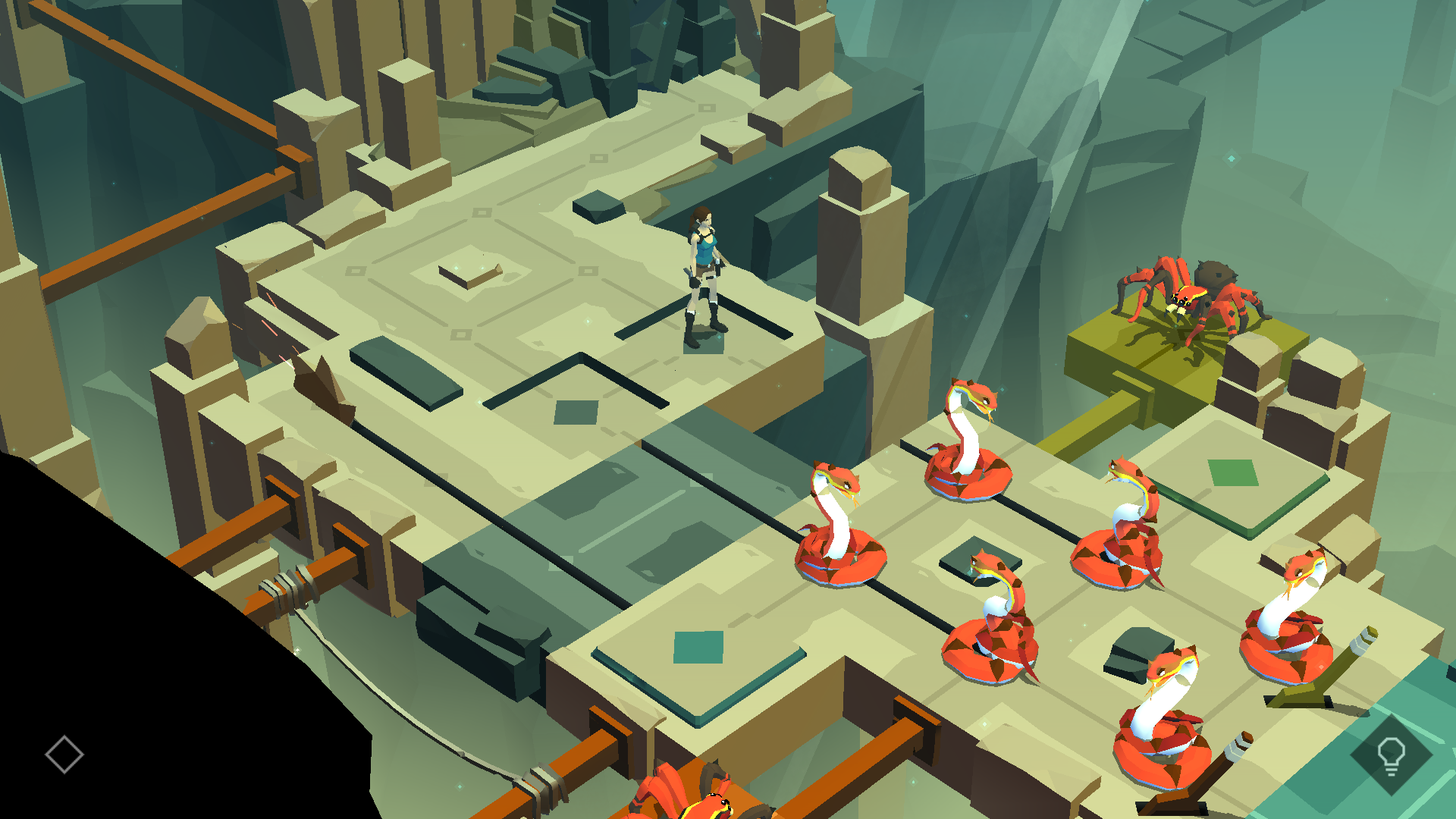
Designed for a touch screen, the controls are very simple. Each level has a pre-defined path as it is turn based, and as Lara, we can navigate anywhere along this path. A lot of times there are enemies in the way, and each enemy type has its own behavior, for example: snakes don’t move, and can only be attacked from the side or behind. The levels also have traps, obstacles and switches en route to the end of each chapter. In the turn-based fashion, we move Lara in a diagonal direction, and then everything in the level follows suit and moves along their defined path.

Progressing through the game is pretty straight forward. There are 5 chapters totally about 40 levels. The game starts off slow, almost a tutorial, but then picks up speed, and gets consistently more challenging through each completed level and chapter. There are also numerous collectibles to be found, and you can replay each level to ensure you’ve found them all. These will unlock alternate costumes.

lara croft go screen

Lara Croft GO is a fun simple game that allows you to drop in and play a level or two, and then move on to more pressing business. The game only supports landscape mode, but is a great homage to the Tomb Raider games, Lara Croft, and puzzle games in general. Supported on both iOS and Android for roughly $5.

-iRogan

Screenshot_2015-09-03-12-56-18Screenshot_2015-09-05-16-47-05Screenshot_2015-09-04-16-27-32Screenshot_2015-09-01-12-41-30

iReview – FAR CRY 4 – Missing Things Are Missing

Walk with me
Walk with me
Just like we should’ve done right from the start

Walk with me
Walk with me
Don’t let this f***ing world tear you apart


Title: Far Cry 4 – 2014
Developer: Ubisoft Montreal
Platform: Xbox 360, Xbox One, PS3, PS4, PC
Publisher: Ubisoft
Reviewed on: Xbox One

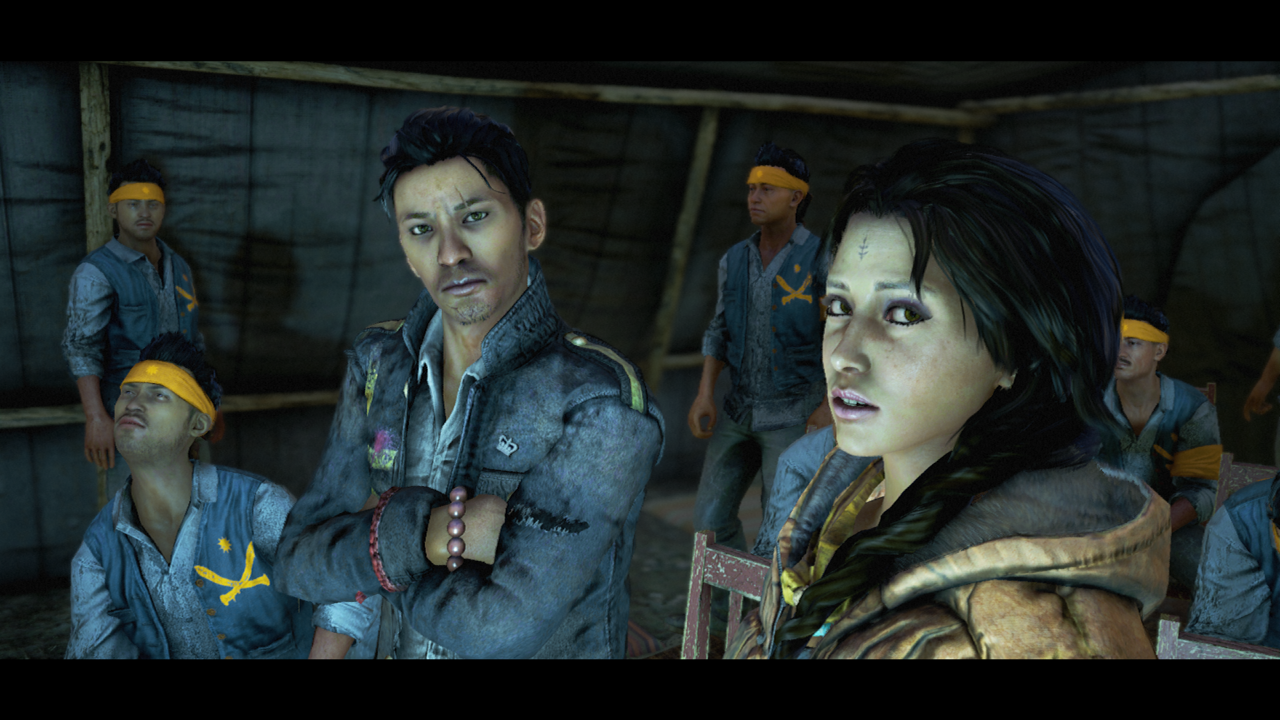
Far Cry 4 stars Ajay Ghale, a young Kyrati-American returned to his birthplace to bury his Mother’s ashes. What follows is a quick introduction to the Kyrati setting: its sprawling country side, mountains, lakes, and jungle, its people and villages, before the big reveal of Pagan Min.

Our caravan is unceremoniously stopped on the way to our Mother’s resting place by the Kyrat Royal Army, a routine identification stop. Things go sideways with the arrival of Pagan Min via helicopter, and we know suddenly something is not right. Speechless, we get a quick glimpse into King Min’s psychosis as he guns down his own Officers to make an impression, taking a selfie with Ajay.

“I’M VERY PARTICULAR WITH MY WORDS. “STOP.” “SHOOT.” “STOP.” “SHOOT.” DO THOSE WORDS SOUND THE SAME?”

We’re then brusquely escorted off to Pagan’s palace and asked to dine with the Glorious Leader himself. Everything seems to be going smoothly – aside from some questionable torture-screams in the other room – but our host is interrupted and leaves, asking us to sit tight.

Sun_Apr_19_18-26-18_PDT_2015

Not wanting the game to end before it’s begun, we obviously don’t tight and instead sneak off to locate the investigation chamber, we find our Caravan Guide being painfully questioned. Enter The Golden Path Fighters stage right, and we’re suddenly whisked away again, this time from the clutches of Pagan Min, to begin our tale – The Piece of Resistance – caught dead in the middle of this Himilayan country’s civil war.

///

Far Cry 4 at its foundation is a story of war. Warring factions between North and South Kyrat: the rebellious Golden Path vs. The Kyrat Royal Army under King Pagan Min’s rule. However, it also foretells of the division between the Golden Path group that Ajay has become the symbol of hope for.

The main purpose behind Ajay being in Kyrat is to do right by his Mother, and lay her to rest, but The Golden Path’s rebel movement was established by Ajay’s Father, and he is therefore compelled to set things right in the land.

Sun_Aug_23_10-23-50_PDT_2015

As we start the rebellion, eliminating Min’s rule from the South Province, one outpost and communication tower at a time, we start to see the rift between the two Golden Path member develop, as one favours the traditional values and history of Kyrat, while the other argues for progress and modernization. This split path is evident throughout the entire story, as we have to make influential decisions, which will favour one side over the other, ultimately deciding the fate of Pagan Min, and The Golden Path.

At the end of the story, in our final meet-up with Pagan Min, he references the start of our story, and asks why we didn’t just sit tight, await his return. Instead opting to proceed along our murderous path we currently find ourselves on.

“Which Ajay is sitting before me at the table now? Can we have a do over? Dine with me and let us return your Mother’s ashes like you originally intended.”

///

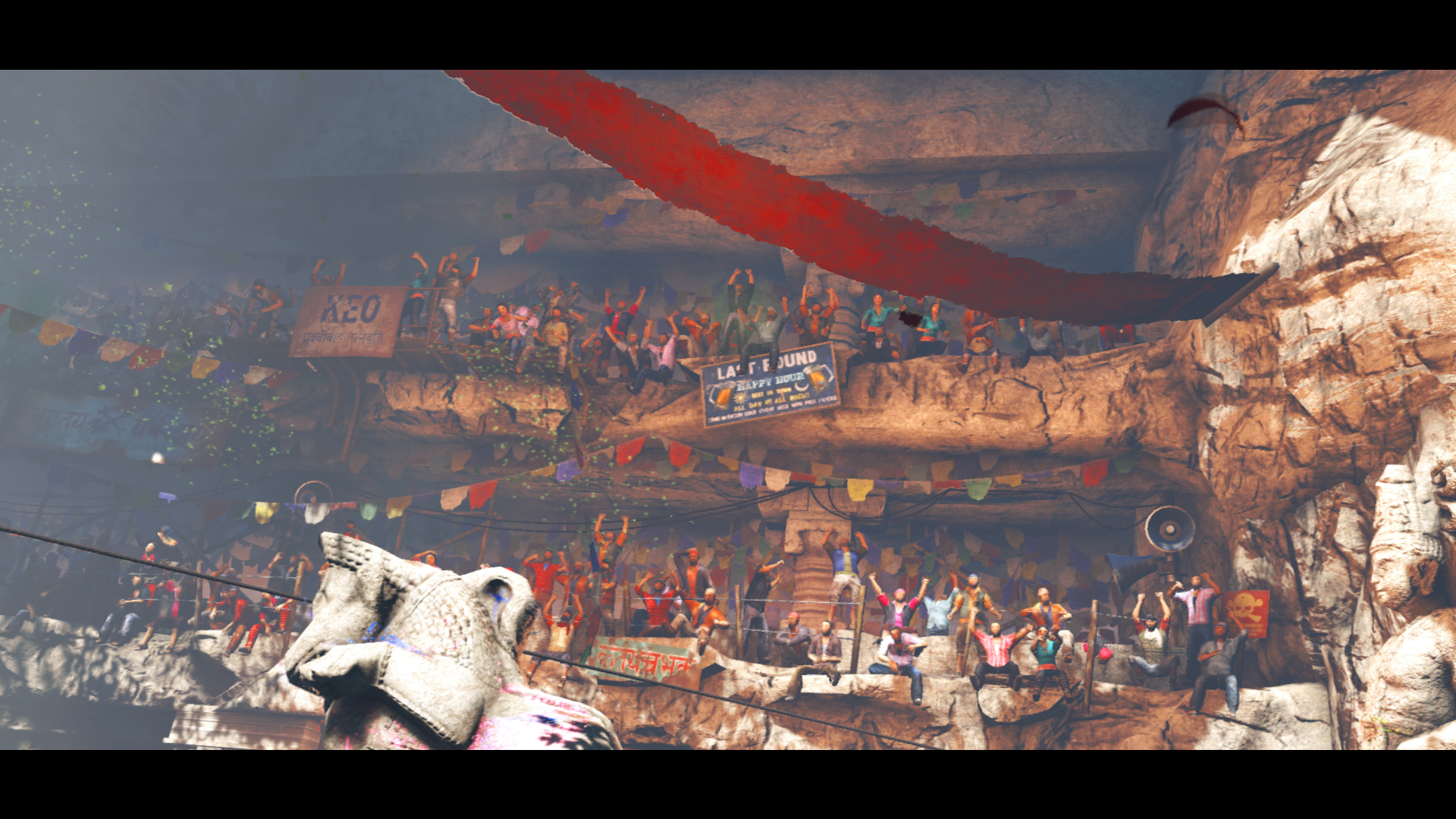
Far Cry The Fourth plays exactly like its predecessor, only with a little more verticality, as it takes place, after all, atop a Himilayan mountainous region. To help with this we’re equipped with a wing suit and grappling hook to scale some of the cliff faces.

There’s more wildlife this time around with eagles, rhinos, and even ride-able elephants. The wildlife is also just as aggressive as ever.

Sun_Aug_23_10-20-51_PDT_2015

Returned are the outposts needing capturing, and the communication towers needing climbing. New this time around are the retaliation parties that will be sent to a newly acquired outpost, if it’s still within a danger region. These parties are not a force to be taken idly, and can be quite aggressive in their response. It is however, an optional task, as I did not lose any outposts to the enemy when opting  to not defend, but instead driving away in search of loftier objectives.

“YOU HAVE THE BROAD SHOULDERS AND BICEPS TO FIGHT EVIL”

New and similar side-quests have bolstered the country’s activity list, as different types of races are available, as well as hunting missions, hostage rescue missions, bomb defusing, and supply runs litter the map. Collectibles have returned as well.

New navigational options have been added as well, with new vehicle types, previously mentioned wing suit and para-glider, Elephants and a nifty gyro copter. Shooting while driving is also now an option, and with that, auto-pilot. Motion-sickness medication not included.

///

Far Cry 4 succeeds on many points, but stumbles and inevitably falls over many others.

Its research and dedication to the Himilayan lands and culture are incredible, and because of this, the game is gorgeous, and beautifully realized. It also did better by the antagonist, Pagan Min and his 3 Lieutenants. Pagan Min is unfortunately kept at a distance throughout the majority of the game, relegated to informative and sarcastic radio messages, but we do kill his double at one point. The main world is a blast to explore, as well as the separated snowy mountain location and Durgesh Prison.

Mon_Apr_20_20-52-24_PDT_2015

Besides all its positive, the game is a retread of Far Cry 3 in a lot of ways. Its reliance on an eccentric, violent villain feels similar to 3’s Vaz. And the game’s heavy dependence on the drug-like hypnotic missions become a chore. It seems that the favourited Far Cry 3 marijuana farm mission was taken and spread far too thin to pad the game’s length by adding unnecessary characters and map out the chemical factory and Shangri-La missions, colourful as they may be.

“CANDLES ARE NOW ILLEGAL!”

The game also, somehow, feels less immersive, and the story less fun. Aside from the patrolling wildlife, the landscape doesn’t feel as alive as 3 did, with its stormy jungle rainfalls. And Ajay Ghale is a pawn in this civil war, and not the tragic hero that Jason Brody was.

///

All said, the game is still very good, good-looking, and worth playing if you liked Far Cry 3. The achievements are standard story key-mission completion, collectibles, liberating outposts and unique murdering methods involving vehicular manslaughter and Elephant jousting.

The added co-op element is a fun addition, but note that the co-op’ee will not unlock anything in their own campaign.

Notable Achievements:
Tusker (Kill 30 enemies with an Elephant) – 10G
The Sky is Falling (Perform a takedown from a Buzzer) – 15G

-iRogan