Anthem Impressions – In Progress

I’ve been playing through Anthem slowly for about a month now. I picked it up upon release, but with my limited free evenings, have only been able to dedicate a few hours at a time.

My Xbox App tells me I’ve been playing in this new world for about 25 hours so far. So, I guess roughly averaging an hour a night. I’m coming close to the finishing the story, so this is just a work-in-progress update, as I may have some more to add once the campaign concludes and the end-game opens up. On that note, I’ve only played with the Ranger Javelin (armored exosuit), so I want to try the other suits too, before my final impressions.

EA/Bioware has done something fairly unique with Anthem, where it almost feels like 2 games. It’s an Action shooter with RPG elements and story, where we play a Freelancer who wears a Javelin exosuit. Inside the city hub of Fort Tarsis is the safe zone, and then outside the city walls is where the bad guys reside. Our job as a Freelancer is to take out contracts, to help kill the monsters, bugs, and bad guys outside.

Inside the city hub is where all the RPG stuff happens. You can change up your Javelin type, look and load-out in the Forge. You can wander around the city talking to people and vendors, building the story and world, and get mission contracts. Then, when our ears are sore, we walk over to the exosuit and launch into the Mission environment where the fun happens. I say “launch” but that’s is putting it nicely, as you have to wait for the loading screens to provide the menu options of either entering the free play open world, loading up a contract, campaign mission, or stronghold (dungeon). All of these are separate instances and you can’t slip from one to the other without first traveling back to the City environment.

When the mission or free-play adventure is done, and we get our credits and perks, and weapon unlocks, and XP, we are then provided a choice of re-entering the city again, or going to the Forge to update the suit (you then have to exit the Forge before you can launch the next expedition, see: more loading screens). The game does not just let you enter free-play again, or to jump into the next mission. You always have to go back to the single-player hub before you can decide what to do next. This divide in the game’s world is cumbersome. I really wish we could just fly back to the city, land and seamlessly transition into the city hub. Or just queue up the next mission or contract we have waiting.

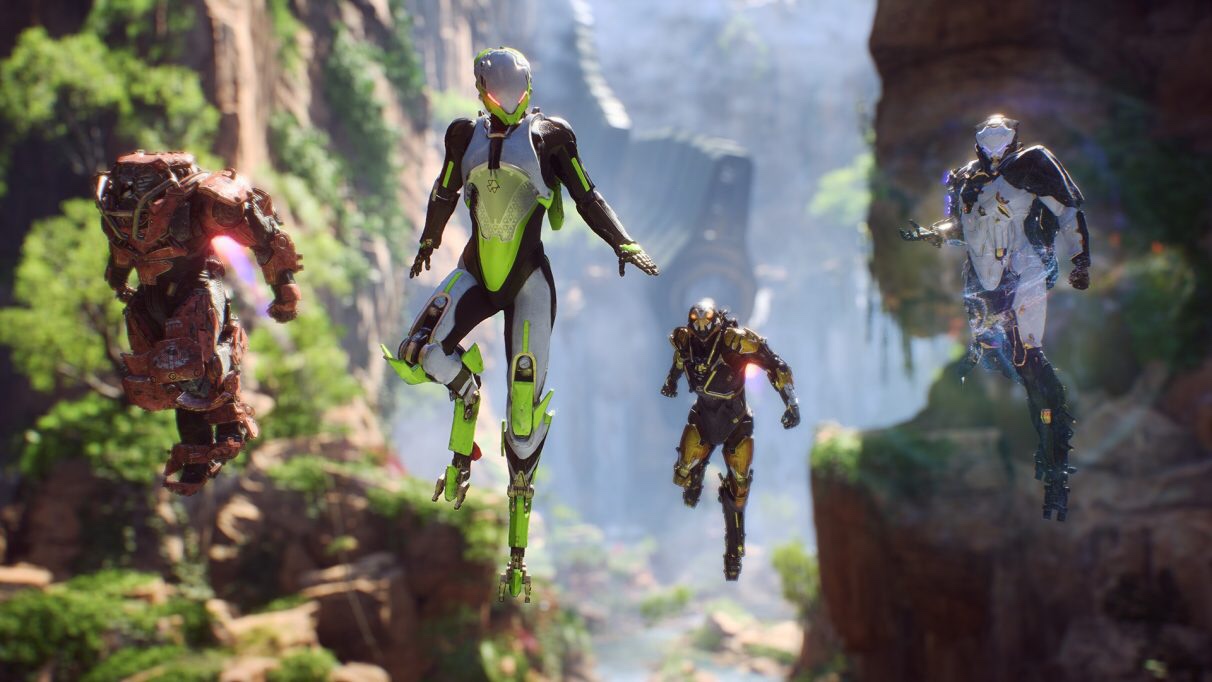
From a gameplay perspective, the game is fun. The Javelin I’m playing now is the Ranger, which is the “all-around” most normal of the bunch. The suit allows you to fly around, hover and attack the enemies as an armored version of the human inside. Think the Iron Man suit – if he was also toting a few types of machine guns strapped to his back instead of embedded in his suit. The Ranger is light, allows standard movement and flying/hovering. The other types of Javelins are the Interceptor, Storm, and Colossus. The Colossus’ name basically says it all. It’s the Hulk Buster version of the exosuit. Slow, and heavy. Storm is the like the Ranger, but with a cape. It allows more flying and maneuverability, and elemental attacks. And Interceptor is the quick ninja type suit. (As I said at the top, I haven’t tried the other suits yet.) The 4 suits will unlock as we naturally reach the max level 30, and then we can modify each class build the way we want.

The missions do feel a little repetitive. They always start on the big wall that resides outside city limits, and protects Fort Tarsis. We then fly to the noted location on the map, and then attack enemies, or defend a position, or gather a few scatters objects to return to a key location, and then maybe do that a few more times before the end of the mission. Some of the important key campaign missions do feel a bit more important and mix up the formula a bit.

But repetitive structure is not always bad. Each mission is in its own way unique. 22 story missions and about the same again in side-mission / contracts. And by default, the game will want you to play in multiplayer, with 3 other squad mates, so it is a different experience every time. You can play how you want. Be the attacker, or the defender, or the person that wants to do all the objectives, or you can sit back and watch. Sometimes it kind of feels like playing on auto pilot (at least on normal difficulty) as your real-world companions will do the majority of the leg work if you’re not quick enough. Everyone is just eager to burn through the mission to move onto the next.

The flying in the game is smooth, and the transition from ground, to jumping, to flying to hovering is fairly seamless. You can even go underwater in some of the deeper ponds. I did note that besides traveling from point A to point B, flying is not really used. I was kind of hoping for more gameplay mechanics that involved flying, like objects that were on the move, but I found out to my dismay that you can’t really shoot and fly at the same time. Hovering is used for some collectibles and puzzles, but those are sparse. Also your suit will overheat if you fly over hover too long, and you need to fly, skimming across the water, or through a waterfall to cool it down. Or just drop to the ground for a few seconds before flying again. I understand that this mechanic is supposed to convey some authenticity to these suits, that you can’t just fly forever, but its more of an annoyance than anything.

Another restriction to the suits is your build. With the Ranger Javelin, you carry two weapons, a grenade type, and a launcher. You’re also equipped with a special weapon, a support mechanic like armor or shield buff, and you can melee attack. This build is locked when you start your mission. Grenade type or swapping your shotgun for an assault rifle is restricted until you return to Fort Tarsis. The game’s back-end has a lot of gear and weapon challenges to track, and it feels like we’re handcuffed to the specific load-out when we start the mission. Another reason we’re forced to return home after each mission to update our Javelin with the loot that was dropped during the mission.

Jumping into the game, knowing it was Story focused became a little overwhelming at first. BioWare does storytelling well when they’re given the time. But the game starts in the middle of an exciting mission, but already on the losing end of the battle, so all the character dialogue is frantic, and confused, and quick to throw a lot of terminology our way. We start off in bad shape and we have to repair our suit which is a good way to introduce the different gameplay mechanics involving the exosuit. The gameplay is simple enough, but from a story perspective, they throw a lot at you right away. Descriptions about the Anthem? and the Cataclysm? and Heart of Rage? and Javelins and Ciphers?

I let the many introductory character’s conversations and mission objectives just wash over me while I tried to just sort out the gun play. It wasn’t until a few hours into the game that things started to settle down and became less confusing. I started to make sense of the different characters and the original events that transpired. At that point I was invested in the story and was able to piece everything together. World building is tough to swallow when it’s all thrown at you in the first mission of a game you’re just learning to play. I’m focusing on the gameplay but the story flew right over my head.

Because this game is also inherently multiplayer-focused, I feel that the way the mission matchmaking works, some of the character’s interactions can be lost. If you want to hear every line of dialogue, you’ll want to launch each mission single player for the first time. It will be more of a grind because you won’t have any help, but with matchmaking, loading up a mission, you may be dropped into one where your companions are already flying to the first objective, or even loaded into a cave or dungeon. This only happened to me on a few occasions. I personally don’t feel I’ve missed anything crucial to the story by having to rush off to catch up to the group, as the dialogue still plays regarless.

But there have been a few instances where I’ve loaded a mission and the action is already taking place. Where I’ve had to fly towards the destination marker, to find the rest of my crew has already cleared the area and are advancing. I feel a little unwanted, knowing that the game started this mission without me. Like I was almost an afterthought to this group of strangers. What did I miss? I don’t know. Just personally, I feel since I’m initiating my own story mission from the campaign (not free play where I’m just loading a random mission with a group), that the mission should start, for me, at the beginning. Everyone else can join me along the way, I don’t care. But I’m selfish.

This may very well be just a server/balancing act with EA/BioWare. I mean the matchmaking works extremely well, all things considered. 90% of the missions I’ve launched, all the crew load at the same point and off we go. Only one mission I’ve played had only 1 partner instead of the full crew. And matchmaking loading is quick compared to Destiny. But in this one respect, Destiny handles the matching making better. We all queue up in space and fly to the mission. In Anthem everyone is just dropped on the wall and off we go. But some are slower to load and get left behind.

These be me thoughts so far. When I wrap the story and try out the other Javelins, I’ll have more to say. Right now I’ve only tried one Stronghold (I’m assuming there are more) and my gear is still low tier. I’m excited to see what the rest of the story has for me. And what happens when the end-game open up.

-iRogan
Looking through my 2018 history, I did zero video game reviews…

Let’s change that.

These are games I completed in 2018, some of which may not have released in 2018. I’ll put the initial release date in parentheses.

Mafia III (2016): Mafia 3 has a really solid story. Upon release it was hindered with game breaking bugs. This hurt sales and reviews. I got the complete edition on discount which included all the DLC and it was worth the price of admissions.

Quantum Break (2016): I bought this game in 2016 and then sat on it. This was a mistake. One of the better games I played this year. Mechanics were really cool and story was interesting, with live action episodes spaced between the game chapters.

STEEP (2016): I waited on this game until it was cheaper. This was a good decision. It is a very cool snow sport game, but not worth full price. Olympic’s DLC was too expensive but it did add a rocket powered wing suit.

Mass Effect Andromeda (2017): I rarely, if ever abandon games mid-playthrough. Mass Effect Andromeda falls into this category.

Need For Speed Payback (2017): A solid racing game through and through. One of the first games that got to utilize my Xbox One X and 4K TV. This game made news because of how poisonous the video game community can be towards developers sometimes, when they don’t get what they want. Like the delayed release date for the Skyline dlc car. (See: Dissapointed in the community – needforspeed – reddit)

Far Cry Primal (2016): I sat of the fence with this game, because although I’ve always enjoyed the Far Cry games (from 3 on…), the concept of this one made me apprehensive as it was a close quarters combat (no guns) game taking place in 10,000 BC. Story ended up being really good. I did miss the long range options, but spears turn out to be pretty brutal weapons.

The Witness (2016): A very intriguing and smart puzzle game. Too smart for me.

Sea of Thieves (2018): What’s bad about being a pirate in the open sea? When there’s nothing to do and you don’t have many friends. On launch this game struggled with repetitious grind and lack of content. They’ve added more but the content requires more crew members. Like, more than 2 which is a shame.

Injustice God Among Us: I don’t typically pick up and play fighting games. But this one really impressed me. So much so, that I got Mortal Kombat X and Injustice 2.

Hellblade: Senua’s Sacrifice (2018): This game is a shorter, intense story game (6 hours) focused on mental health and multiple personality traits. Gorgeous visuals and puzzle and combat gameplay. Recommended to play with surround sound headphones 🎧 to fully experience voices in your head.

Mortal Kombat X (2015): after playing and being impressed with Injustice, I figured I’d get NetherRealms’ other fighting games. I was not disappointed.

A Way Out (2018): A very story focused mandatory-co-op game with some unique elements. Both players are shown on the screen at all times in a split screen format. The game also comes with a guest pass so if you are playing online, the other party doesn’t need to buy a copy.

Injustice 2 (2017): See Injustice 1 and Mortal Kombat X

Tekken 7 (2015): Thinking I might like other fighting games, I tried Tekken 7 while it was free for a 72 hour weekend. I beat the story in one night. It’s awful. Don’t play it.

Mirrors Edge Catalyst (2016): Nice looking but wasn’t able to recreate the uniqueness and identity of the first game.

Destiny 2 (2017): Again like Mirrors Edge, this game is gorgeous compared to its predecessor. But wasn’t able to recreate what made it Destiny 1 special. Still, I played this solo, and really enjoyed the new story and gameplay changes. Played both the expansion packs but haven’t gotten to Forsaken yet.

Ori and the Blind Forest (2015): A stunning side view platform game. Difficult at times (where at one point during the final level escape my game crashed when I was able to finally succeed.)

No Man’s Sky (2018): Originally released on PS4 and PC, I waited for it to be released on Xbox after a big, big update to the game. The game has good ideas but many issues. They added coop which I appreciate, but still can’t grab my interest.

The Crew 2 (2018): Better looking and with more variety than Crew 1 (See: Boats and Planes and Hovercrafts and Bikes and Monster Trucks). But they did away with the story and they added fast travel from the start which makes the map feel immediately smaller.

God of War (2018) PS4: Game of the year from a technical and game direction stand point (See: Video Game Award 2018). How they pulled off the whole game with a seamless, no-cuts camera still amazes me. More grounded than previous God of Wars and a more humanized story. Outstanding in all categories.

Forza Horizons 4 (2018): Best in the series, which is saying a lot because the series has been stellar since its inception.

Spider-Man (2018) PS4: My personal game of the year. Tell me I’m wrong. (Then See: You’re wrong).

Red Dead Redemption II (2018): I haven’t quite finished this yet but like God of War, this game is a technical marvel from game play to visuals. Rockstar has always paid incredible attention to the most mundane of details. It means their games take 5-6 years to make. But the time pays off.

Top 5:

Spider-Man

RDR 2

Quantum Break

Ori and Blind Forest

Mafia III

-iRogan

iREVIEW – RIME

RIME (2017)

Publisher: Grey Box, Six Foot
Developer: Tequila Works
Platform: XboX One
Availability: PC, Switch, PS4, Xbox One

“RIME is a journey, but unlike Journey, it does have its share of problems.”

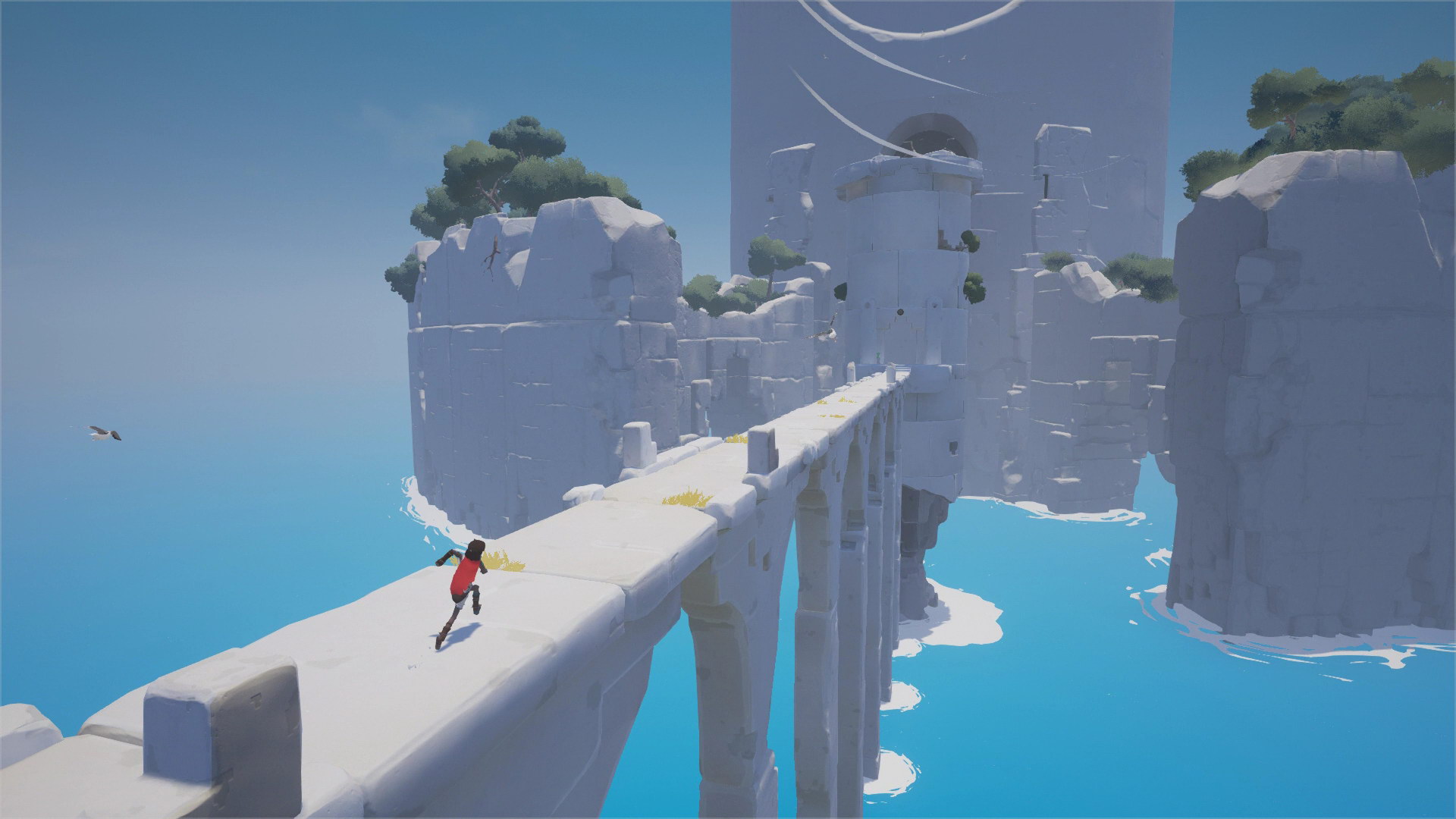
The first thing you’ll take away from the game is its gorgeous visuals. It’s actually appealing in sight and sound. You play the game as a lone hero; nothing super distinguishable about you save for your bright red cape. The world is rendered with beautiful cell-shaded environments, and it is very easy to get lost in the scenery and vistas, and overall scope of some of the architecture.

You start the adventure mysteriously landed on an island with no direction on what to do next. You can wade around in the water a bit, or walk along the sand scoping out the crabs. Or you can start climbing the rocks and cliffs to get your adventure started.

RiME

It’s what lays underneath this pretty face that lie the cracks.

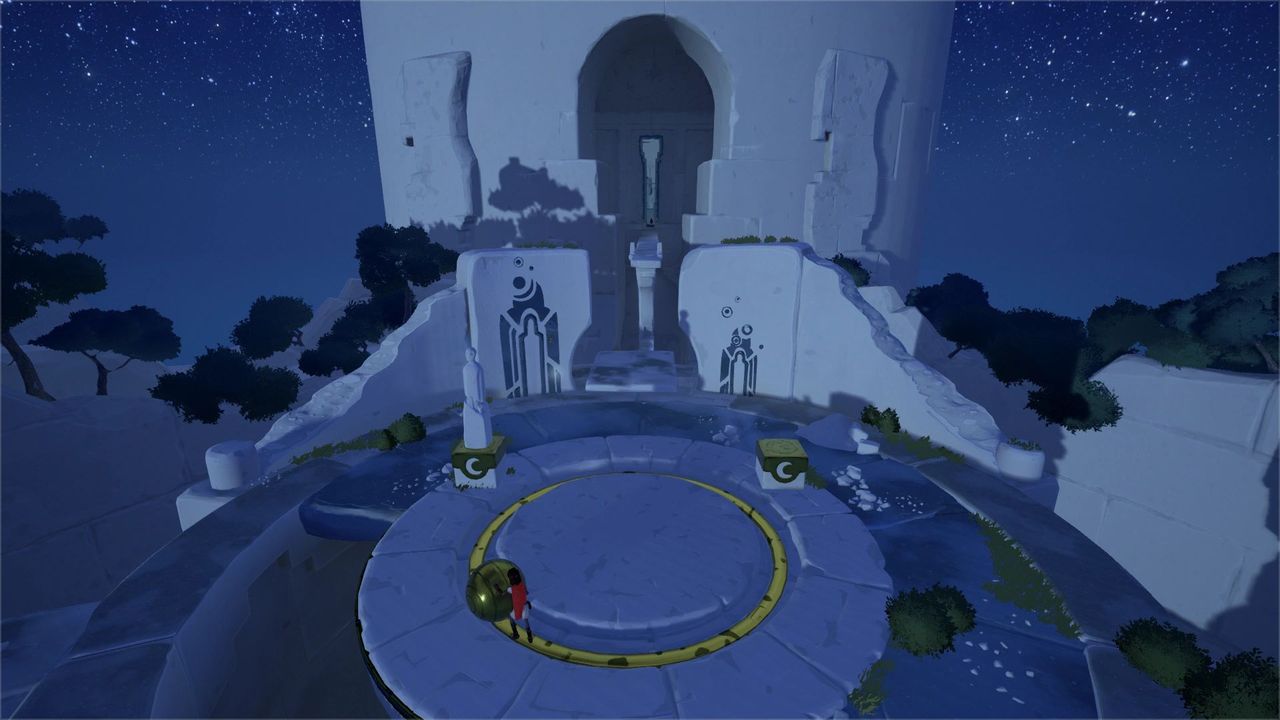
RIME gives you no HUD or any real directions. But it will give you clever little hints as to where you’re supposed to be going, whether it be an ominous red cloaked figure off in the distance, or a light blue beacon shining into the sky. This will draw your attention in the right direction.

As the lone hero in this story, you really have no one to talk to, so there’s no dialogue, but that doesn’t mean you won’t be using your voice. Besides your hands, your voice will be your primary tool, as it appears to have some special abilities throughout the game. The game takes this “emote” mechanic right from JOURNEY, or ABZU.

Yelling as vases will shatter them. Yelling at torches or braziers will ignite them. Yelling at the little idol statues will activate them to reveal your path ahead. This is the main mechanic of the game besides platforming and exploring. If you try your voice when it’s not needed, you’ll just happily hum to yourself. At least that’s something besides silence.

At the end of the first area, after activating the necessary Idols, you will awake a Fox. This little guy is your exclusive guide for the rest of the adventure. He’ll run ahead to the next area, leading the way, and then happily yap at you when he needs to draw your attention. This mechanic doesn’t always work however, as he’s small and therefor easy to miss, and he’ll only yap at you when you’re in proximity. Sometimes he’ll vanish on you and appear at the next checkpoint, leaving you wandering around a large area trying to find out where that next checkpoint is.

RiME-screenshots-9

The puzzles themselves are fairly intuitive and straight-forward in design. Light is the primary theme for all of the puzzles, and when you yell at torches, they’ll ignite and these little blue orbs you’ll find in walls are the main mechanic for switches. These you can pick up and carry around, and these are what activate the doors, or passages. They’ll also explode into a ball of light and defeat any strange enemies, when you yell at it. You’ll use 2 or 3 light orbs on pedestals in a single room, and arrange them to create specific shadows. Some of the puzzles work quite well.

There are also a few mind-bending puzzles that had me scratching my head a bit. In the latter areas of the adventure, there are a few rooms with a twist. Picture a large, long room. On either side, there’s two floors connected by stairs, and there’s dark hallways attached, that go deeper into the walls. If you go down any of the hallways on the bottom floor, turn a corner and then exit, you’ll find yourself on the opposite side, on the top floor.

Another long hallway area found that if you ran in the same direction, with the camera facing forward, there would be no end to the hallway, just the same area on repeat.

In yet another, final area, there’s a tall mine-shaft that you have to scale up for quite a ways. At the end is a set of stairs, and this would have you arrive at the bottom of the room you just left. These puzzles were the most interesting aspect of the game, by far, and it’s a shame that these were so few, and so late in the story.

rime-january-screenshot-10-web-1483648033353_1280w

The game does suffer from a few problems. Visually, I mentioned that the game is beautiful. Lush and vibrant colours, clever use of tones for the game mechanics, and just the scale of the architecture and camera use is impressive. This does impact the frame-rate at times. When turning the camera too fast, or if there’s a mechanic in play that’s activating, the game will stutter. Doesn’t help that it feels like the game runs at a not so smooth 30fps generally. And this is on the Xbox One and Xbox One S.

Another issue is the lack of direction at times. The Fox guide helps, sure, if you can find him. And there are a few different colour cues, or beacons to follow. But other than that, there’s not a lot of direction. Some of the areas are quite large, and a few large underwater segments as well, where you’ll need to find water bubbles just to stay under and navigate. This does encourage exploration, but as I was playing, I felt discouraged as I was quite anxiously worried that I might get lost and not know how to advance. So whenever I was given any semblance or direction, I would follow it explicitly, and not risk getting sidetracked.

Thinking about it now, this is the first time a game has ever made me feel stressed in an environment, where I didn’t want to explore for fear of getting lost. Most games I’m quite the adventurer, always willing to turn down the wrong corridor in hopes of finding come supplies.

///

Tequila Works has done a great job in creating a believable world, and beautifully rendered it. Considering it was built on the Unreal Engine, I was hoping for a little more fluidity in the gameplay and animations, but that could just be chocked up to a smaller development team. The puzzles are sufficient, but nothing trulely new or inspirational. Nothing we haven’t really seen before in similar games, however the mind-bending rooms were a pleasant addition  that had me stumped. Navigational cues could use some work, but that could also be a patience issue with the player. At 5 hours or so in length, depending on how much exploring you do, its not that long, but if you can make it to the end, you’re in for a heart-wrenching finish, and I hope you enjoy the ride.

///

The achievements are pretty standard affair. Story-based achievements, plus some hidden areas. Some scattered collectibles as well. A lot of them are easy to miss as there’s areas that become inaccessible after you pass that area. Now that I’ve completed the story once, and I’m a little more comfortable with the layout, I’ll probably go through it a 2nd time to explore more and unlock some more achievements. First play through only netted me 325/1000G.

Notable achievements:

Careful Steps (Don’t smash the eggs) – 25G
Dark and quiet (Complete the labyrinth without making a sound) – 25G

iRogan


Homefront: The Revolution – Final Thoughts

I won’t be doing a full review for Homefront, as I’ve been recording my thoughts as I progress through the game. You can find the previous entries here:

Homefront The Revolution First Impressions
Homefront – The Revolution: Further Impressions

This will be my final piece though. Final Thoughts, as it were.

This title has been such a divisive experience for me. On one side, as a sequel to Homefront, which had set the bar high, I was excited for the prospect of more story to dive into. However, with The Revolution, the game is so different, it would be hard to argue that they are related.

The story still tells of a resistance group fighting against the Korean invasion. It’s still a first-person shooter, but the rest has changed. It’s not a linear game, but a segregated open-world area. The city has been split into 6 different zones, and the only way to transfer to each zone is through the resistance’s underground tunnels. They’ve added bases and outposts that need to be captured to advance, a-la the Far Cry series.

Capturing the bases and radio towers differs quite a bit as you progress through the game, and there’s not a lot of instruction in how to advance in certain parts. The game focuses a lot on exploration, and traversal of the buildings, clambering up vehicles or platforms, out windows and along exterior vents. In some instances, doors or platforms require power, which comes from a generator. The generator requires a motorcycle to rev the engine. However, to get the motorcycle to that area, you’ll have to jump it off a ramp, or drive it up a series of stairs in the adjacent building, then weave it along the catwalk or makeshift platforms that connect the two buildings. All the while, this farce is taking place in the middle of a enemy populated area. Try avoiding the scouting groups or drone fly-by.

That’s just one example. Later on, some doors require the hack tool to open, or worse yet, a stronghold will have a little ramp hidden outside of plain view, that will allow your Remote RC-Bomb to drive in, and blow open the door. That’s hoping you’ve even unlocked the RC Explosive perk. Which happens to be the final Explosive upgrade. And this Stronghold was only in the 3rd area of the game. Try explaining that to my past-self, who scoured the building for an hour trying to look for a way in.

Even after the very large patch that came out a few months back, the game is still buggy. From time to time, you’ll see objects or weapon caches just floating in the air. The initial game loading, like, when you start the game, and press “Continue from last checkpoint”. Yeah, this load screen actually wears through its own loading music before the game starts. Luckily the auto-save stalls at checkpoints are all but gone. The frame rate tanks to about 3 fps for a couple seconds, but that’s forgivable compared to what it used to play like.

I’m finally nearing the end of the campaign, and I can’t say it’s been fun. I can’t recommend it to anyone. It has its good moments, and it does tell a dire tale, one of despair and loss, of resistance against unbeatable odds – which is its only saving grace. But I shouldn’t come up against so much resistance to enjoy the game itself.

-iRogan

iReview – MX VS ATV REFLEX

MX Vs ATV REFLEX (2009)

Publisher: THQ
Developer: Rainbow Studios
Platform: Xbox One Backwards Compatibility
Availability: Xbox 360, PS3, PC

mx_vs-_atv_reflex_cover
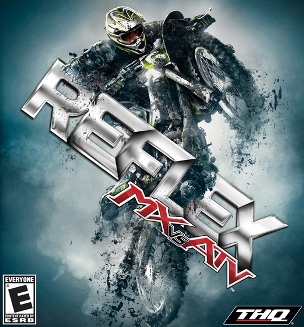
Released probably eons ago (actually 2009) by Rainbow Studios and THQ, MX vs ATV Reflex is the 3rd game in the MX vs ATV series.

The game has been made backwards compatible on the Xbox 360 and was recently made the Xbox Live Games With Gold free game. So I picked it up, and have been playing it a lot. A surprisingly amount actually, considering I have Forza Horizons 3 available, and I’d rather play this.


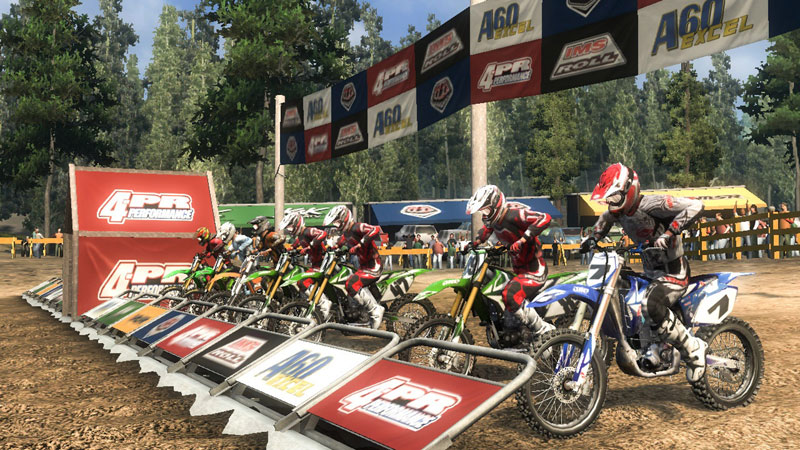
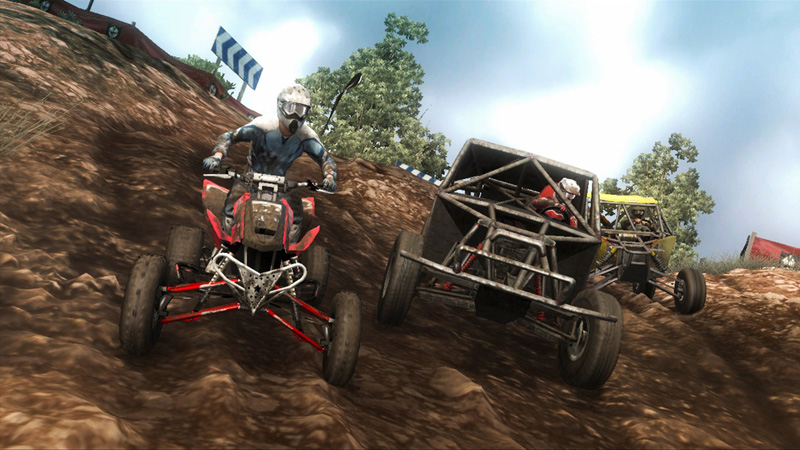
The game features Motocross Bikes, ATVs, Buggies, and Super Trucks, and you race out in the wilderness, over dirt, mud, water, and snow, or in an arena with jumps and obstacles. Throughout the campaign there are a few different modes. Waypoint, Nationals, Supercross, Freestyle, Omnicross, and then the Chmpionship races. Each series supports different classes of vehicles, whether they be, MX Bokes, ATVs, Buggies, or Super Trucks. The Omnicross mode which features all four types of vehicles, in my opinion, has got to be the most dangerous of all sports conceived – from the Bike’s perspective. You’re sharing the path with ATVs, Buggies, and Super Trucks. I think it would almost be impossible not to get killed. The trucks, in these latter modes seems to have a clear advantage over the smaller vehicles. They’re more stable, faster, and larger.

Each mode has a set of races that make up a series, and there are 3 series for each mode. They start easy, only 3 races, and then 5, and then 8. Each series more difficult, and longer, with the championship series having the longest races, and the most laps.

mx-v-atv-reflex-01-lg

There are also bonus races at the end of each mode’s series. These are either elimination style, or a solo time based checkpoint race, or races where you start as the person in last place, and try to win. The MX bikes also have a free style mode in an arena, or open area, with jumps and ramps, where you get scored on your tricks.

The big change this year is the handling mechanics. The left thumbstick will control your bike or vehicle, and the right stick controls the player’s body and balance. You can lean your body into the turns or jumps to get more momentum, or to right yourself if you lose balance. The right stick also allows you to pull off tricks while flying through the air.

From a course perspective, one of the notable key additions to the series is the real-time deforming ground. As more vehicles race around a track or path, the ground and mud will show the tire tracks, and the ruts will get deeper and more torn up, as the race continues. This can throw off the player’s balance when landing or cornering.

mx-v-atv-reflex-03-lg

The main issue I have with the title is the difficulty curve – specifically with the bikes. On Rookie or Moderate, the game is quite easy, and at times I found myself finishing a race 30-50 seconds ahead of the 2nd place racer. This is when I can get out ahead of the pack. If you get stuck behind, it can get very difficult to gain any placement, as the tracks and corners can be quite tight, and it is easy to knock into another racer, and fall off your bike. After a couple bails you’ll be at the back of the pack, and it will be difficult to fight your way through, to complete the race with a solid placement. 1st, 2nd, and 3rd advance, and only the championship series have multiple point rounds. This is especially notable in races where ATV’s and Buggies are racing beside you. They have no care for your well-being and will side-swipe you or knock you off the course as if you’re not there.

The game is easy on the achievements, and will tie up a lot of your time to complete all the races. As you get later in the series and championship races, they take about 10-15 minutes each to complete. The game is, however, surprisingly a lot of fun, and it feels really good when you can hit the jumps and land solidly on the other side, maintaining your rhythm and momentum. For the series that allow them, I would suggest you use the super trucks, instead of attempting the MX Bike or ATV, as you’ll be less frustrated in the end trying to compete against them.

One downside is that the game is old now, so the Xbox Live functionality has been disabled. Possibly one of the victims of THQ going bankrupts a few years ago.


Notable Achievements:
Coming on Strong (Lap an opponent in a race) – 15GLong Jumper (Land a jump of 300 feet or greater) – 15G

-iRogan